1Step 1
Connect the tools you already use
Link a Computer — local or cloud — and its AI coding tools become Runtimes your Agents can run on.
One work system for product and engineering teams. Keep the issues, sprints, and reviews your team already knows — and let Agents pick up tickets, ship code, and bring results back for review.
Used by teams at






How it works
Managing work and doing work used to live in different tools. Sharkly closes the loop: the system that plans the sprint also runs the Agents — on Claude Code, Codex, Gemini, and the tools your team already uses.
Link a Computer — local or cloud — and its AI coding tools become Runtimes your Agents can run on.
Backlog, sprints, and boards your team already knows. Issues stay the single source of truth.
Set an Agent as the assignee — it completes the work and brings the result back for review.
Works with
 Pi
Pi Cursor20 more
Use cases
Use cases
Turn scattered ideas into clear requirements with goals, scope, and acceptance criteria — then break them into work.
Learn more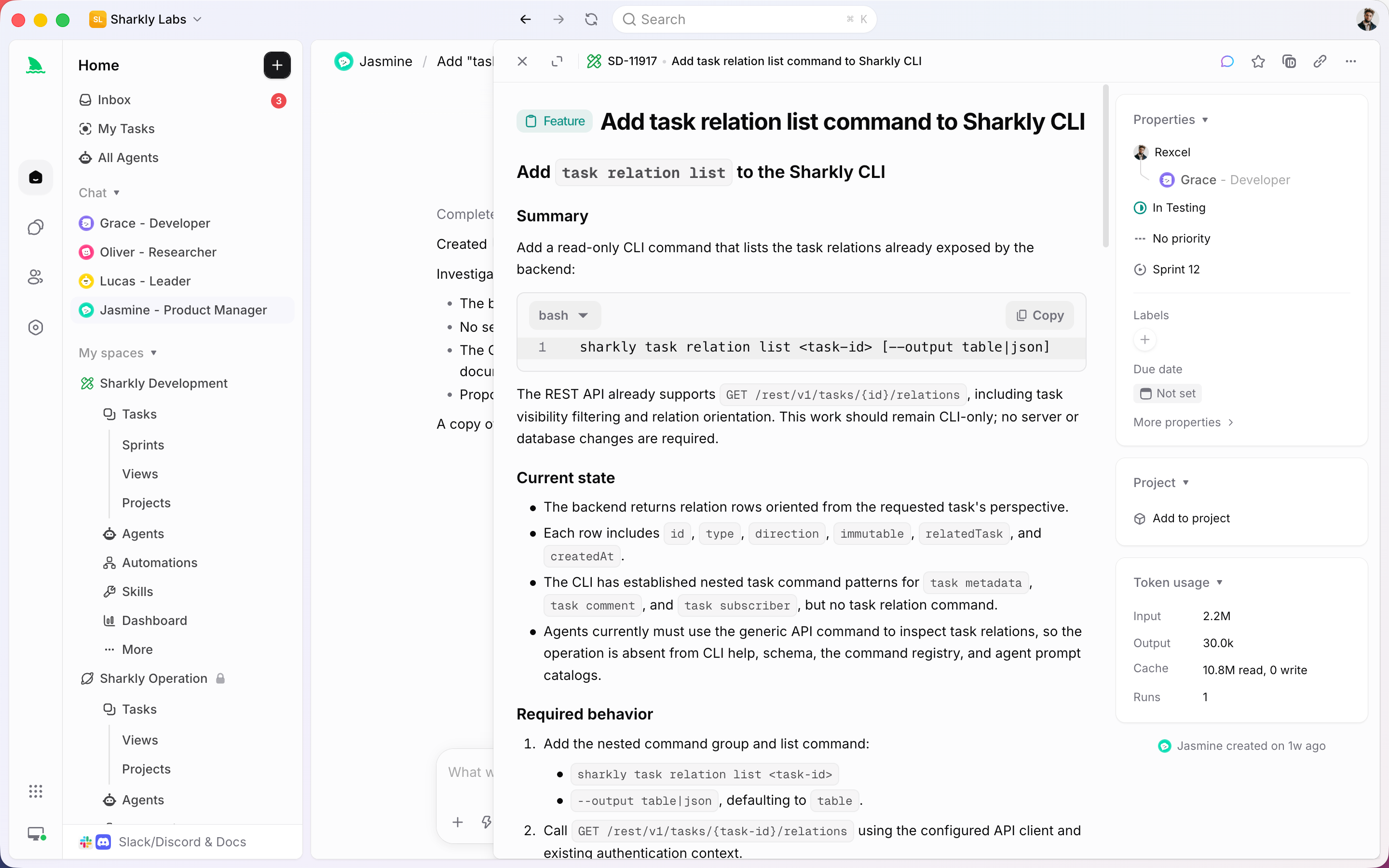
Core capabilities
Issues, sprints, assignees, comments, and triage — the full project-management foundation, with people and Agents moving on the same board.
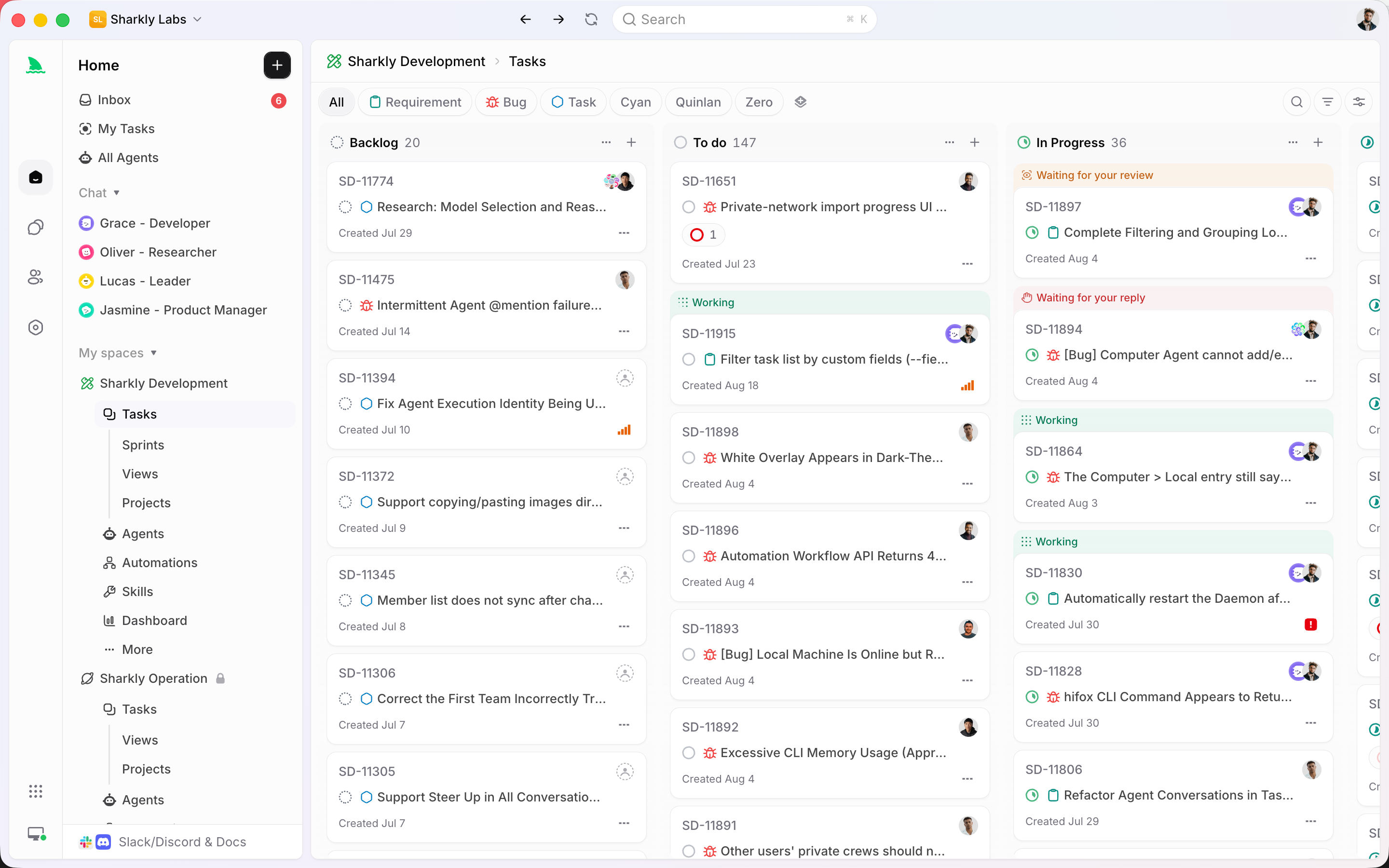
Route requirements, bugs, and tech debt from the same task system. Agents run in parallel, each with the ticket's full context, while progress, blockers, and results stay attached to the work.
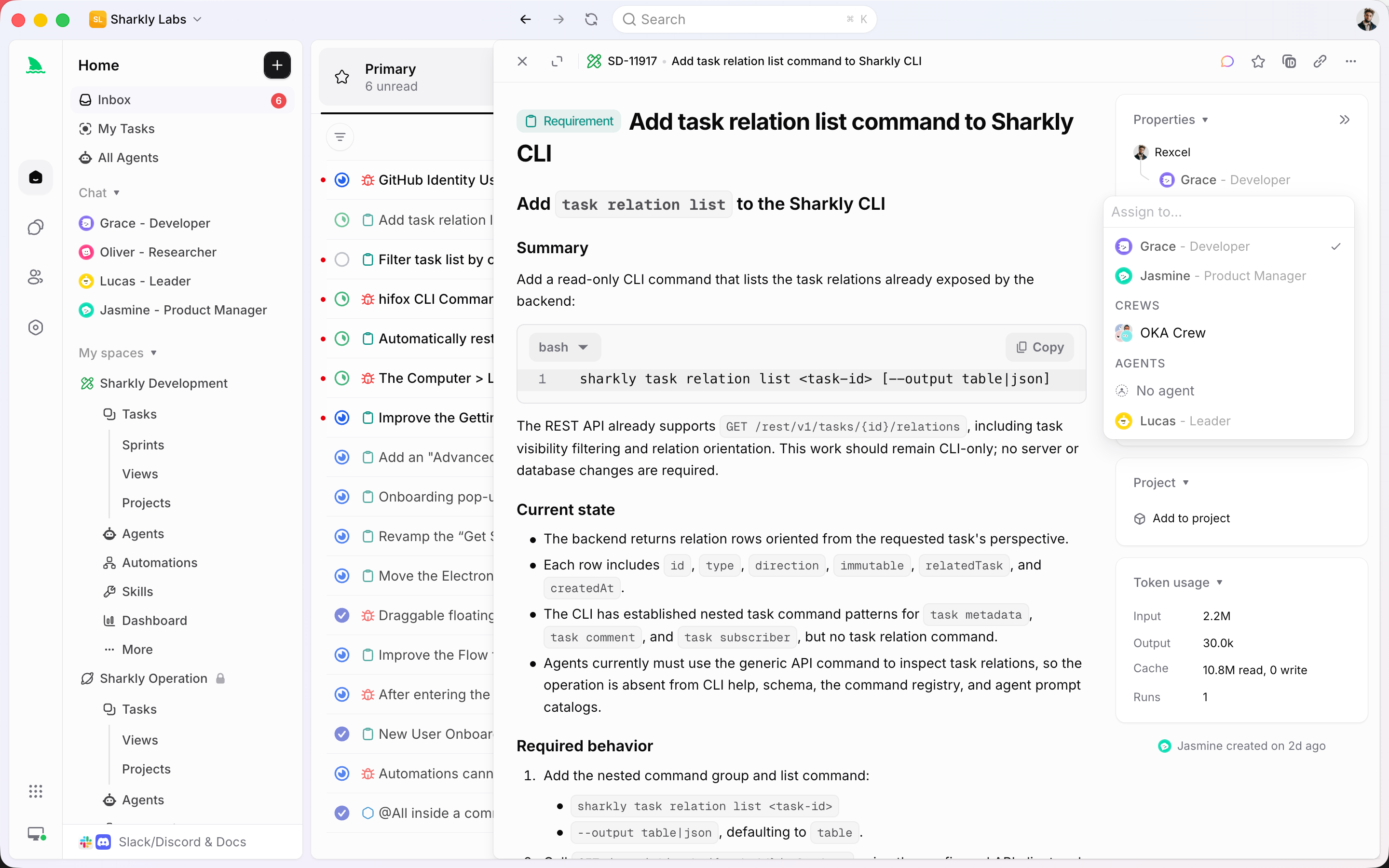
Agent works the task directly — code lands in an isolated worktree, progress shows on the ticket, and every result comes back to a human for review before it merges.
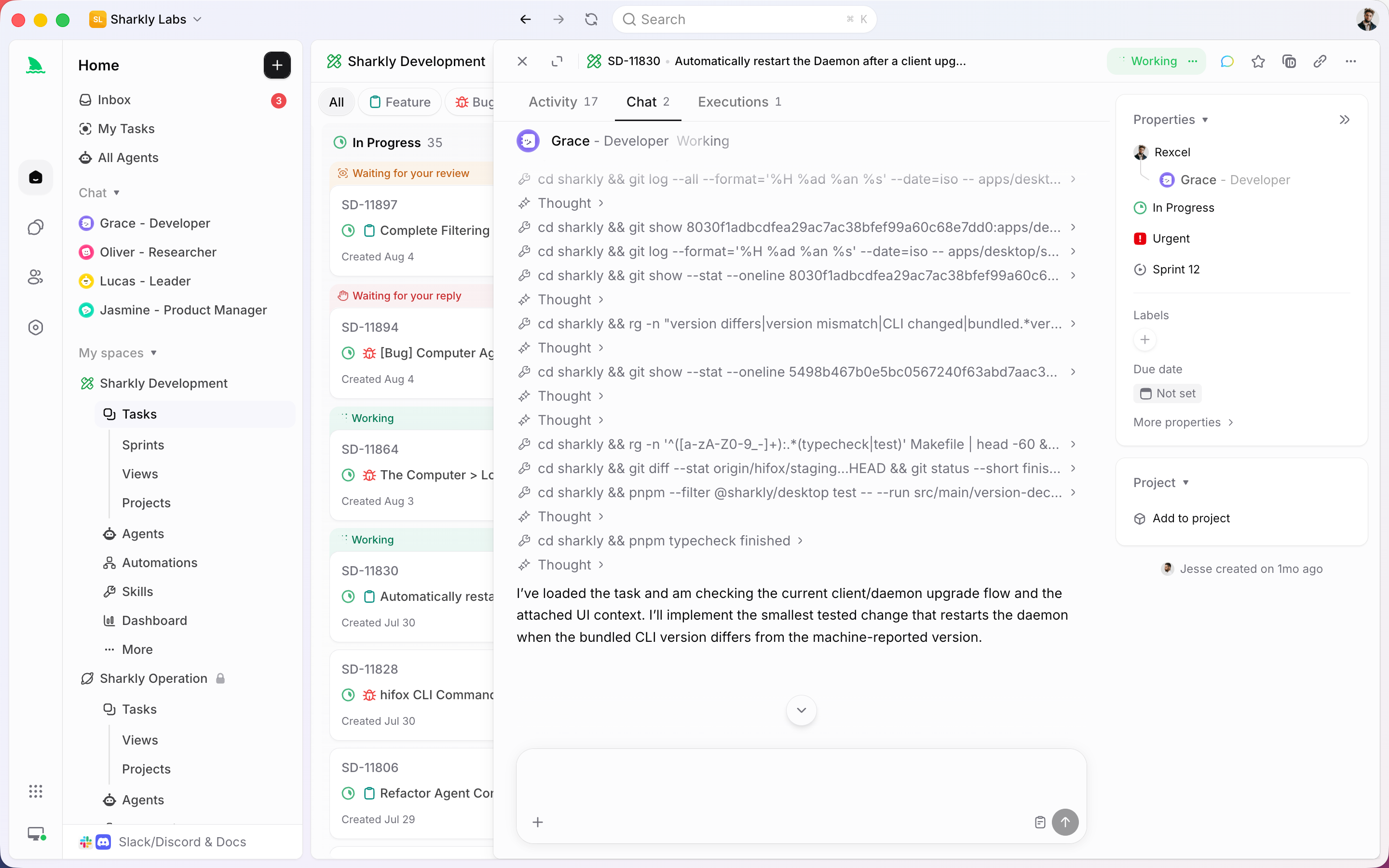
Saved Agents with their context and Skills live in the Space, so anyone can assign them — and every run is visible to the people accountable for the result.

Import
Connect your current tool, copy issues across with history, and run both in sync while the team moves over. Your projects, statuses, and workflows survive the switch.
Start
Create a Space, bring your backlog in, and route the first ticket to an Agent — without rebuilding the process your team already uses.
Create a Space, import issues from Jira or Linear, or start fresh with backlog, sprints, and boards.
Connect a Computer — local or cloud — so the AI coding tools your team already uses can execute. Give the Agent one repeatable job, like bug fixes or test coverage.
Set an Agent as assignee. Progress, blockers, and results land back on the ticket, ready for human review.
Pricing
The whole product — Agents, Sprints, integrations — free for up to 10 people. Beyond that, Team is $7 per user / month. Model usage stays on the coding plans and API accounts you already have.
FAQ
Both, on purpose. Agents collapsed the line between managing work and doing work, so Sharkly is one system for both: plan issues and sprints, assign tickets to Agents, and review what ships.
Claude Code, Codex, and similar tools perform execution. Sharkly manages team-level assignment, connected Computers, task context, progress, blockers, results, and human review across those tools.
Those tools add AI to a system built before Agents. In Sharkly, Agents are first-class teammates: they get assigned, execute inside the system, and report back to the ticket.
Connect your current tool and copy issues across, history included. Run both in sync while the team switches at its own pace.
Yes. Planning, requirements, triage, and review are all no-code; Agents handle the execution side.
Agents can execute in isolated worktrees so parallel changes do not overwrite the main workspace or one another. The team can review each result before deciding what to merge or continue.
Sharkly is free for up to 10 people. Model usage stays on the coding plans and API accounts your team already has — Sharkly keeps assignment, execution visibility, collaboration, and review in one place while those tools handle model usage.