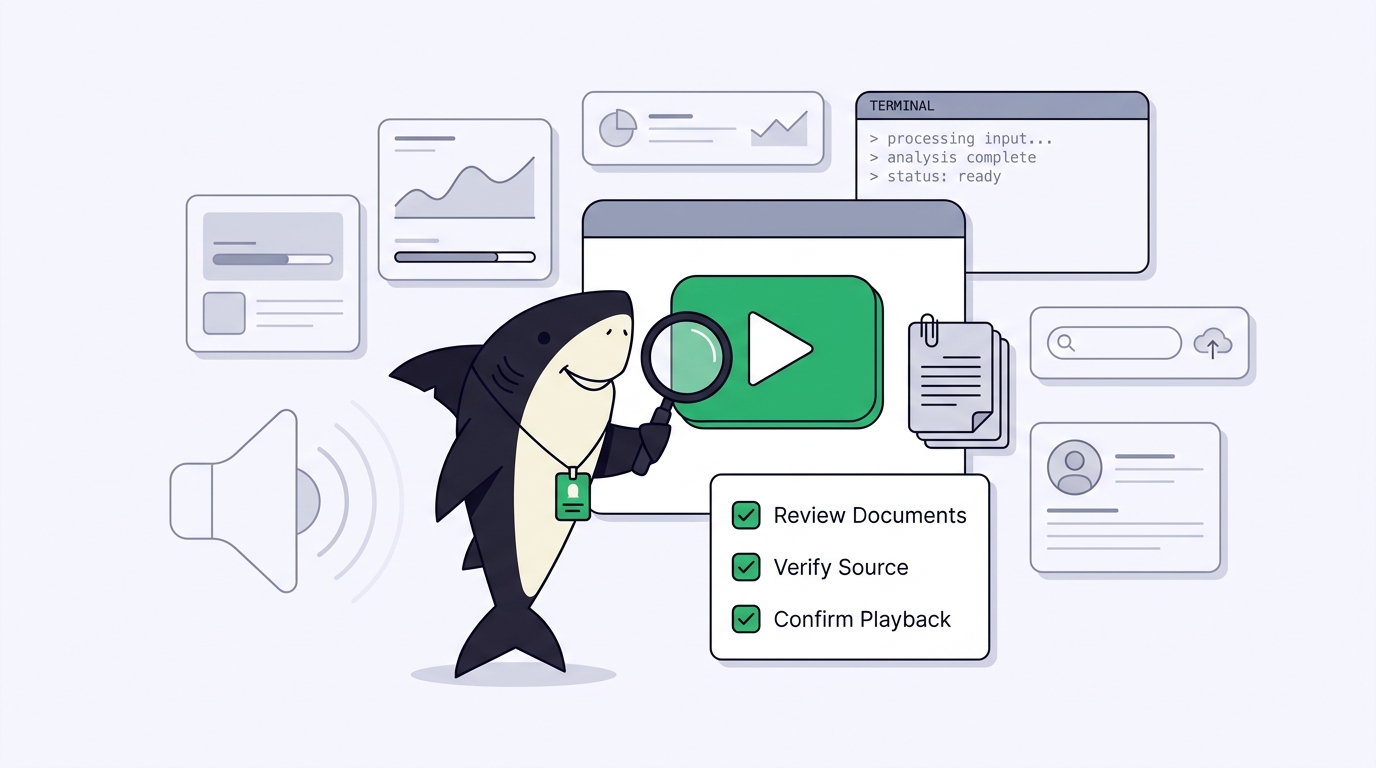
A 40-second clip has been circulating since late July with the caption: “Head of Claude Code: 85% of our engineers are running dozens or hundreds of agents. The way you do it is graph engineering.” One repost of it passed 300,000 views this week. Engineering leads are forwarding it with the question that always follows: how far behind are we?
Before anyone reorganizes a team around it, it is worth knowing that the sentence does not appear in any Anthropic talk we could find. What Anthropic’s engineers actually said on stage this year is more useful, and it points at a problem the clip skips entirely: not how to start hundreds of agents, but what to do with what comes back.
TL;DR
The “85%” and “graph engineering” lines are caption text added by repost channels, not quotes from a primary source. The talks they are cut from make different claims: that agents now run for hours or days, that almost all of Claude Code is written by Claude Code, and that the harness behind long runs is a planner, a generator, and an evaluator that tries to break the output. OpenAI published its own numbers the same week: 3.1 agent-workdays per human workday, and over half of long successful tasks needed a human to step in. Both companies describe the same bottleneck. It is review and coordination, not agent count. That is the layer Sharkly is built for.
What the clip claims, and where it came from
The earliest post we found carrying the caption is from late July 2026, and the same wording has been reposted by several accounts since, most recently on September 5. None of them link to a talk. Searching the phrase turns up “graph engineering” courses and roadmaps that cite the clip as their source, which is how an unsourced caption becomes a discipline.
Three Anthropic talks from 2026 cover this ground.
“Build Agents That Run for Hours”, an AI Engineer conference workshop by Ash Prabaker and Andrew Wilson (May 2026, 75 minutes). The word “graph” does not appear in the transcript. Neither does “85%”. The workshop opens with the speakers asking the audience how many have an agent running in the background right now, counting “just one, two, three”, and telling the room there should be more of them.
Code with Claude 2026 (May 6). The adoption claim from that event, per attendee notes, is Fiona Fung’s “every engineer at Anthropic uses Claude Code.” That is a statement about usage, not about parallel agent counts.
“How Anthropic Uses Claude Code: Agentic Software Engineering at Scale”, Daisy Hollman at NDC (published August 2026). It is about context engineering for monorepo-scale work. No percentage of engineers, no agent counts.
What Anthropic’s engineers actually said
Strip the caption away and the workshop makes four claims you can build on.
Runs got long. The speakers describe effective runtime growing from about an hour to about twelve hours across one model generation, with their full harness running for more than a day. Their working figure for a fully featured application is “typically 3 to 5 hours.”
Claude Code writes Claude Code. In their words, “almost all of Claude Code is being written by Claude Code, and it can run effectively for days at a time.”
The harness is an org chart. The setup behind long runs is “a very simple kind of PM, IC, and QA org structure”: a planner, a generator, and an evaluator, with “adversarial pressure between them.” The evaluator does not read diffs. It drives the built application in a browser and tries to break it.
Humans intervene before the run, not during it. On tuning the harness, the speakers describe sitting down with seven runs, reading through them, and adjusting the prompting. The human work is in designing the loop and reading its output.
That last point is the one the clip inverts. The talk is not about one engineer supervising a hundred agents in real time. It is about a small number of long runs, structured so that a machine evaluator catches most problems and a person reads what survives.
The numbers that do exist
OpenAI published “Research acceleration: the view inside OpenAI” the same week the clip resurfaced, and it contains the kind of figures the clip pretends to.
| Claim | Figure | Source |
|---|---|---|
| Agent effort per human workday, research org, mid-August | 3.1 agent-workdays | OpenAI |
| Median researcher daily inference at API prices | More than $600 | OpenAI |
| 90th percentile researcher daily token spend | More than $7,000 | OpenAI |
| Successful 4-8 hour tasks that needed 1+ human interventions, Jan-Jul | Over half | OpenAI |
| Engineers at Anthropic using Claude Code | “Every engineer” | Code with Claude 2026 |
The post also notes a trend toward researchers running four or more agents simultaneously. Four is the number a primary source is willing to put its name to. Not dozens, not hundreds.
The intervention figure is the important one. More than half of the successful long tasks needed a person to step in at least once. At 3.1 agent-workdays per human workday, a working day now contains several moments where an agent has stopped and is waiting for someone, and that someone has to find out.
What neither the clip nor the talks solve
Whether your real number is four agents or forty, the same four questions show up the moment more than one run is in flight, and none of them are answered by a better prompt or a better graph.
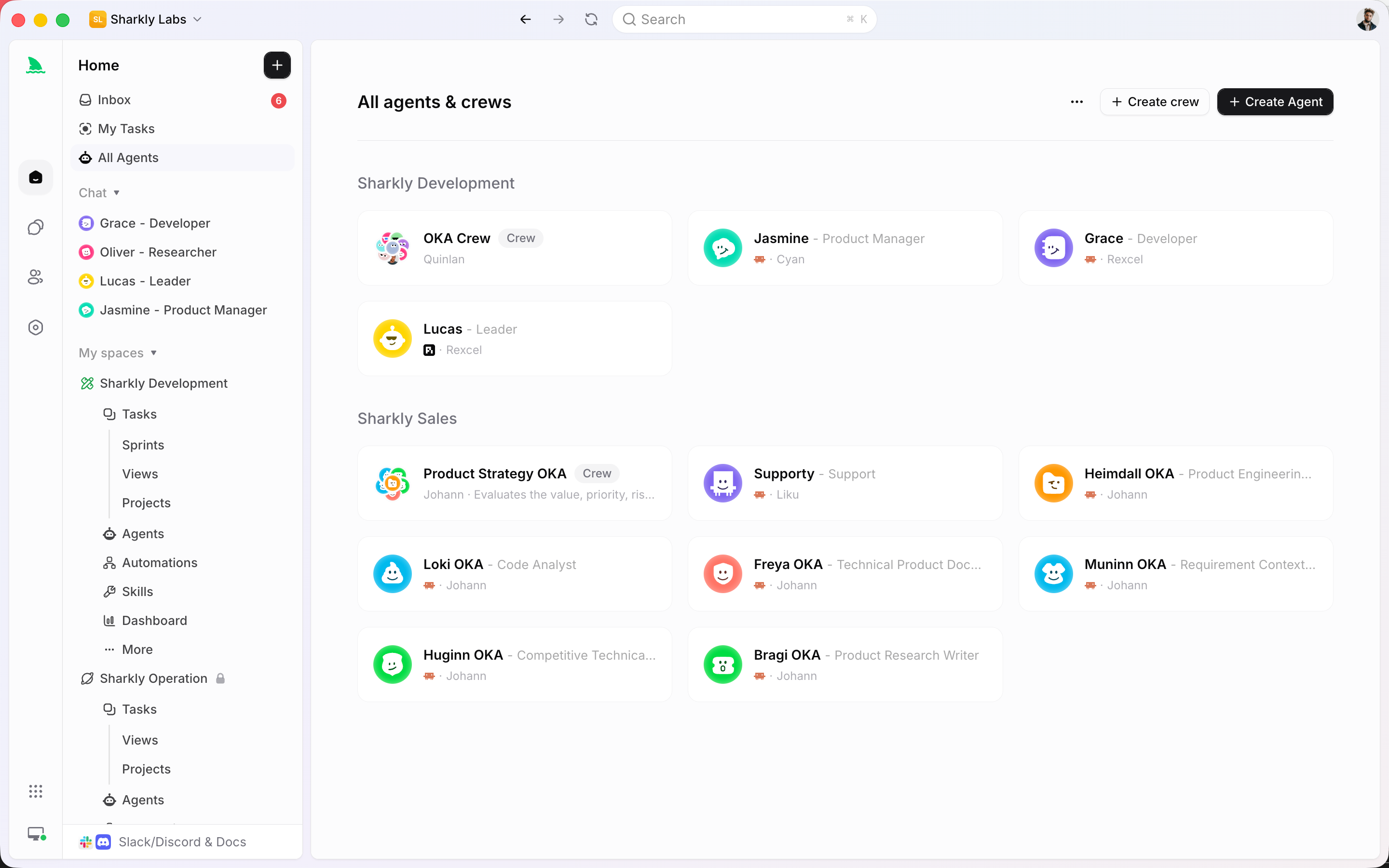
Which run is stuck? A terminal that has gone quiet looks the same whether the agent is thinking, waiting for a tool approval, or dead. Sharkly keeps Task status and Agent working state separate: a Started Task can show Working, Waiting for human reply, Waiting for human review, or Error. A Computer being online only means its local service is sending heartbeats; each Runtime on it reports its own status, so an online machine with a broken Runtime is diagnosed at the right layer.
Which two runs touched the same file? The Codex documentation warns against parallel write-heavy workflows for exactly this reason: “agents editing code at once can create conflicts and increase coordination overhead.” In Sharkly, each Task run gets its own isolated directory, and repository-backed work can use a separate git worktree per run, the mechanism our post on parallel agents in isolated worktrees covers in detail.
Where does the question land? An Agent that stops and asks is doing the right thing. The failure is the question landing in a terminal nobody is watching. Sharkly routes waiting-for-reply, waiting-for-review, failed and blocked signals into the Primary section of the Inbox for the responsible person, and a reply on the Task can start the follow-up run with the thread as context.
Who accepted it? Acceptance is a person changing the Task status after reading the evidence: the Agent’s summary, the execution log, then the diff. Merging a linked pull request does not change the Task status, so a merge is never mistaken for a decision.
Agents research, execute, test, and report. People set direction, grant authority, and accept the result. The clip sells the first sentence and skips the second.
Use a graph, or use a board?
Use a planner-generator-evaluator loop inside one run when the work is a single deliverable that a machine can test end to end, the way the workshop’s example applications were tested in a browser. That is the harness pattern Anthropic described, and it works.
Use a shared board with assignable Tasks when the work is many deliverables across a team, when a person has to answer mid-run, or when someone other than the person who started the run will review it. Sharkly is not a replacement for Claude Code, Codex, or the harness you build inside them. It is the layer around them that keeps context, progress, blockers, results, and human review visible from request to release, so the number of agents you run is limited by review capacity you can see rather than by terminals you can watch.
Frequently asked questions
Did the Head of Claude Code say 85% of engineers run hundreds of agents? We could not find that sentence in any Anthropic talk, transcript, or post. The caption circulates without a link. The attendee-reported claim from Code with Claude 2026 is that every Anthropic engineer uses Claude Code, which says nothing about parallel counts.
Is “graph engineering” an Anthropic term? Not in the sources we checked. The word “graph” does not appear in the “Build Agents That Run for Hours” transcript. Decomposing work into parallel branches that converge is a real and older idea; the name appears to come from repost captions and the courses built on them.
What is the highest agent count a primary source states? OpenAI’s research-acceleration post describes a trend toward four or more agents simultaneously, alongside 3.1 agent-workdays of effort per human workday.
How does Sharkly relate to a harness like the one in the workshop? The harness runs inside a Runtime such as Claude Code. Sharkly assigns the Task to that Runtime on a connected Computer, isolates the run, and returns the result to the Task for review. The two operate at different layers.
The short version
The clip is a caption. The talks behind it describe long, structured runs with an evaluator that tries to break the output, and a person who reads what survives. OpenAI’s numbers describe a research org already producing three agent-days per human day, with a human intervention needed in most long tasks. Both point at the same constraint: the work returning to a person, not the work going out to agents. Connect one Computer, create one Agent, and assign it something boring. The docs cover each concept in more depth: docs.sharkly.ai.