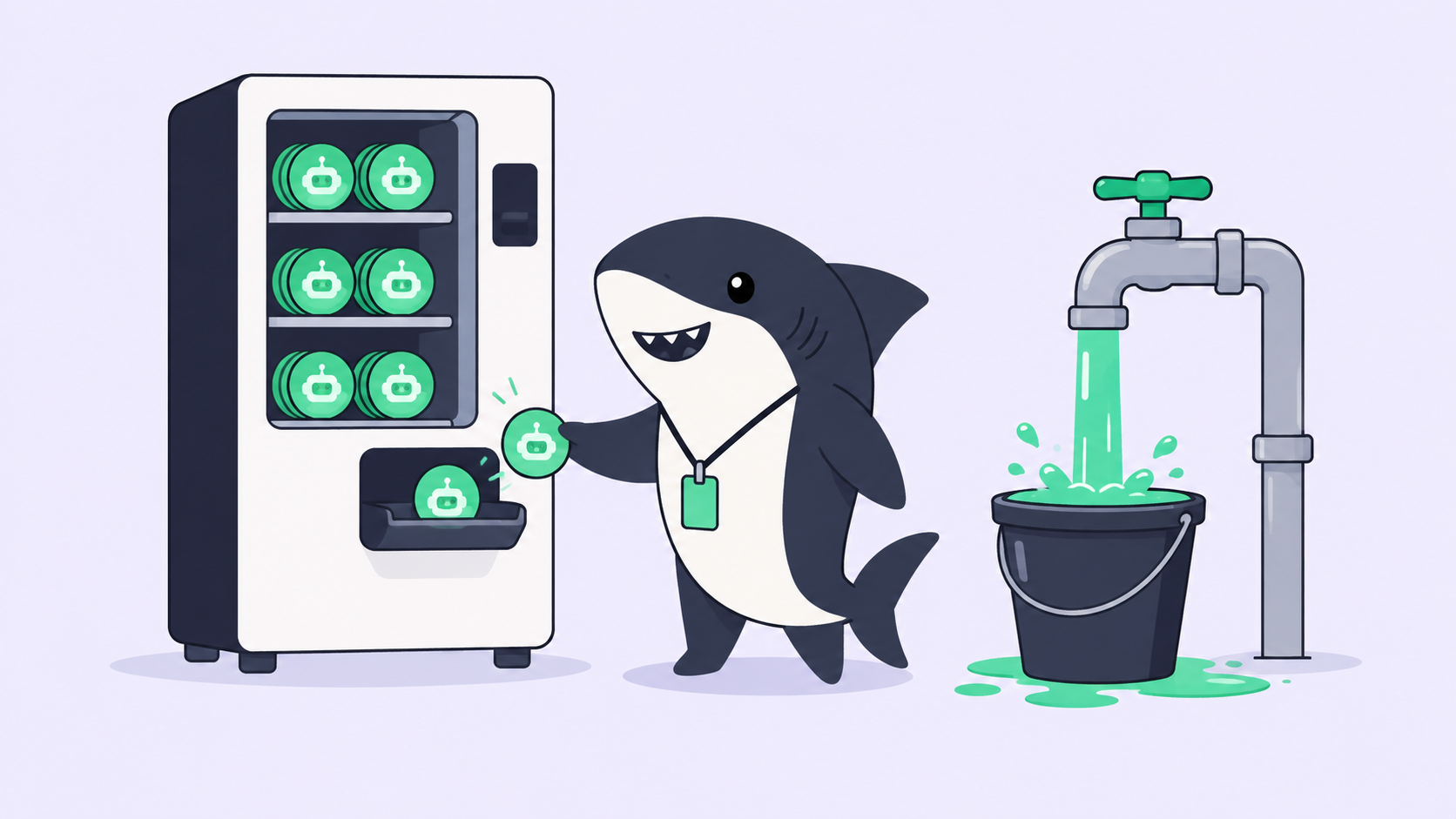

The first thing to understand is that Higgsfield sells two separate products with separate billing, and most comparisons quietly confuse them. The subscription on higgsfield.ai runs on credits. The API at open.higgsfield.ai runs on a prepaid dollar balance. Your plan, your credits and your unlimited access exist only on the website and do not travel to the API.
Once that is clear, the question of whether you need a subscription answers itself for most workflows. Here is the reasoning, with prices read on 22 September 2026.
What a subscription costs
Higgsfield varies its plan ladder by region, and two different ladders were live on the same day under the same currency when I checked. One ran Basic at $9, Pro at $29, Max at $79. The other ran Plus at $49 and Ultra at $129. Its own billing payload also disagreed with its own pricing page about how many credits the Plus tier includes.
| Tier | Monthly | Annual, per month | Credits per month |
|---|---|---|---|
| Basic | $9 | $9, no annual discount | 120 |
| Pro | $29 | $23 | 600 |
| Max | $79 | $59 | 1,800 |
| Plus | $49 | $39 | 1,000 |
| Ultra | $129 | $99 | 3,000 |
| Team | $79 per seat | $69 per seat | 5,000 across 5 seats |
Do not treat that as canonical. Check what your own account is offered, because the number you see may not be the number in any article about this, including this one.
The credit mechanics that actually decide value
Three rules matter more than the headline price.
Credits do not roll over. The terms state that subscription credits do not carry to subsequent billing periods and that unused credits expire. Separately purchased add-on credits last 90 days. Rollover appears only on the Enterprise card.
Annual plans do not give you a year up front. They reset every 30 days like a monthly plan. Paying annually buys a discount, not a bigger bucket.
Failed generations are refunded automatically, which is genuinely good and worth saying, since plenty of platforms charge for failures.
The practical effect is that a subscription is a use-it-or-lose-it monthly allowance. If your work is bursty, you either overbuy every month or run dry in the week you actually need it.
The free tier is a preview, not a tier
A free account exists and carries zero credits. Every generation it produces is watermarked, and upgrading later does not remove the watermark from work you already made. You have to regenerate it on a paid plan.
There is a three-day free trial of the Plus tier, but it is only available through the MCP integration, it requires a card, it grants 100 credits that work nowhere except MCP, and it auto-charges $49 a month unless you cancel.
The API route
The API is prepaid in dollars with a $5 minimum top-up, and you are only charged for generations that complete successfully. No free tier or trial credit is documented for it anywhere.
Authentication is a key ID and secret pair sent as a single header:
Authorization: Key ${HF_API_KEY_ID}:${HF_API_KEY_SECRET}
Concurrency scales with what you have spent in the last 28 days: two concurrent generations on a new account, ten at $25, twenty at $100, forty at $1,000.
Two details that do not appear on the pricing page. Funds added to an API balance expire one year after you add them, so prepaid money is not permanent. And generated output files are guaranteed to stay available for at least seven days, which means the download step belongs in your pipeline rather than in your plans for next month.
Sample list prices:
| Model | Price |
|---|---|
| Soul 2 Standard, image | $0.0032 per image |
| Z-Image Turbo, image | $0.015 per image |
| Ideogram 4.0, image | $0.03 per image |
| Kling 2.5, video | $0.042 per second |
| Wan 3.0, video | $0.05 per second |
| Kling 3.0, video | $0.084 per second |
| Seedance 2.5, video | $0.2057 per second |
| Genjutsu motion control | $0.318 per second |
Put those against the subscription. A $29 Pro plan buying 600 credits has to beat roughly $29 of prepaid API balance, which at Kling 2.5 rates is around eleven minutes of video. Whether that trade favours you depends entirely on the next section.
The rule that decides it
The unlimited model bundles are the strongest reason to subscribe, and they only work on higgsfield.ai.
Higgsfield states this plainly: any generation made outside the website, including through MCP, CLI, Canvas and other automated tools, always deducts credits. The unlimited bundles also carry concurrency caps of one video at a time up to 15 seconds, and they prohibit automation, scripting, credential sharing and reselling access. Unlimited usage may also be slowed during high-traffic periods.
So the decision rule is simple. If you generate by hand, in a browser, in bursts, on a small number of models covered by an unlimited bundle, the subscription is good value and the API is not. If you generate programmatically, at any volume, the subscription’s headline feature is unavailable to you by design and you are better off on prepaid API balance where you pay per second and nothing expires.
Buying a tier for the unlimited perk and then automating against it is the one clearly wrong answer, because you pay for the bundle and spend credits anyway.
If you are looking at leaving entirely
“Higgsfield alternative” usually means one of three different things, and they have different answers.
You want the same models for less. Most of what Higgsfield exposes is not its own. Veo, Sora, Kling, Seedance, Nano Banana, FLUX, Grok and Wan all have their own APIs, and going direct removes a layer. xAI publishes five cents a second for video, so a 15-second clip is under a dollar, which sets a useful reference point: any aggregator has to beat the direct price by enough to justify the extra dependency. Higgsfield publishes its own comparison claiming it undercuts one rival aggregator by roughly half on several models. That is a vendor claim about a competitor and worth verifying against both providers’ live pricing before you rely on it.
You want to stop paying a subscription. Then you do not need an alternative provider at all, you need the API, which is the argument above.
You want to experiment without paying anything. Higgsfield’s free tier watermarks everything, so it is not useful for output you intend to keep. Cloudflare Workers AI gives 10,000 neurons a day with no card, which covers a real number of FLUX images. Replicate offers free runs on a curated collection, also without a card, though it does not publish how many.
The honest summary is that Higgsfield is an aggregation and workflow layer over models you can reach yourself. You pay it for breadth in one account, for its own cheap in-house models, and for motion control. If none of those three is what you came for, the layer is not earning its margin.
A worked example
Say you need two minutes of finished video a month, generated by hand, on Kling.
On the API at Kling 2.5 rates, 120 seconds costs about $5.04, and your balance does not expire. On Pro at $29 you get 600 credits that vanish at the end of the month whether you spend them or not, plus whatever unlimited bundles your tier includes, usable only in the browser.
If you were going to sit in the browser anyway and the unlimited bundle covers your model, the subscription wins comfortably. If you are scripting it, the API is roughly a sixth of the price and carries no expiry. The gap is wide enough that guessing wrong for a year is a real amount of money.
What you give up on data
Consumer plans are trained on. The terms say your content, inputs and outputs may be used to train and develop Higgsfield’s models, and the only consumer opt-out is deleting your content or your account, which stops it going forward rather than retroactively. “No training on your data” is listed as a feature of the Team, Scale and Enterprise tiers.
If that matters to your work, the relevant upgrade is not Pro or Max. It is the team tier, and that changes the arithmetic considerably.
What is genuinely good
Three things, stated plainly because a piece that only lists drawbacks is marketing in the other direction.
The breadth is real. The catalog runs to roughly 98 models spanning video, image, audio and 3D, including Veo 3.1, Sora 2, Kling 3.0, Seedance 2.5, Nano Banana, FLUX.2 and Wan 3.0. The 3D coverage in particular is unusual among aggregators.
Motion control, which Higgsfield brands Genjutsu, is a genuine differentiator. Transferring movement from a driving video and replacing objects inside an existing clip are not standard features elsewhere, and if that is your workflow the comparison largely ends there.
The rights position is clean. Higgsfield does not claim ownership of outputs, does not restrict commercial use, lets you sublicense to clients, and those rights survive cancellation. A terms update effective 27 August 2026 also removed the previous perpetual licence language, which was a change in the user’s favour.
Worth knowing on the way out: refunds are narrow. First purchase only, within seven days, and only if you have used zero credits. Renewals are not refundable.