monday.com sells seats and meters AI. Both facts matter more than usual once part of your delivery runs through AI coding agents, because the tool’s pricing model and its idea of what AI does were both designed for a world where every unit of work passes through a person.
The free, open-source, AI-native alternative people search for is really a request to change three things at once: stop paying per seat, own the deployment, and let an agent do work rather than describe it. This article takes monday.com at its best, then sorts the alternatives by which of those three they actually deliver.
TL;DR
monday.com’s Free plan stops at 2 seats, paid plans start at $9 per seat per month billed annually with a seat minimum, and AI arrives as a monthly credit allowance. Open-source options like Plane, OpenProject, and Huly remove the seat bill and the hosting question but do not treat an Agent as an assignee. Open-source agent managers like Multica and Emdash deliver all three words with thinner team planning. Sharkly is agent-native and currently free up to 10 people, and it is not open-source.
What monday.com is good at, and where the model strains
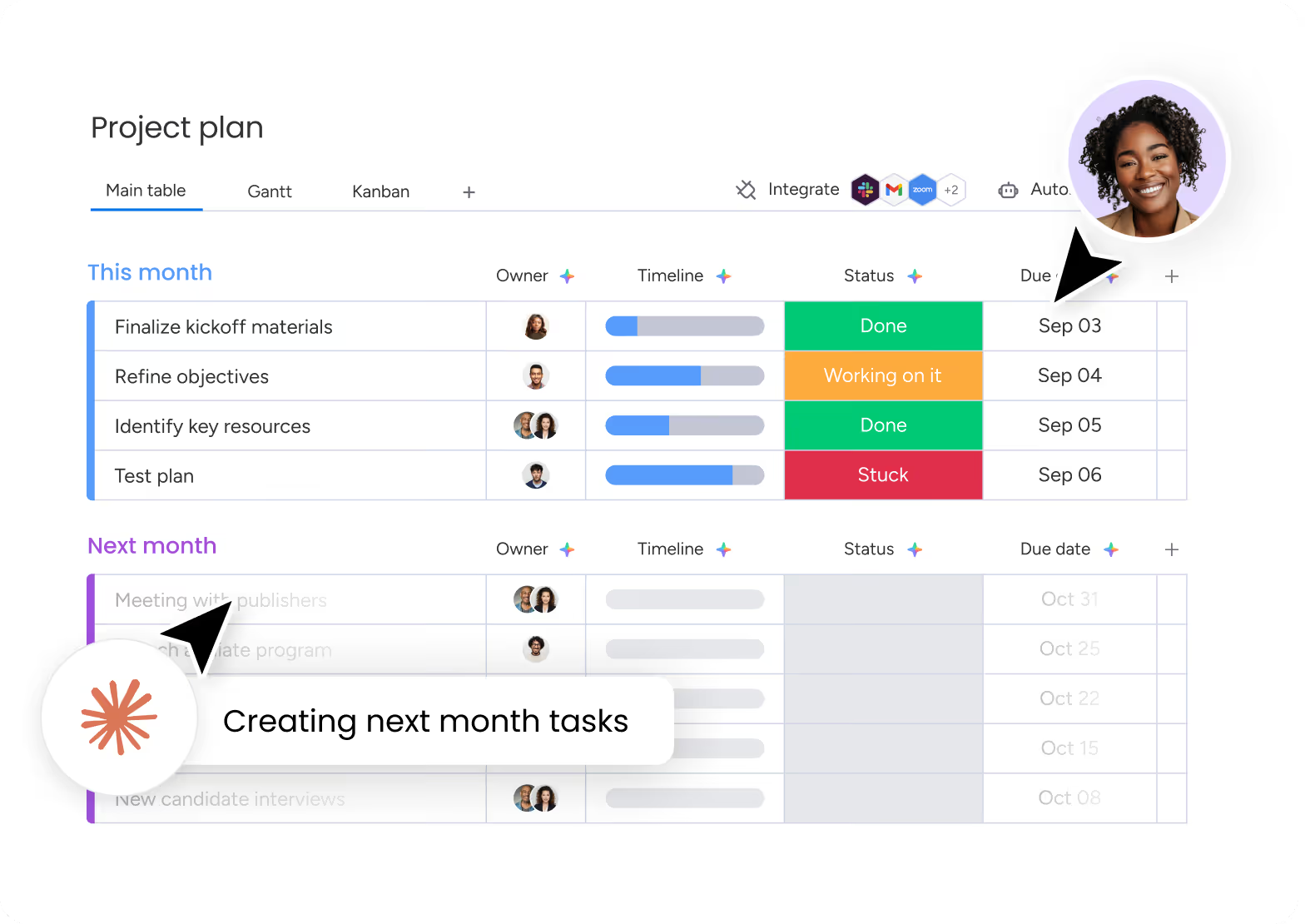
monday.com earns its place. The board metaphor is genuinely legible to people who do not work in engineering, the automation builder is approachable, and monday dev adds sprint management, roadmap planning, a GitHub integration, and an AI sprint summary for teams that want engineering inside the same tenant as the rest of the company. If your problem is that engineering work is invisible to the business, this is a good tool.
Two structural details decide whether it fits an agent-heavy team.
The first is seats. The Free plan covers up to 2 seats, 3 boards, and 3 Docs. Paid Work Management plans list Basic at $9, Standard at $12, and Pro at $19 per seat per month billed annually, with a seat minimum on paid plans, so the entry cost is a multiple of the per-seat figure rather than the figure itself. monday dev prices Basic at $9, Standard at $12, and Pro at $20 per seat annually with a 3-seat minimum.
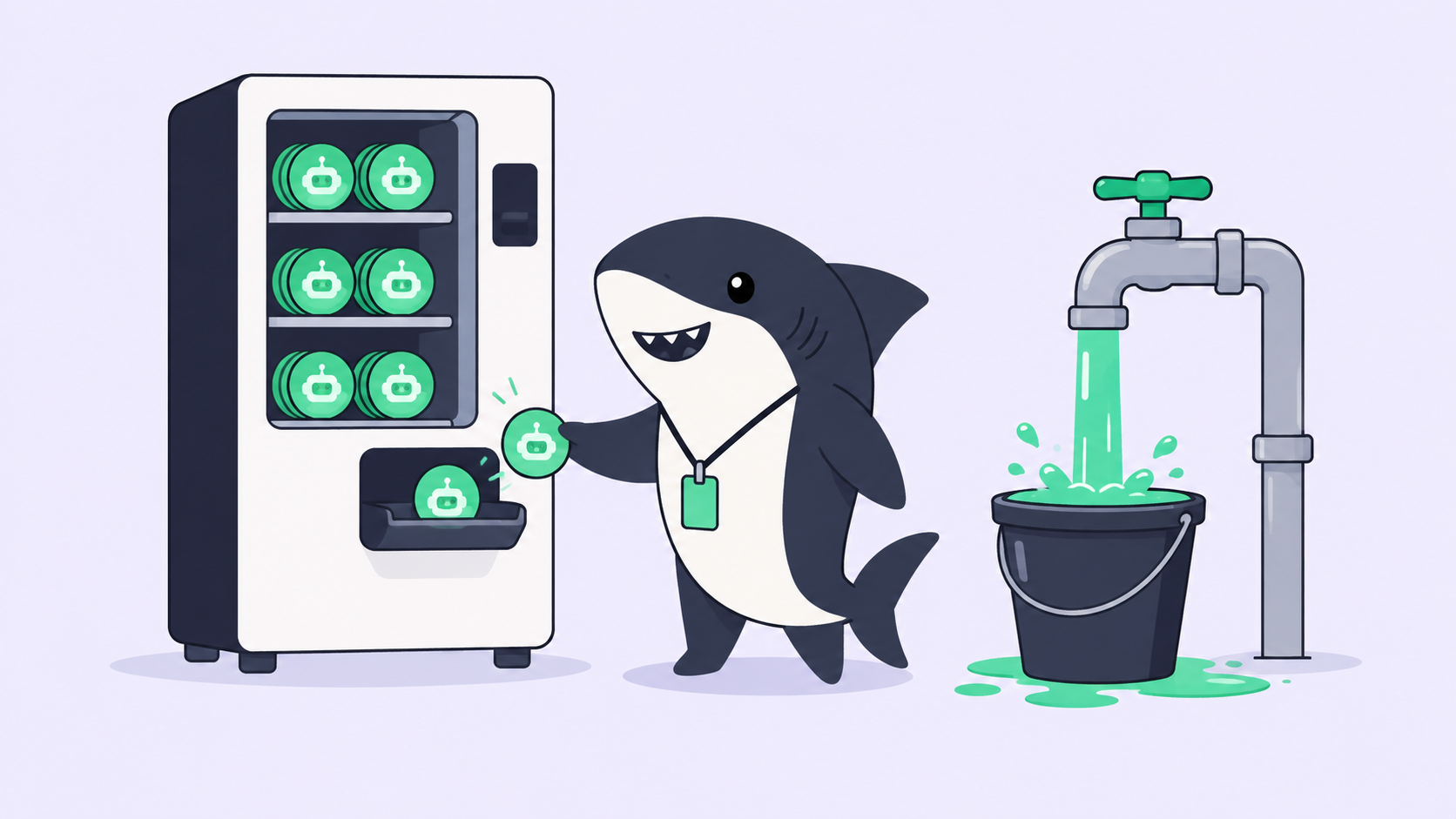
The second is how AI is sold. Credits are allocated monthly by plan: 1,000 on Basic, 2,000 on Standard, 3,000 on Pro, with custom allocations on Enterprise. That is a sensible way to price an assistant that drafts and summarizes for a person. It is the wrong shape for agents that do the work, because the thing consuming tokens is a coding run on your own infrastructure, billed by your own model provider, and a credit meter inside the tracker has no view of it.
The three requirements, sorted honestly
Open-source work managers. Plane, OpenProject, Huly, and Vikunja remove the seat invoice and the hosting question. Plane offers a free self-hosted edition with a Pro tier at $6 per user per month billed annually. OpenProject covers Gantt, agile boards, and time tracking. These are real answers to “open-source alternative to monday.com,” and self-hosting moves cost rather than deleting it. Skip Focalboard, which still appears on lists but is no longer actively maintained.
None of them accepts an Agent as an assignee. Your agents run in terminals beside the tracker, which is the too many terminals problem in a different wrapper.
Open-source agent managers. Multica is Apache-2.0 and manages agents like teammates with a task lifecycle, agent profiles, self-hosting or a cloud, and auto-detection of Claude Code, Codex, OpenClaw, and OpenCode. Emdash is an Apache-2.0 agent development environment with a worktree per task. Orca is MIT and drives 30+ CLI agents. OpenAI Symphony is Apache-2.0 and turns issues in Linear, GitHub, Jira, Asana, or GitLab into isolated Codex runs. These satisfy all three words.
Their trade is the half of monday.com that has nothing to do with agents: cross-functional visibility, sprints a mixed team plans in, views a non-engineer can read, and a review gate that separates finished from accepted. If your organization chose monday.com so marketing and engineering share a surface, no open-source agent manager replaces that today.
Agent-native and currently free. Sharkly is not open-source, and self-hosting is a custom-priced option rather than a download. What it removes is the two pricing frictions above. It is currently free for organizations of up to 10 people with no feature difference from the paid tier, and $7 per user per month billed yearly beyond that. Seats count people. Guests, Agents, Crews, Computers, and Runtimes do not occupy seats, so adding eight agents does not change the bill. Model usage is bring-your-own-key, so runs bill against the Claude Code, Codex, or API plan already attached to the Runtime instead of against a credit balance.
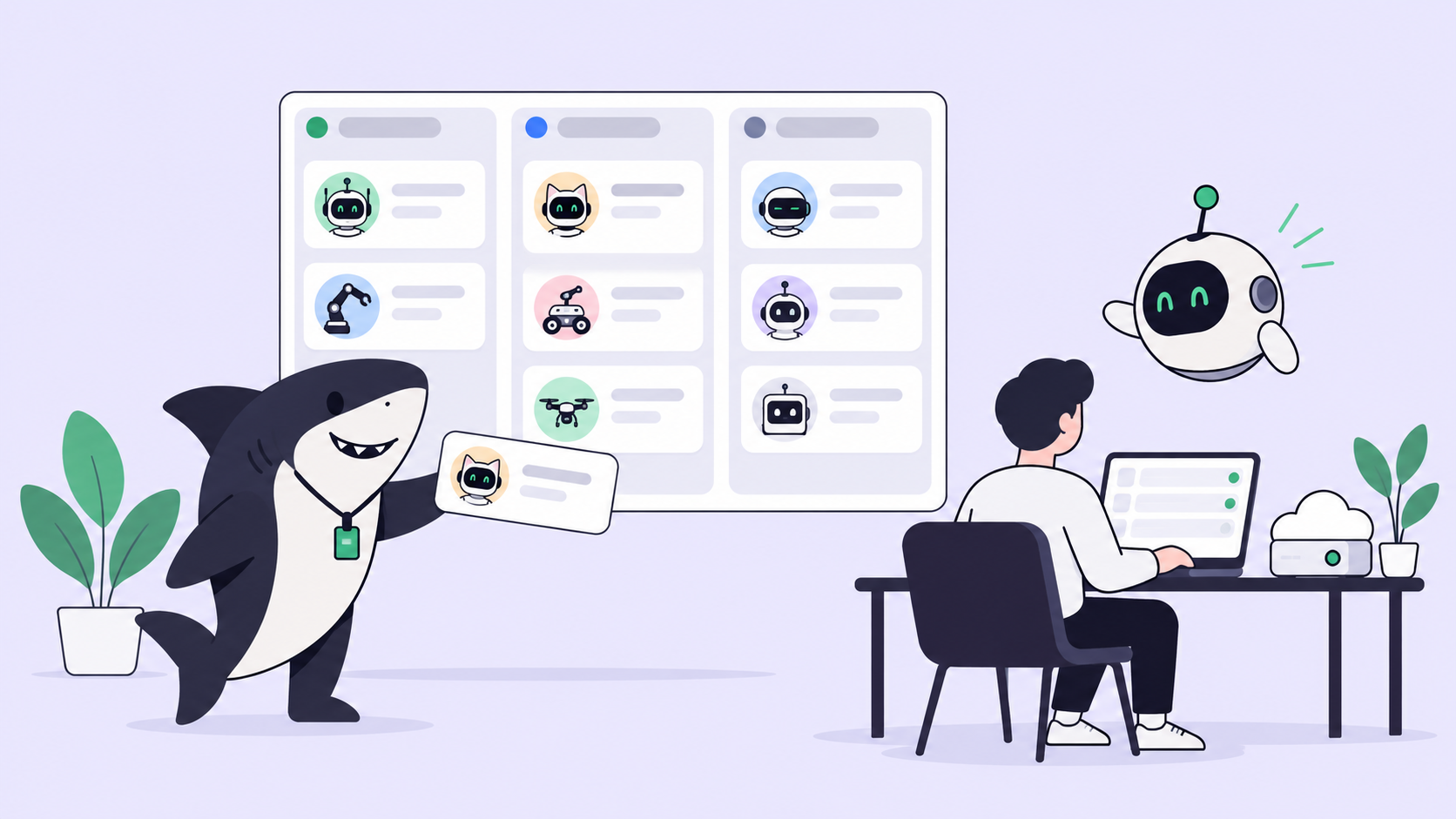
On the third requirement, an Agent is an assignee. Assign a Task, move it out of Backlog, and the run starts on a connected Computer in an isolated worktree, returning results, blockers, and evidence to the Task. A person moves it to Done. Human ownership of agent work covers why that last step stays with a person.
Seat math, side by side
| monday.com | Open-source self-host | Sharkly | |
|---|---|---|---|
| Free tier | 2 seats | Unlimited, your hardware | Up to 10 people |
| Paid entry | $9 per seat per month annually, seat minimum applies | $0 licence, infrastructure and ops time | $7 per user per month billed yearly above 10 |
| Agents cost seats | Not applicable, agents are not assignees | Not applicable | No |
| AI billing | Monthly credit allowance by plan | Your own keys | Bring your own key, Sharkly does not sell tokens |
| Source available | No | Yes | No |
The row that usually decides it is the third. In a per-seat tool, scaling agents is free because agents are not modeled at all; in a credit-metered tool, scaling AI is a variable you watch monthly. In a tool where agents execute, what scales is review capacity, which is a staffing question rather than a billing one.
How to choose without a migration
Start with the requirement you would not trade. If it is source code and data residency, self-host Plane or OpenProject and accept that agent runs stay outside. If it is running agents today with the smallest possible stack, try an open-source agent manager; at three or four engineers you will not miss the planning layer. If it is agents doing real work while people who do not run agents can still see it, that is the gap Sharkly is built for, and the way to test it is not a migration.
Run one real Task through it. Connect one Computer, create one Agent with a narrow role, and give it something read-only, as getting started with Sharkly sets out. Keep monday.com for company-wide planning while you do. If the review loop feels better than a terminal and a status comment, widen it; if it does not, you have spent an afternoon.
FAQ
Does monday.com have a free plan?
Yes, limited to 2 seats with 3 boards and 3 Docs. Paid Work Management plans start at $9 per seat per month billed annually with a seat minimum, so the practical entry cost is higher than the per-seat number suggests.
Can monday.com assign a task to an AI coding agent?
Not as an assignee that executes. monday dev includes an AI sprint summary and the plans include AI credits for assistant-style features. Those help the person doing the work rather than claiming a task, running it on a connected host, and returning a diff for review.
Is Sharkly open-source?
No. A self-hosted deployment is available and priced individually. If published source is a hard requirement, look at Multica, Emdash, Orca, or Symphony instead.
What happens to cost when we add more agents?
In Sharkly, nothing on the seat line: Agents, Crews, Computers, and Runtimes do not occupy seats. Model usage rises on your own provider account, because runs bill against the plan attached to the Runtime. Sharkly pricing explained has the full model.
Can we keep monday.com and run agents somewhere else?
Yes, and many teams do during evaluation. Sharkly ships integrations for Jira, GitHub, and Slack, so GitHub usually becomes the shared evidence trail while monday.com stays the company-wide plan.
Which open-source option is closest to monday.com itself?
OpenProject for breadth and reporting, Plane for a lighter issue-and-cycle model, Huly if you want tracker, documents, and messaging in one suite. All three are self-hostable and none treats an Agent as an assignee.