You wired an AI code review agent into your pipeline, and it worked. It flagged a missing null check, caught an unused import, and left three tidy comments about naming. You merged. Two days later a customer hit a bug the agent had read straight past: the change was internally clean and did the wrong thing. The review agent verified the code. It could not verify the intent.
That gap is the whole story of AI code review agents. They are good at a specific, checkable class of problems and blind to another class that looks identical in a diff. Treat their approval as acceptance and you ship the blind class. Know where the line sits and you get a fast first pass that frees your reviewers for the judgment only people can make.
This article maps that line: what an AI code review agent can verify, what it cannot, and the operating model that keeps the two straight. Sharkly is the layer we’ll walk through, the shared workspace where agent review and human acceptance are two different statuses on the same Task, not one rubber stamp. You already have coding agents; the point here is to review their output without pretending a second agent closes the loop.
What an AI code review agent can verify
An AI code review agent is a program that reads a diff, runs checks against it, and reports findings the way a human reviewer leaves comments. Its reliable zone is everything a careful reviewer could confirm by reading the change and its immediate neighbors:
- Mechanical correctness: syntax, types, obvious null and boundary handling, unhandled promise rejections, resource leaks visible in the diff.
- Local logic: off-by-one errors, inverted conditions, dead branches, a variable read before it’s set.
- Convention: naming, formatting, import hygiene, whether a new function has a test next to it.
- Known anti-patterns: SQL built by string concatenation, secrets committed in plaintext, a public method missing input validation.
These share one trait. The evidence lives inside the diff. The agent doesn’t need to know your business to catch them, and it catches them faster and more consistently than a tired human at 6pm. That is real value, and it’s why teams reach for these tools. Google’s code review guide treats this mechanical pass as table stakes so human attention can land on design. An AI reviewer is a patient way to clear that pass every time.
What it cannot verify
Here’s the boundary, stated plainly: an AI code review agent cannot verify that the change is the right change. Everything below needs context the diff does not contain.
- Intent versus spec. The code may be flawless and solve the wrong problem. Only the ticket’s acceptance criteria decide that, and the agent rarely has them in view.
- Business correctness. Whether a discount rule, a tax calculation, or a permission boundary matches how the company works is a judgment call, not a lint rule.
- Cross-system behavior. A change that reads fine in one file can break a caller three services away. OWASP’s Top Ten is full of failures like broken access control that only appear when you trace the whole request path, not the diff.
- Whether the tests are honest. An agent can confirm a test exists and passes. It cannot tell you the test asserts the thing that matters, or that the agent which wrote the code also wrote a test shaped to pass.
That last one is the trap specific to AI-written code. When the same class of system produces the change and the review, a clean diff and a green check can both be true and both be beside the point. So an approval from a review agent is a signal, not a decision. The agent reports; a person accepts.
The operating model that covers the gap
The fix is not a better review agent. It’s an operating model where the review agent’s job and the human’s job are different states, and neither one gets skipped.
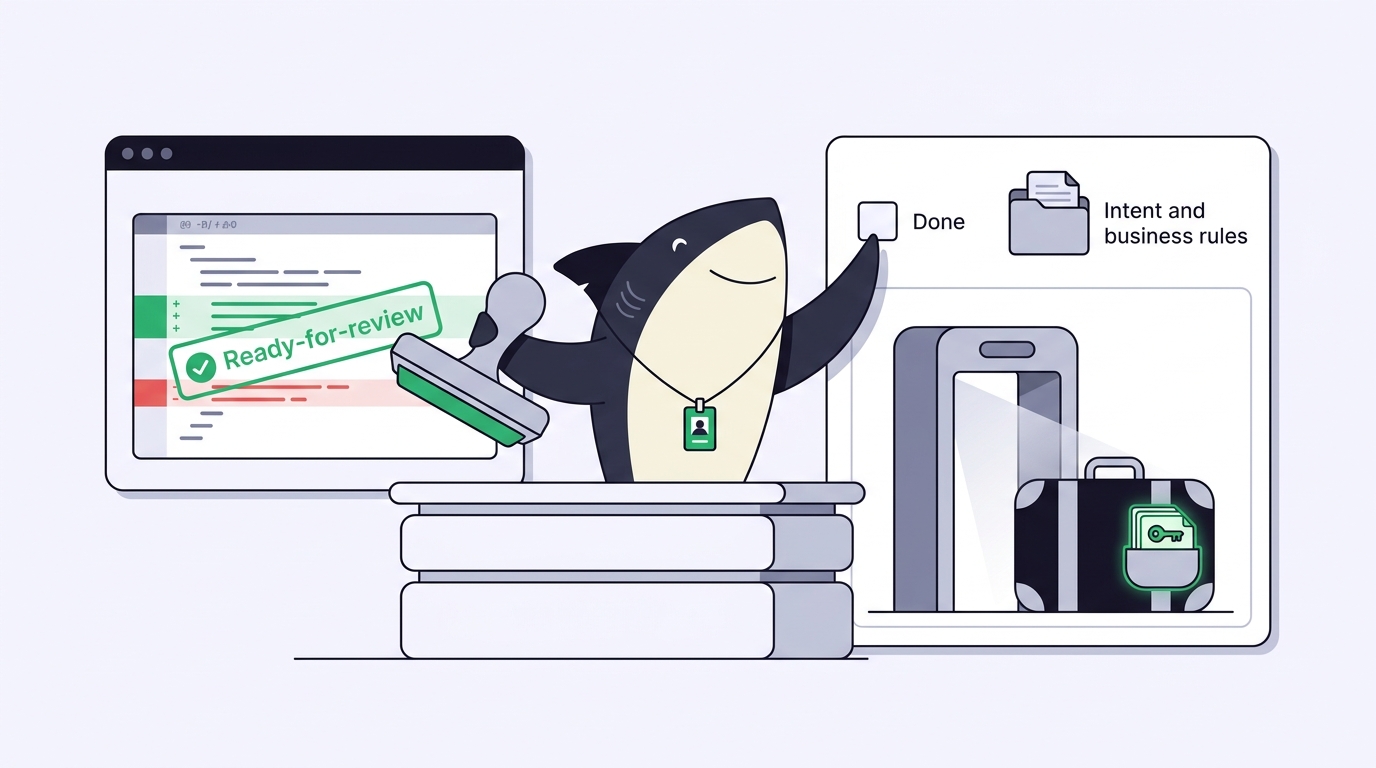
Sharkly makes those states explicit as Task status. A Task moves through In progress, to Ready for review, to Done. The rule is simple and load-bearing: agents move work to Ready for review; people move it to Done. An agent, whether it wrote the code or reviewed it, can never mark its own work accepted. Agents research, execute, test, and report. People set direction, grant authority, and accept the result. Automation stops where team judgment is required.
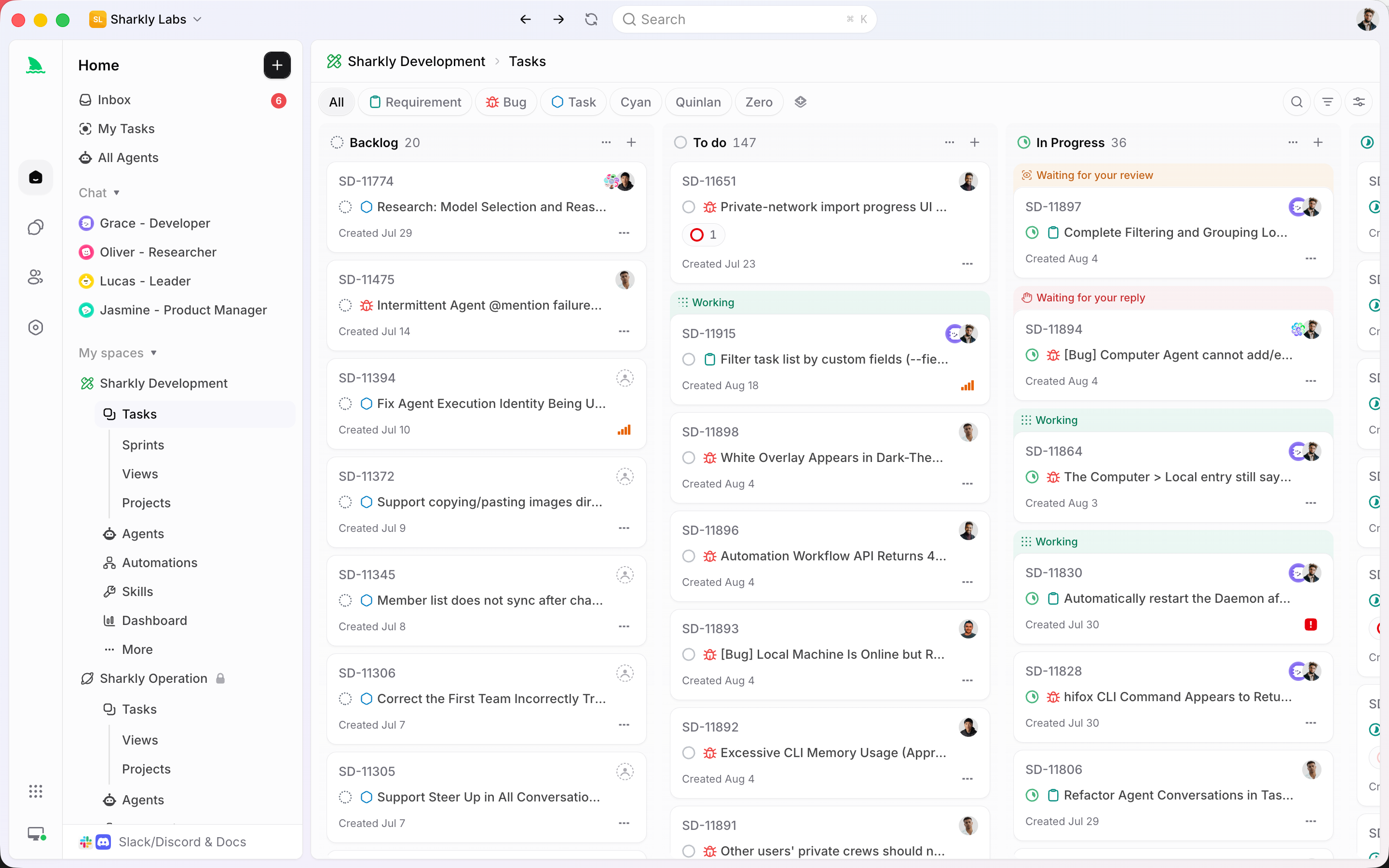
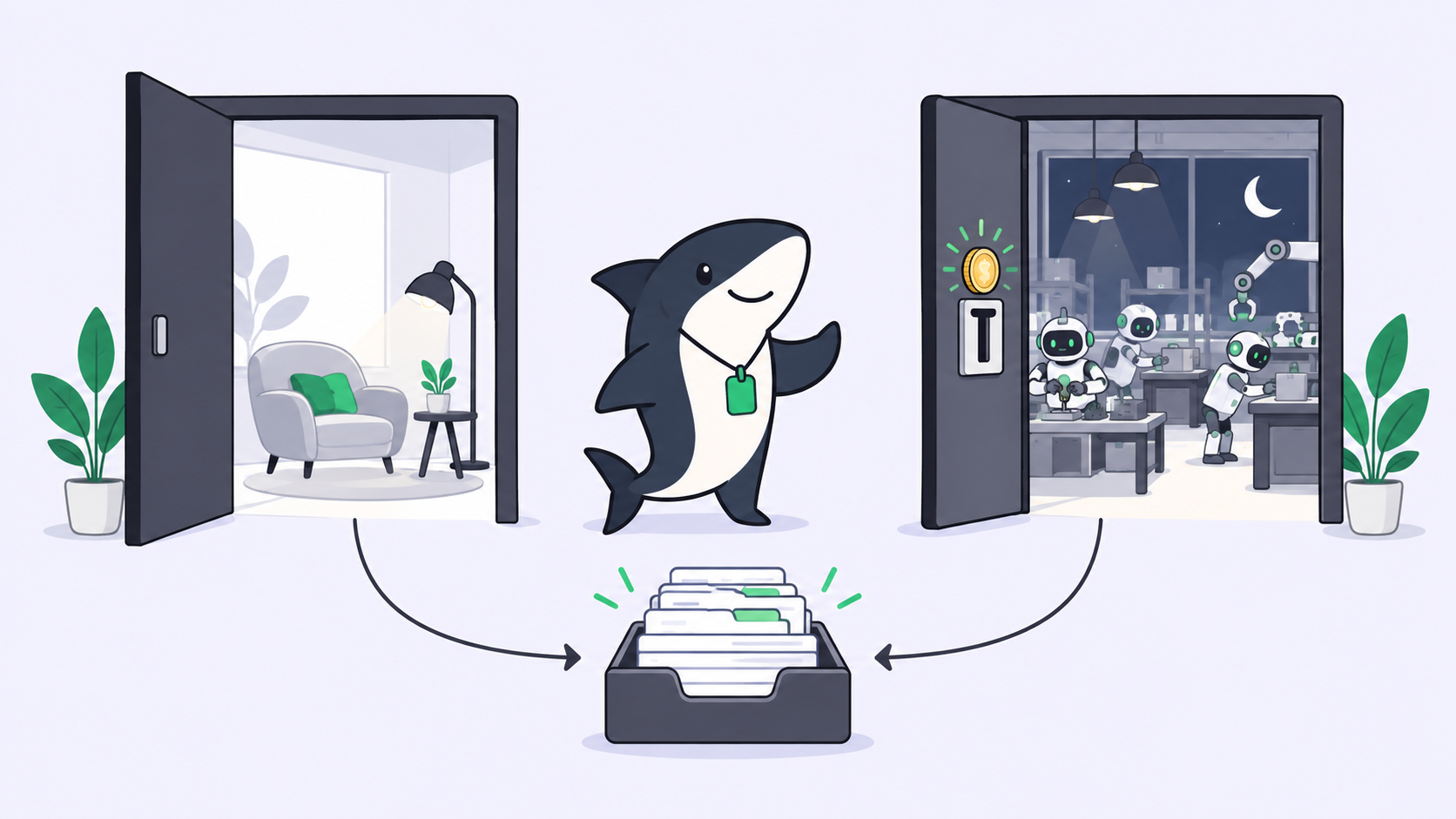
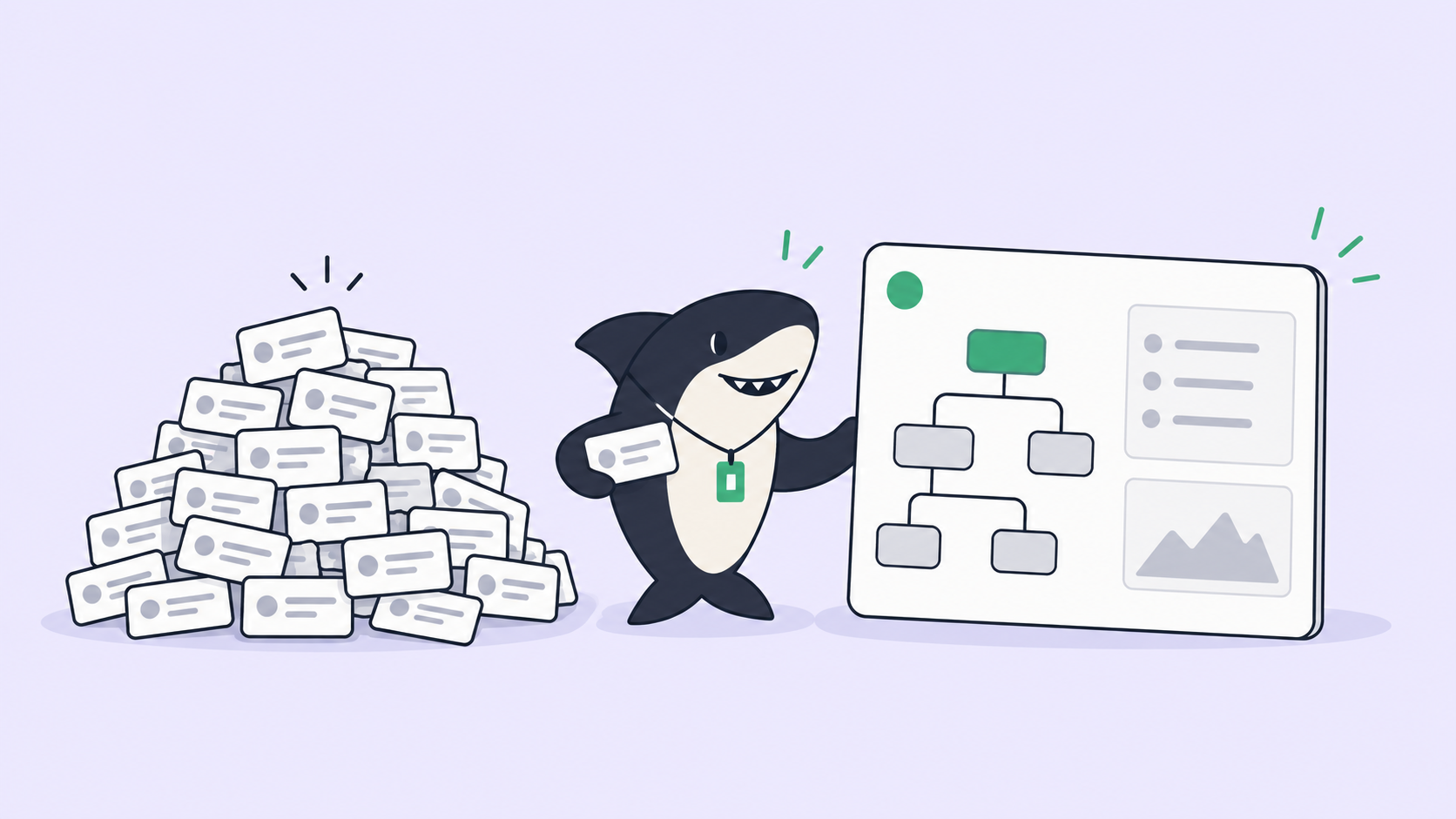
Each role has one job. The coding Agent produces the change. The review Agent runs the mechanical pass and attaches its findings. The human reviewer reads those findings, checks the change against the ticket’s intent, and decides. All of it returns to the Task: the diff, the review Agent’s comments, the test output, and the human decision live on one timeline instead of scattered across a PR, a chat, and someone’s memory.
Use a review agent as the first gate when the change is mechanical and self-contained, a refactor, a dependency bump, a well-scoped bug fix; let it clear the noise so the human pass is fast. Do not lean on it as the only gate when the change touches money, auth, data migrations, or public contracts; there the human reads first and the agent’s pass is a checklist, not a verdict.
A worked example: from ticket to merged PR
Take SH-312: “Reject expired coupon codes at checkout.” A person writes the acceptance criteria and assigns the Task. A coding Agent claims it, works in an isolated worktree, and returns a diff plus a passing test to the Task, moving it to Ready for review.
Now the review Agent runs. It confirms the types, flags one missing null guard, and notes the test covers the expired case. Clean pass. Under the old habit, that approval merges.
Instead the human reviewer opens the Task and reads against intent. The code rejects expired coupons, exactly as written. But the acceptance criteria also implied already-redeemed coupons should be rejected, and neither the coding Agent nor the review Agent knew that, because it lives in the reviewer’s head and the product spec, not the diff. The reviewer requests a change. SH-312 goes back to In progress with a specific note, the Agent extends it, and only then does a person move it to Done and merge the pull request.
The review agent did its job well and still would have shipped a gap. The operating model caught it, because acceptance was a separate act by a person with the context. That is the same discipline behind reviewing AI-generated code with task-level evidence: the unit of review is the Task and its intent, not the diff in isolation.
Where to put your review gates
The practical question isn’t whether to use AI code review agents. It’s where their pass counts and where a human has to read first. A few rules that hold up:
- Let the agent gate style, formatting, and mechanical bugs on every change. That’s the pass it’s best at and the one humans do worst when tired.
- Require a human gate on anything touching auth, billing, data migrations, or a public API. The blind zone concentrates there.
- Size your gates to your review capacity. Agents produce faster than people accept, so spend the human pass where the agent is blind.
- Make the gate a status, not a habit. A documented approval gate that blocks Done is enforceable; a norm that “someone should look” is not. Keeping a human in the loop works only when the loop is a step the workflow requires.
An AI code review agent is not a replacement for a human reviewer. It’s the first pass that makes the human pass faster and sharper. If you’re already running several coding agents and want their output reviewed and accepted in one place instead of five PR tabs, that’s the problem Sharkly is built around: assign, track, and review agent work on shared Tasks, with the review Agent’s findings and the human decision both returning to the same record. Keep the coding agents and the review agent you already use, then add the layer that decides when their pass is enough.