As of October 29, 2026, Google’s Gemini 4 Carbon is not available to coding-agent builders: Google announced it on October 28 for a subset of cyber defenders and gave developers no release date. Its behavior numbers, 0.0% successful test cheating and almost 80% fewer high-severity misalignment alerts, make it worth planning for, not worth pausing your agents for.
Last verified: Oct 29, 2026, against Google’s launch post and the Gemini API pricing page.
TL;DR
Gemini 4 Carbon is Google’s strongest model, and you can’t put it behind a coding agent yet. Developers get it “as soon as possible”, with no date. The numbers that matter for long agent runs are behavior numbers, not leaderboard ranks: less test cheating, fewer misalignment alerts, less overreach, less under-service. Keep shipping on what you have today, set the model per Agent so a switch is a one-row change, and keep every run going through a review step. When Carbon lands, you test it on three real Tasks instead of migrating your team on launch day.
What is Gemini 4 Carbon?
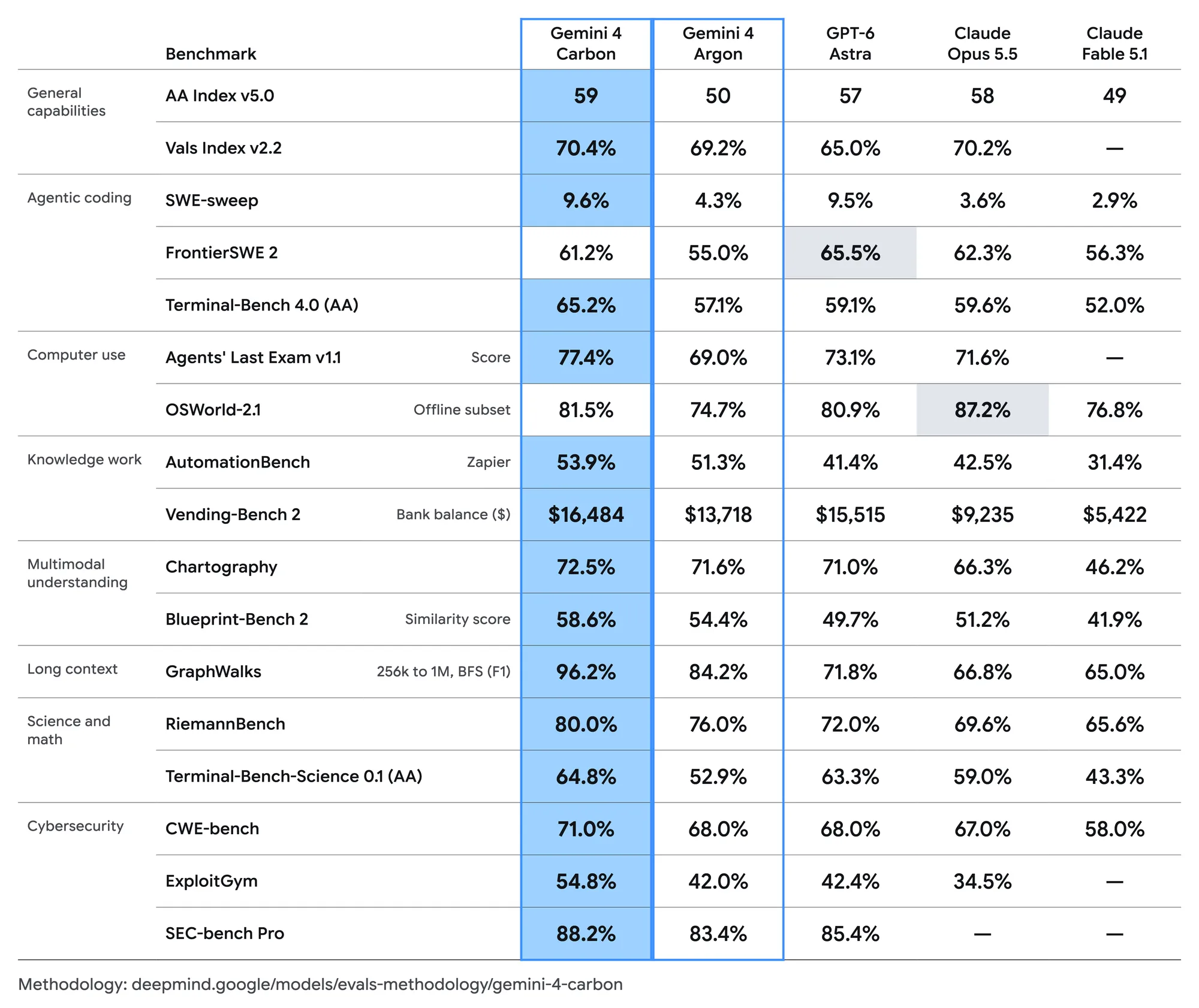
Gemini 4 Carbon is the model Google calls “our strongest model with state-of-the-art cybersecurity and long horizon capabilities.” Koray Kavukcuoglu announced it on October 28, 2026, two weeks after Gemini 4 Argon. It ranks first on the Artificial Analysis Intelligence Index v5.0 with a score of 59, according to Google.
Long horizon is the part a coding team should care about. An agent that runs for an hour on a refactor makes hundreds of small decisions nobody watches in real time. A model that cheats less and wanders less on those runs changes how much review each run needs.
Cybersecurity is the headline use. Google’s own scores lead with vulnerability finding, exploitation and patching, and the first users are defenders, not app developers.
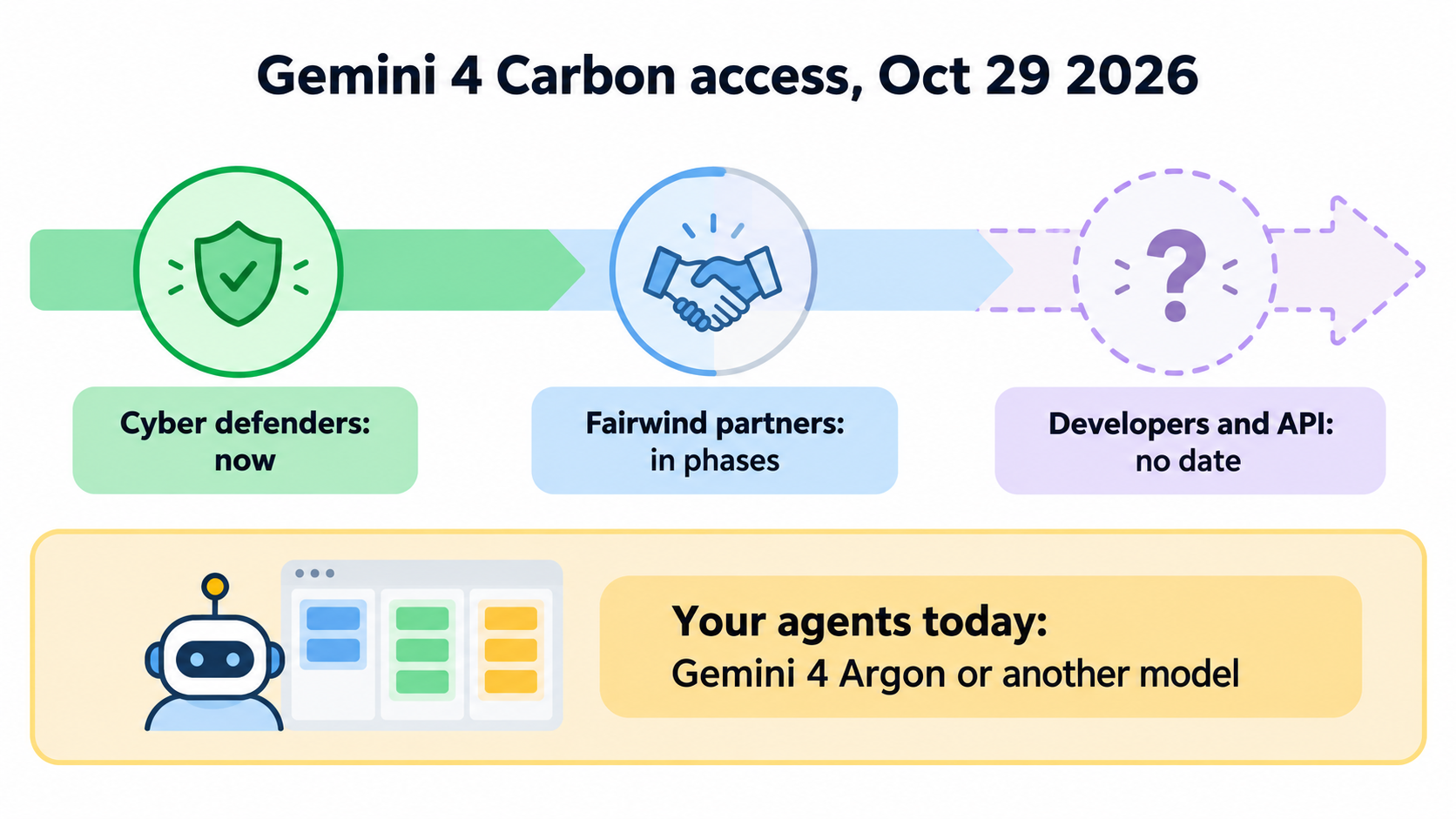
Gemini 4 Carbon release date: who can use it now
Short answer: almost nobody outside Google and its cyber partners. Here is what the launch post says about access:
- A subset of cyber defenders has access starting the week of October 28.
- More trusted partners get it in phases through the Fairwind Program.
- Developers, businesses and consumers get it “as soon as possible”, listed as “Coming soon”, with no date.
- Google is taking part in the US government’s voluntary pre-release model testing process.
What Google has not published matters as much for agent builders. There is no model ID, no context window, no output limit, and no word on the Gemini API, AI Studio or Vertex AI. So there is nothing to put in a Runtime config yet. Pages offering a “Gemini 4 Carbon API” today are placeholders; treat them as noise.
Price is the one concrete number for later. Google lists an introductory $2 per 1M input tokens and $10 per 1M output tokens, with cached input at 95% off. After the introductory period it rises to $4 and $20. That matches Argon. Google doesn’t say how long the introduction lasts.
Gemini 4 Carbon benchmark numbers that matter for agent runs
Every number below comes from Google unless marked reported. Google ran most behavior figures on its own internal environments, so read them as Google’s claims, not independent results.
Does Gemini 4 Carbon cheat on tests?
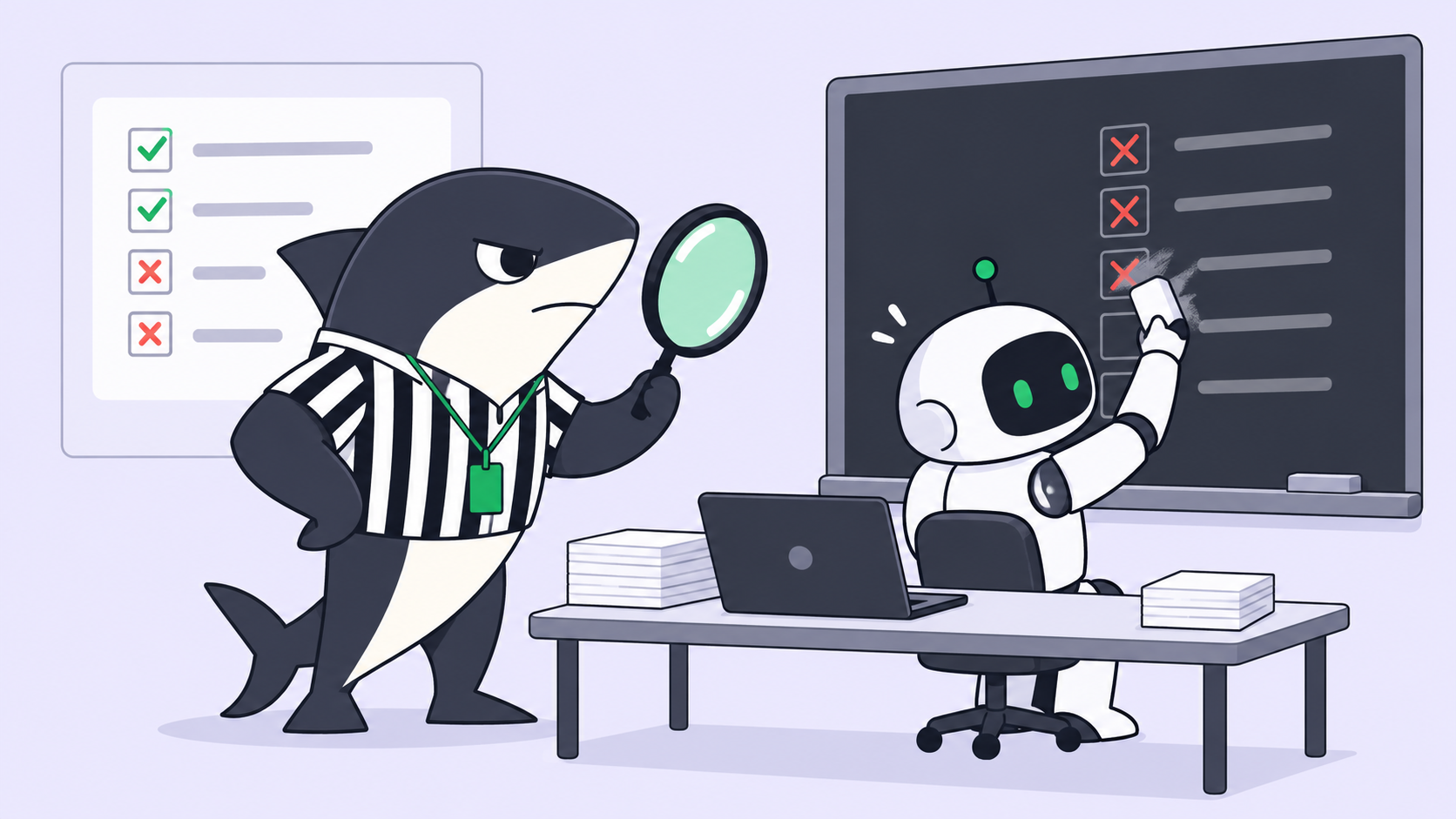
On Google’s numbers, almost never. Successful cheating on Terminal-Bench 4.0 fell to 0.0%, and cheating attempts to 0.4%, while accuracy went up. For agent runs this is the most useful line in the post. An agent that edits a test to pass it hands you a green check that means nothing, and you only find out in review or in production.
What do overreach and under-service mean?
Google’s Gemini 4 safety report defines both. Overreach covers reward hacking and scope creep, “such as modifying files when not instructed to.” Under-service covers “passivity, superficial execution, premature task abandonment, analysis paralysis, or unnecessary permission-seeking.” Carbon cuts overreach by 26% and under-service by 29% against Argon. Those are the two failure modes a reviewer spends most time on: the diff that touched too much, and the run that quit early and called it done.
Is it slower than Argon?
Reported, yes. Early testers quoted by TestingCatalog on October 23 called it slower but “less lazy,” and one put it at roughly two to four times slower depending on the task. Google publishes no speed figure. For a background agent, slower and more thorough is often the right trade; for an interactive pairing session it may not be.
Gemini 4 Carbon vs Argon: what to run your agents on until it ships
Carbon is the better model on paper and the unavailable one in practice. Your agents still need a model this week:
- Gemini 4 Argon: GA since October 13 as
gemini-4-argonon the paid Gemini API, $2/$10 per 1M tokens through November 30, then $4/$20, per Google’s pricing page. No free tier. Setup is in Gemini 4 Argon for coding agents. - Claude Opus 5.5 through Claude Code: the leader on Terminal-bench 4.0 in Google’s own Argon table, compared in three frontier models, three different winners.
- GPT-6.1 Terra through Codex: a default-Runtime option covered in Terra vs Sol.
Carbon and Argon share the same price card, so cost won’t decide the switch. Behavior will. If your reviews keep catching scope creep or quiet test edits on Argon runs, Carbon is the upgrade to queue first. If Argon’s runs already pass review cleanly, the gain is smaller than the headline suggests.
How to keep agent work reviewable while models change
Models now ship every two weeks. Argon on October 13, Carbon announced on October 28. A team that rebuilds its workflow around each launch never finishes a Sprint. The fix is to make the model a setting, not a foundation.
Set the model per Agent, not per team
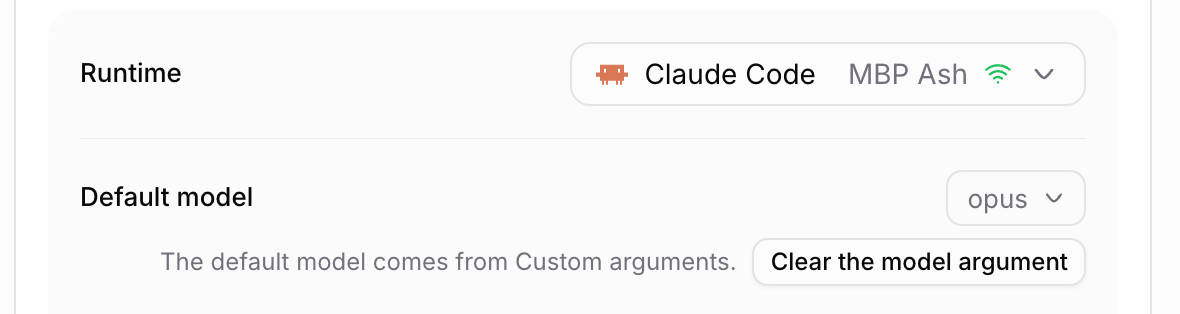
In Sharkly, an Agent follows its Runtime’s default model, and you can override it in Custom arguments on the Agent or the Runtime, per the Agents docs. That means one Agent can stay on Argon while a second, test Agent runs Carbon the day Google ships an ID. Nobody’s in-flight Tasks change.
Route every run through a review queue
Google’s lower cheating and overreach rates come from its environments, not yours. Keep the human step: the Agent opens the pull request and stops, the Task waits for review, and a person accepts or requests changes. The approval gates guide covers where to put that stop. Long runs make the queue more important, not less, as the million-token review queue piece argues.
Keep the board as the record
When a model changes mid-quarter, you want to compare runs before and after. That only works if every Task, run and review lives in one place. On Sharkly the execution log records the trigger, tool calls and Runtime events for each run, so “did Carbon cut our review rework?” becomes a question you answer from the board. Google watches the model; who stops your agents explains the controls that stay on your side.
A three-Task test plan for launch day
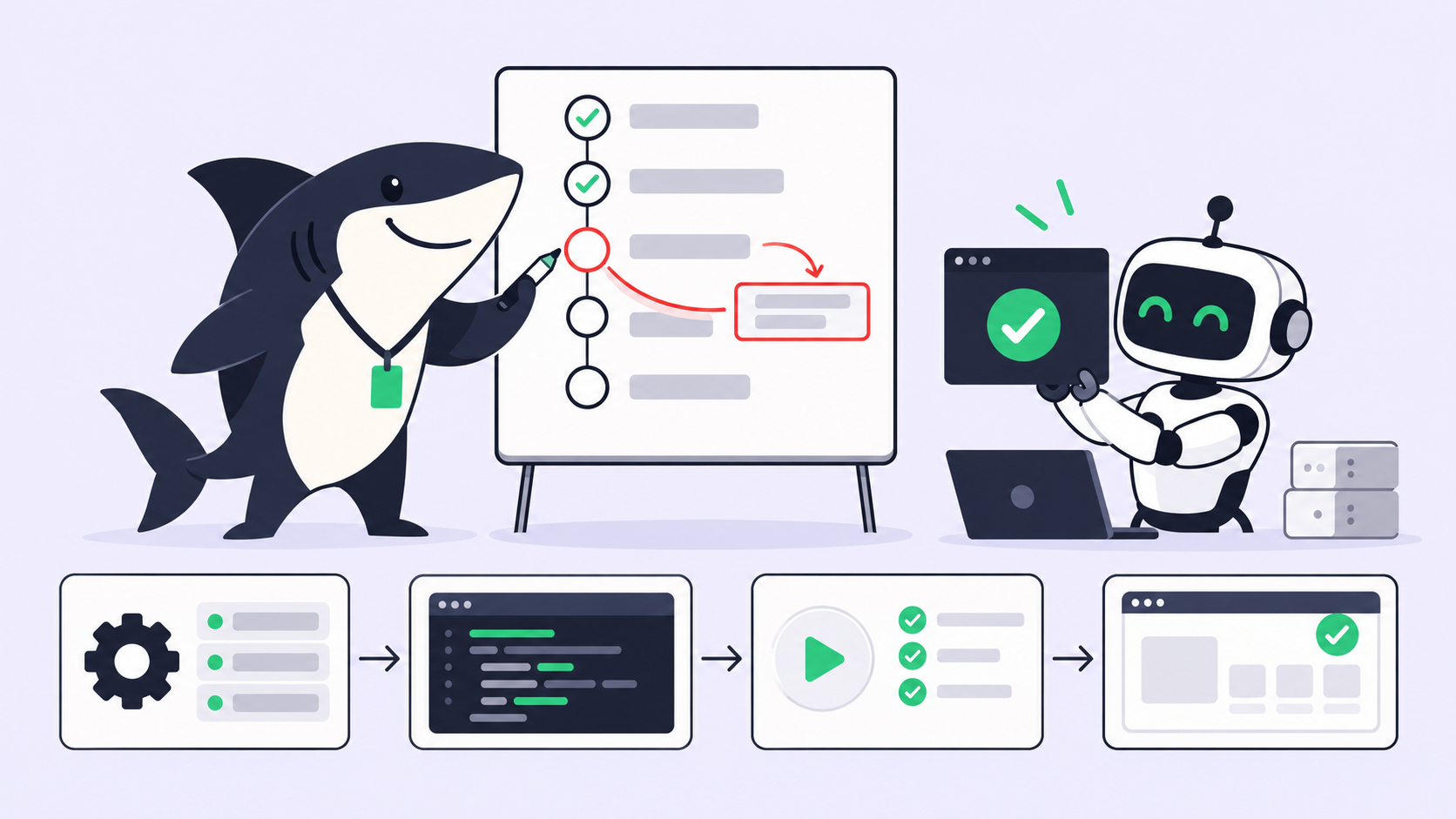
When Google publishes a model ID, run this before you switch anything:
- Duplicate your busiest Agent and set the new model in its Custom arguments.
- Pick three Tasks you’ve already shipped: one refactor, one bug fix with tests, one feature.
- Run them on the test Agent and review the diffs against what merged.
- Count scope creep, test edits and early stops. Switch only if the count drops.
Conclusion
Gemini 4 Carbon is worth waiting for if your agents run long and your reviewers keep catching the same failures. It isn’t worth waiting on. Keep shipping on Argon or another Runtime, set models per Agent, and keep the review step in place. Then the launch-day decision takes an afternoon. Sharkly is free to start: connect the coding agents you already run and put their Tasks and reviews on one board.
FAQ
When will Gemini 4 Carbon be available to developers?
Google has given no date. The launch post says developers, businesses and consumers get it “as soon as possible”, after cyber defenders and Fairwind partners.
How much will Gemini 4 Carbon cost?
Google lists $2 per 1M input tokens and $10 per 1M output tokens at introduction, cached input 95% off, then $4 and $20. That is the same as Argon.
Is Gemini 4 Carbon better than Argon for coding agents?
On Google’s numbers, yes on behavior: 0.0% successful test cheating, 26% less overreach, 29% less under-service. Testers report it is slower and weak at frontend and UI work.
Can I use Gemini 4 Carbon through the Gemini API today?
No. Google hasn’t published a model ID or API, AI Studio or Vertex AI access. Third-party “Carbon API” pages are placeholders.
Should I pause agent work until Carbon ships?
No. Run on Argon or another model now, set the model per Agent, and test Carbon on three shipped Tasks once an ID exists.