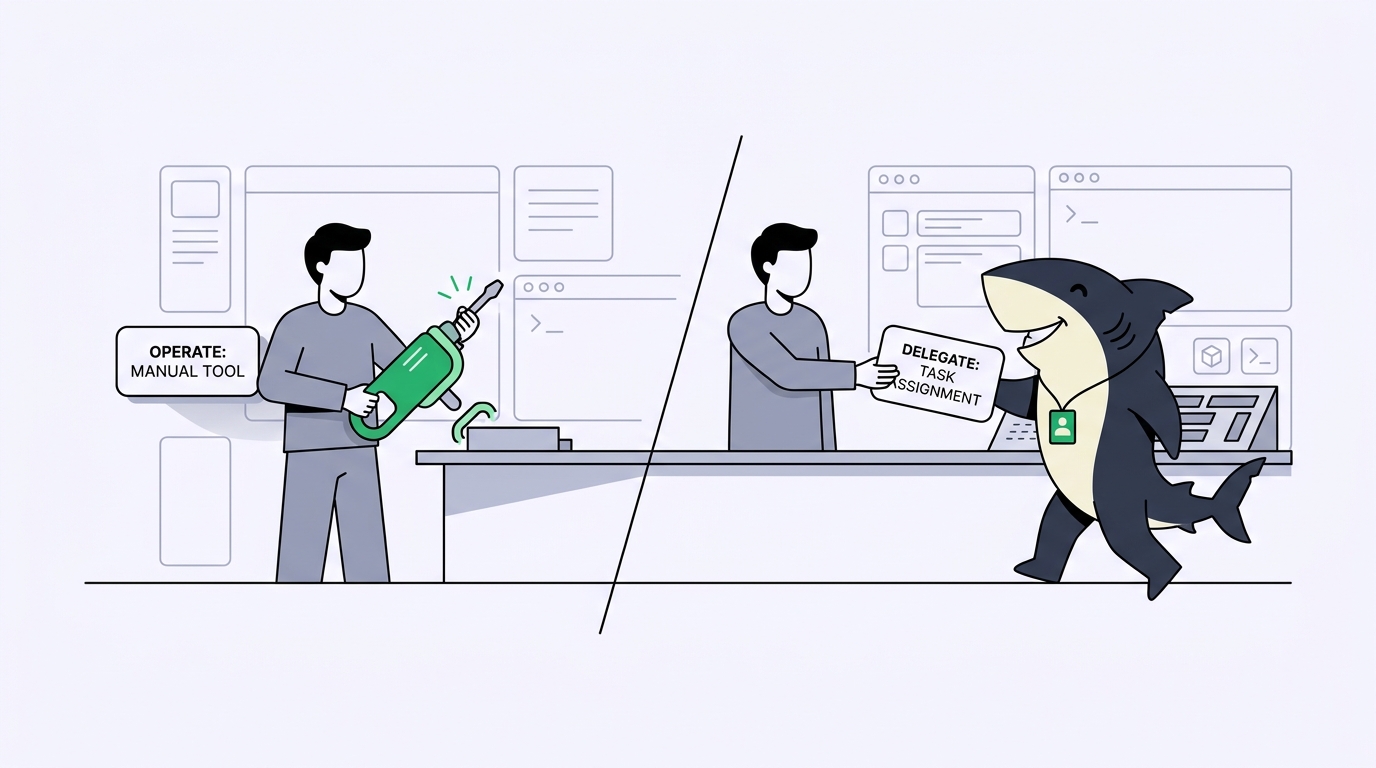
An assistant waits for you. A teammate carries work you are not watching. That single difference explains most of the confusion in the current AI-at-work conversation, and it decides which parts of your process have to change.
Both patterns are useful, and neither is a stage the other grows out of on its own. What changes is where the work lives, who is accountable for it, and how anyone else finds out what happened. This guide draws the line between an AI assistant and an AI teammate, lists the five things that actually change in a team’s week, and is direct about where the teammate metaphor stops being helpful. Sharkly exists because of the second pattern, so the boundaries below are stated plainly rather than sold.
TL;DR
An AI assistant works inside your session: you prompt, it answers, the value is in your context and disappears when you close the window. An AI teammate is assigned a unit of work with a stated outcome, executes it somewhere the team can see, and reports back to a record that outlives the session. Moving from one to the other does not require better models. It requires assignment, a visible execution trace, a review state, and a person who accepts the result.
The definitions worth keeping
An AI assistant is prompt-scoped. You are present for the whole thing. The work product is a suggestion you accept or discard, and the accountability question never comes up because you never left. Autocomplete, chat, and inline refactoring all live here.
An AI agent, working as a teammate, is task-scoped. It gets a goal, constraints, and enough context to proceed. It researches, executes, tests, and reports. You are not present for the middle. That absence is the whole point, and it is also the source of every new requirement below. Our definition piece on agentic coding walks the same ladder from a different angle.
The dividing question is not intelligence. It is this: if you close your laptop, does the work continue, and can a colleague tell what happened?
What actually changes at work
1. Work becomes an item, not a message. With an assistant, the request is a chat turn. With a teammate, the request has to survive being read by someone who was not in the room: a stated outcome, what is in and out of scope, relevant files, constraints, and how completion will be reviewed. Teams that skip this write vague tasks and blame the model.
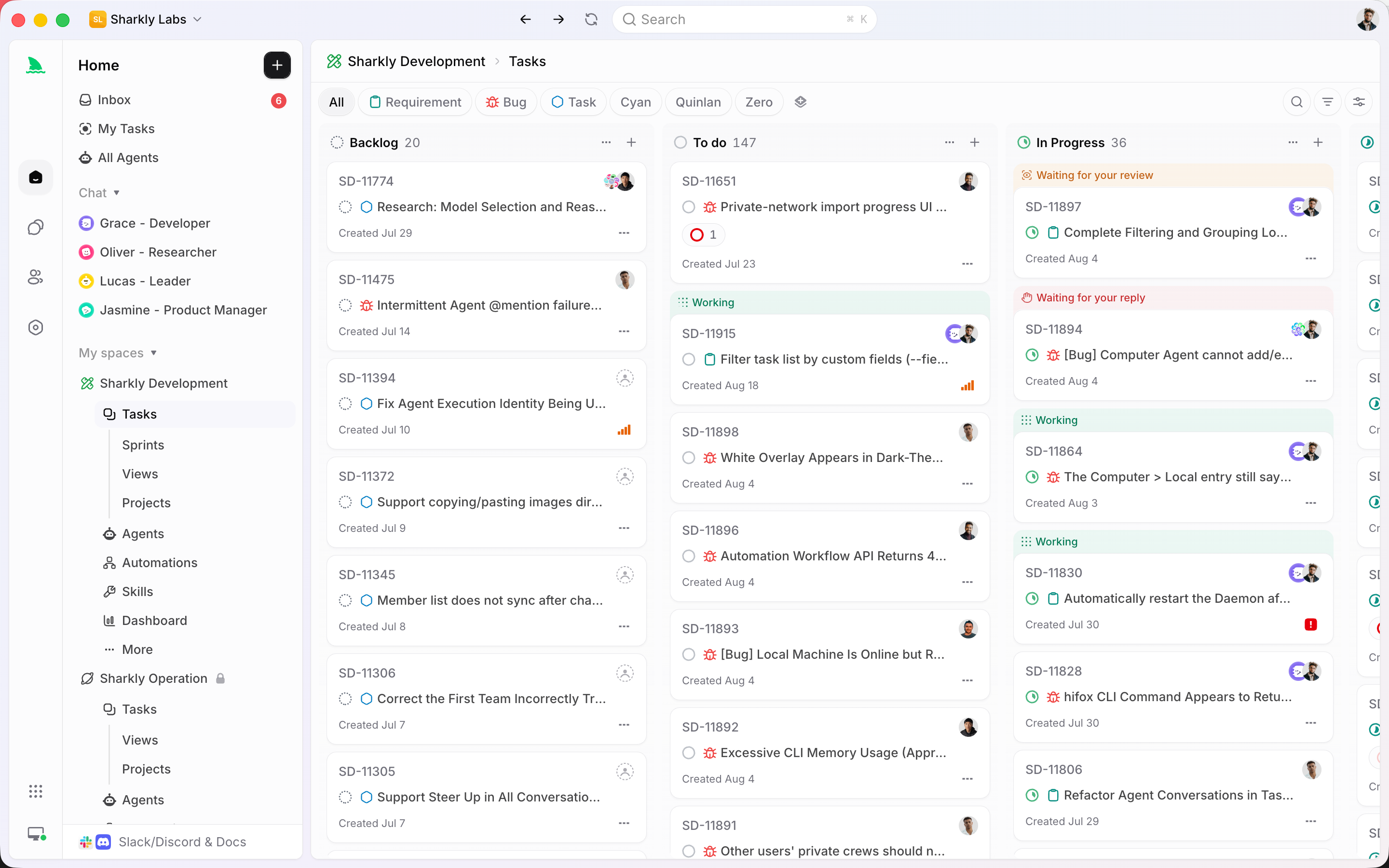
2. Assignment splits in two. A person stays responsible for the outcome. An agent executes. Tools that collapse those into a single assignee field produce boards where nobody can be asked about anything. Sharkly keeps human assignees and the execution assignee as separate fields on the same task, so both facts are recorded at once.
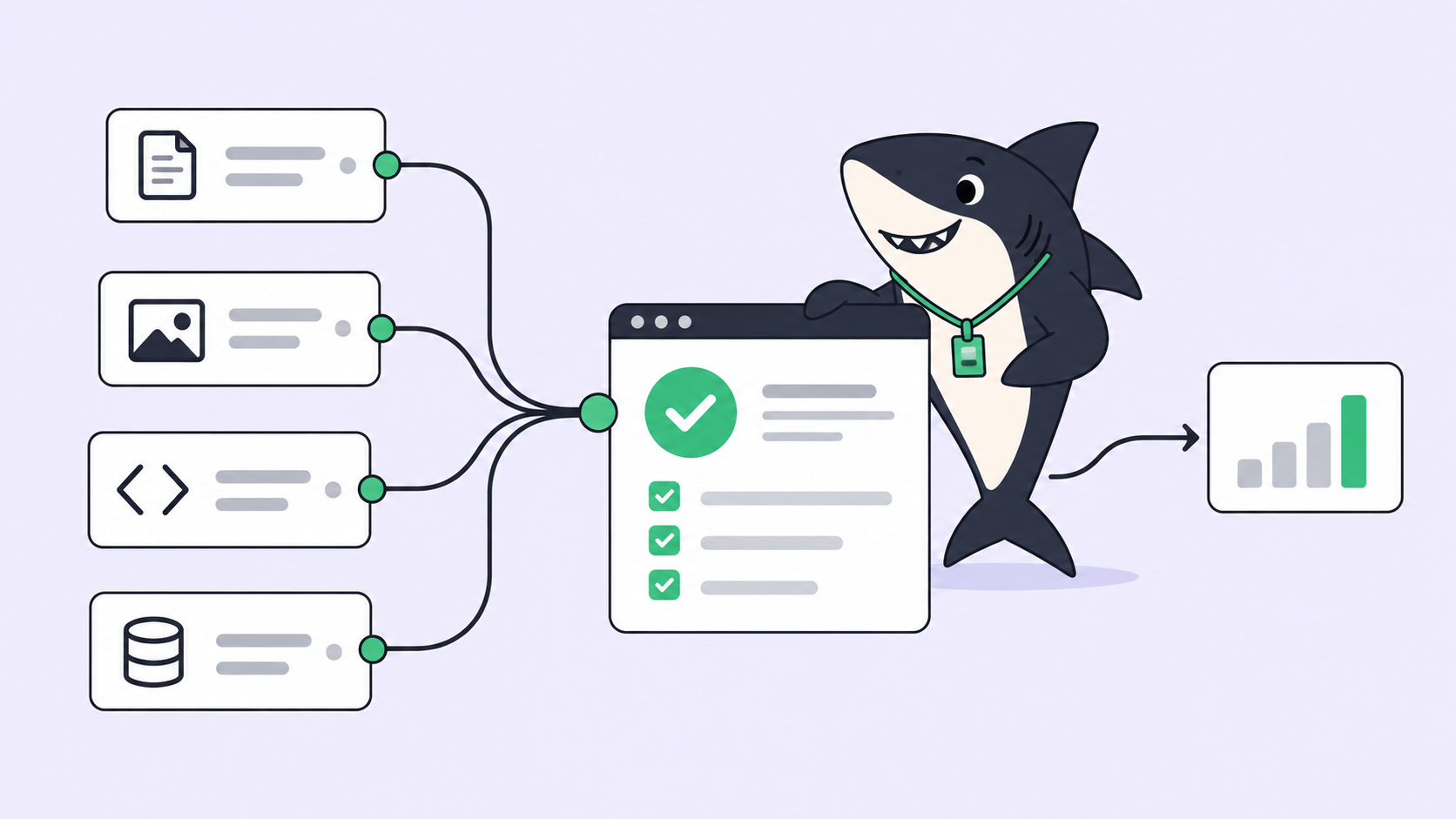
3. Visibility stops being optional. An assistant’s work is visible because you watched it. A teammate’s work is visible only if the platform streams progress, comments, blockers, and a trace back to a shared record. Otherwise the honest status of half your work is “ask Priya, she started it.”
4. Review becomes a named state. Not “someone will look at it eventually” but an explicit waiting-for-human-review signal that reaches a queue. In Sharkly that signal lands in the agent inbox of the responsible person alongside failures and direct questions.
5. Capability becomes shared, or it stays personal. One developer’s prompt craft is an assistant trick. Saved as an agent configuration with instructions, runtime, repositories, and reusable skills, it becomes something the next person inherits instead of rediscovering.
| Dimension | AI assistant | AI teammate |
|---|---|---|
| Unit of work | A prompt | A task with acceptance criteria |
| You are present | Always | For direction and review |
| Where output lands | Your editor or chat | A shared record with a trace |
| Accountability | Implicitly yours | A named person, explicitly |
| Failure mode | Bad suggestion, discarded | Silent work nobody reviews |
| Reuse | Personal habit | Saved configuration and skills |
A week that looks different
The changes show up in the calendar before they show up in the metrics.
Standup stops being a status broadcast, because the board already carries status. What is worth five minutes is the exception list: which runs failed, which results are waiting on a human, which task turned out to be written badly enough that the agent guessed. That list is short and it is actionable, which is more than most standups manage.
Planning changes shape too. When a task has to be specific enough for an agent to execute, refinement moves earlier and gets more concrete: acceptance criteria stop being a formality because a vague one produces a run you have to throw away. Teams usually notice this as writing more scope up front and losing less time mid-sprint.
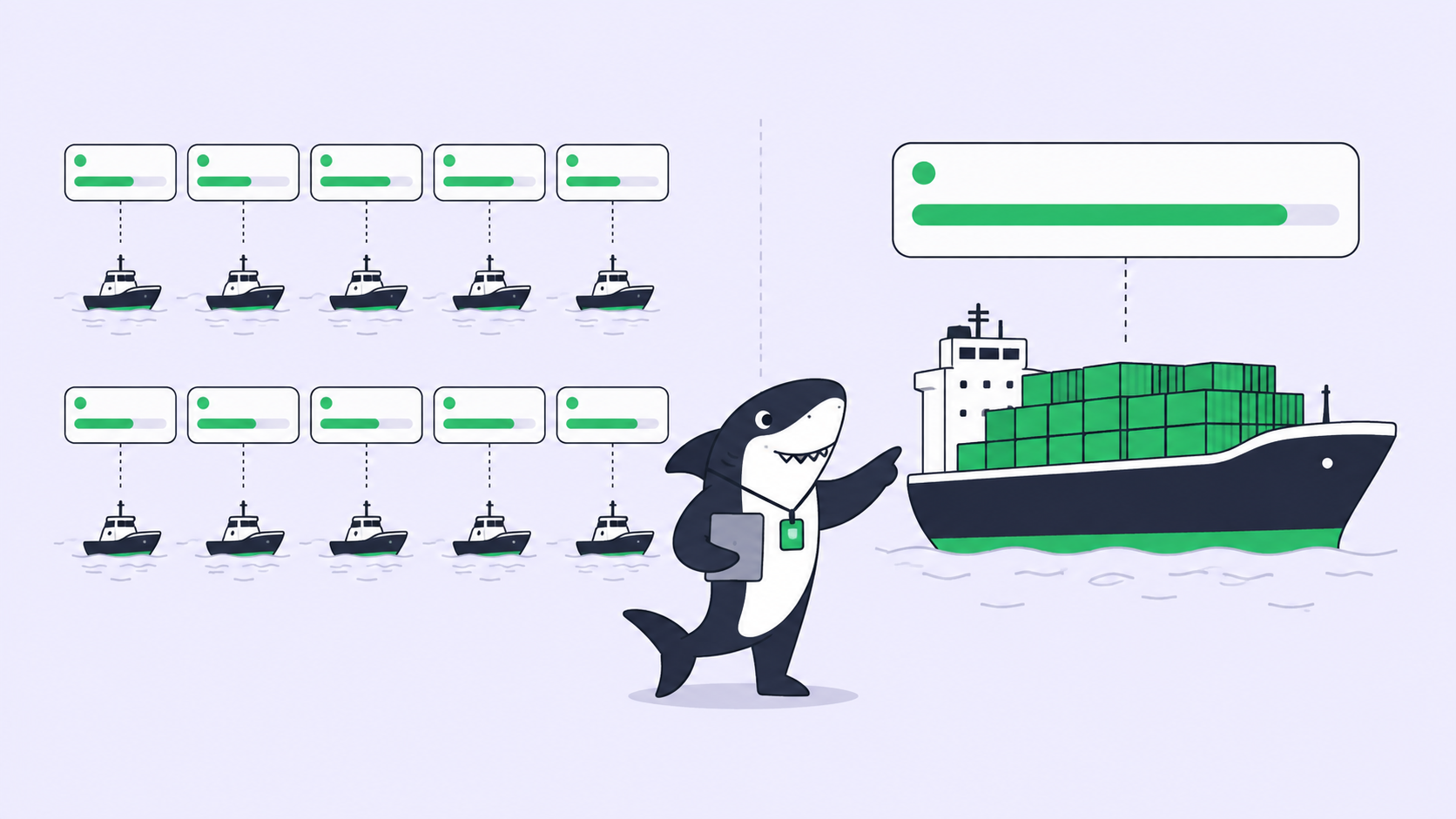
Review becomes the constrained resource. Three agents can produce more changes in a morning than one reviewer clears in a day, so the honest constraint moves from typing speed to reading capacity. Plan for that rather than discovering it: cap how much agent work is in flight per reviewer, and treat a growing queue of unreviewed results as the same problem as a growing pile of unmerged pull requests.
Where the teammate metaphor breaks
Take the metaphor seriously and it starts misleading people in three ways.
An agent cannot hold accountability. It can be credited with work; it cannot answer for an outcome, be asked to justify a trade-off next quarter, or absorb the consequence of a bad decision. Every serious platform in this space encodes that: Linear keeps the human as primary assignee with the agent as contributor, and Sharkly’s own framing is that agents research, execute, test, and report while people set direction, grant authority, and accept the result.
An agent has no continuous memory of your team unless you give it one. A new colleague absorbs context by being around. An agent gets exactly what you wrote down, which is why written scope beats implied scope every time.
And an agent’s state is not a project state. A task can sit In Progress while the agent is working, waiting for a reply, waiting for review, or reporting an error. Reading run state as project state is how teams end up surprised at the end of a sprint. Our guide to AI agent project management covers that separation in detail.
What to add before agents behave like teammates
Four things, in this order. None of them requires a migration.
- A task with a reviewable outcome. If you cannot say how you would check the work, an agent cannot either.
- An execution assignee that is separate from the owner. Assign the person and the agent on the same item.
- A visible run. Progress, comments, and a trace attached to the task, readable by anyone on the team.
- An acceptance step. A named person moves the work to done after reading the evidence, not after seeing that the run finished.
Add them for one repeating kind of work first: dependency bumps, test coverage on a stable module, migration scaffolding. Expand once a second person has reviewed someone else’s agent result without needing a verbal briefing. Download Sharkly if you want that loop preconfigured, or build it in the tracker you already run.
FAQ
Is an AI agent just an assistant with more permissions? Permissions matter, but the real difference is the unit of work. An assistant handles a prompt inside your session; an agent handles a task that outlives it and reports back to a shared record.
Should we replace assistants with agents? No. Assistants stay better for anything you want to steer keystroke by keystroke. Agents are for work you can specify, hand off, and review.
Who reviews agent work at scale? The same people who review human pull requests, which is why review capacity becomes the real bottleneck. Start by measuring how long results wait before a human opens them.
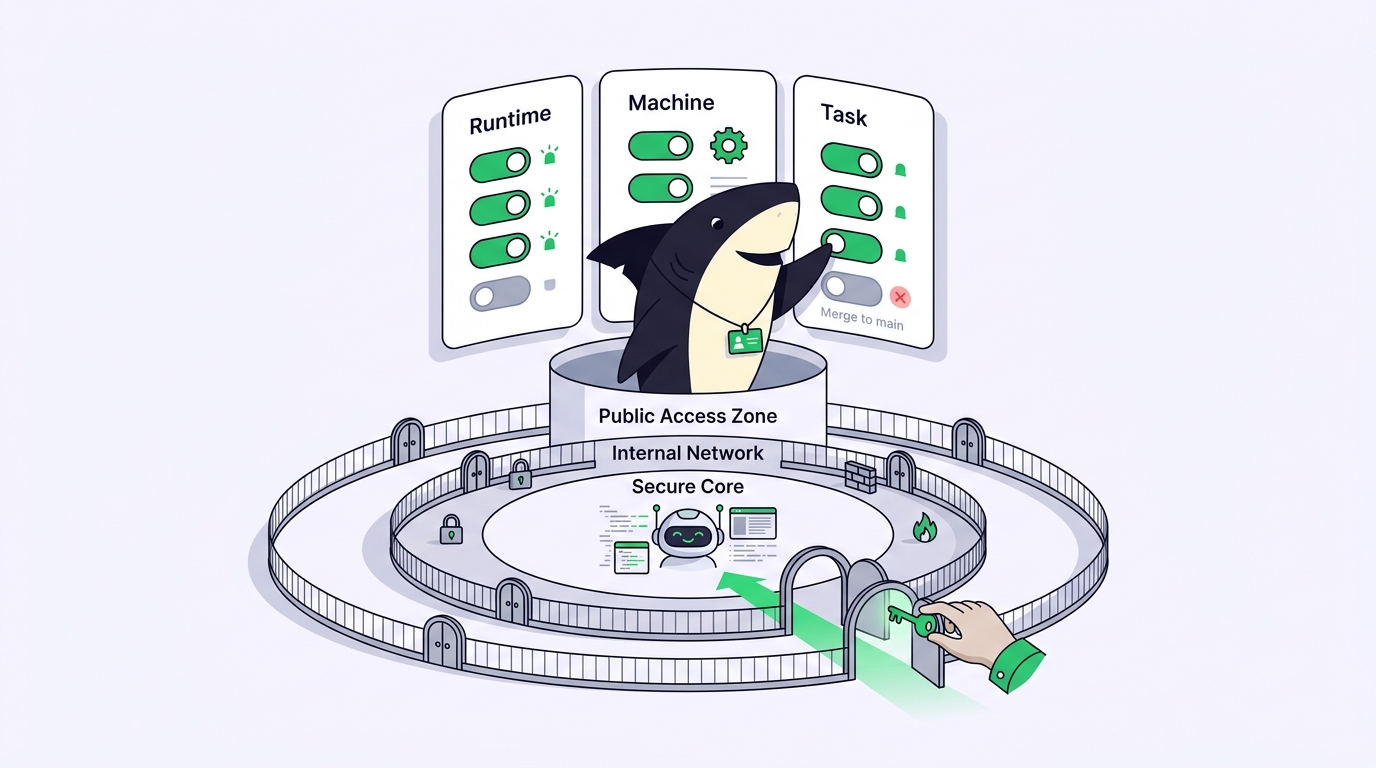
Do agents need their own accounts and permissions? They need scoped access, and it should be as narrow as the work requires. In practice that means specific repositories, specific machines, and a role model that decides who can trigger which agent. Our Sharkly Agents explainer shows one implementation.