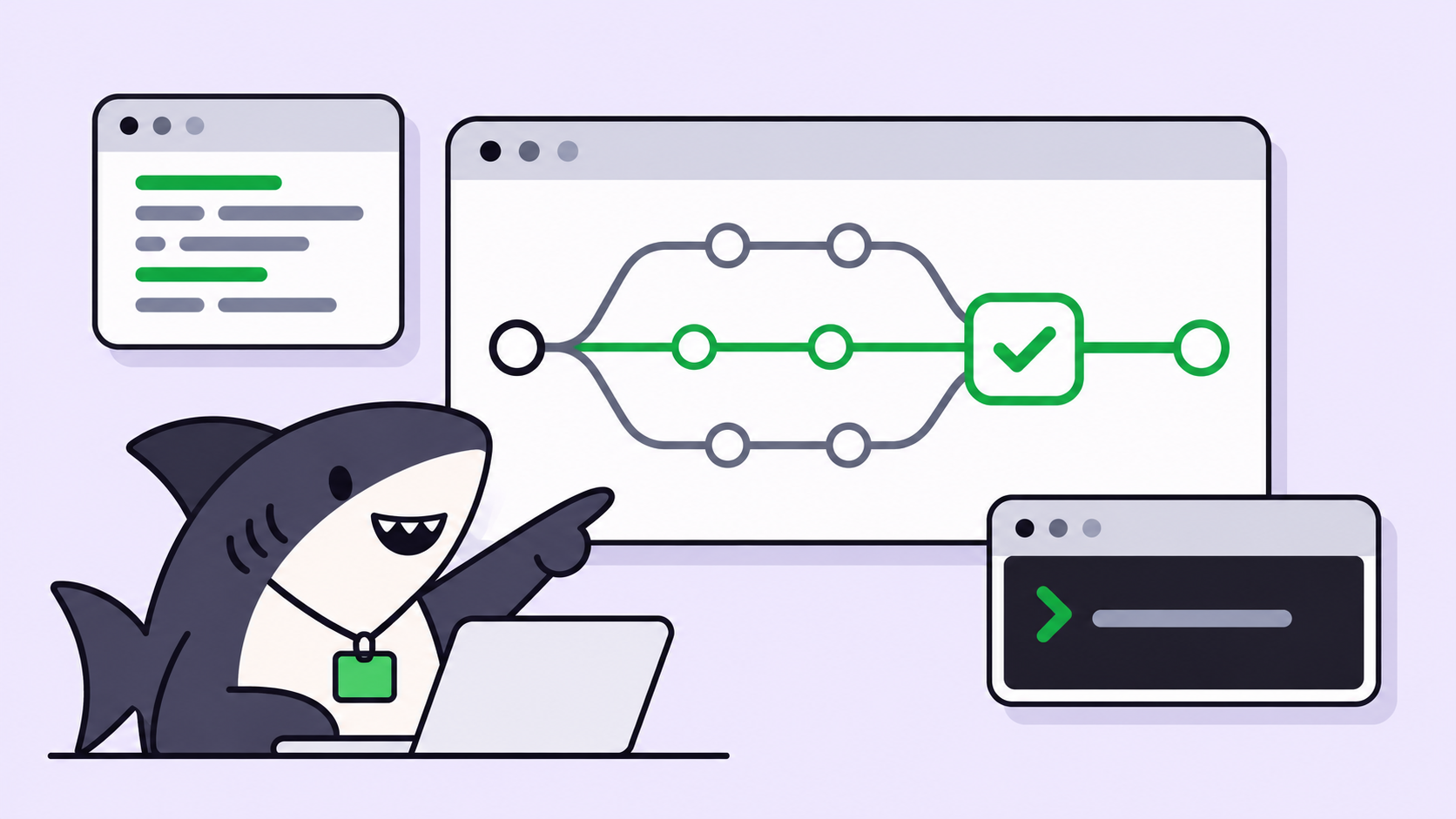
An AI code review workflow gives a coding agent the implementation, an AI reviewer the first pass on the pull request, and a human approver the merge decision. Continuous integration (CI) runs the required checks. The pull request carries the diff and review history, while your task board shows who acts next.
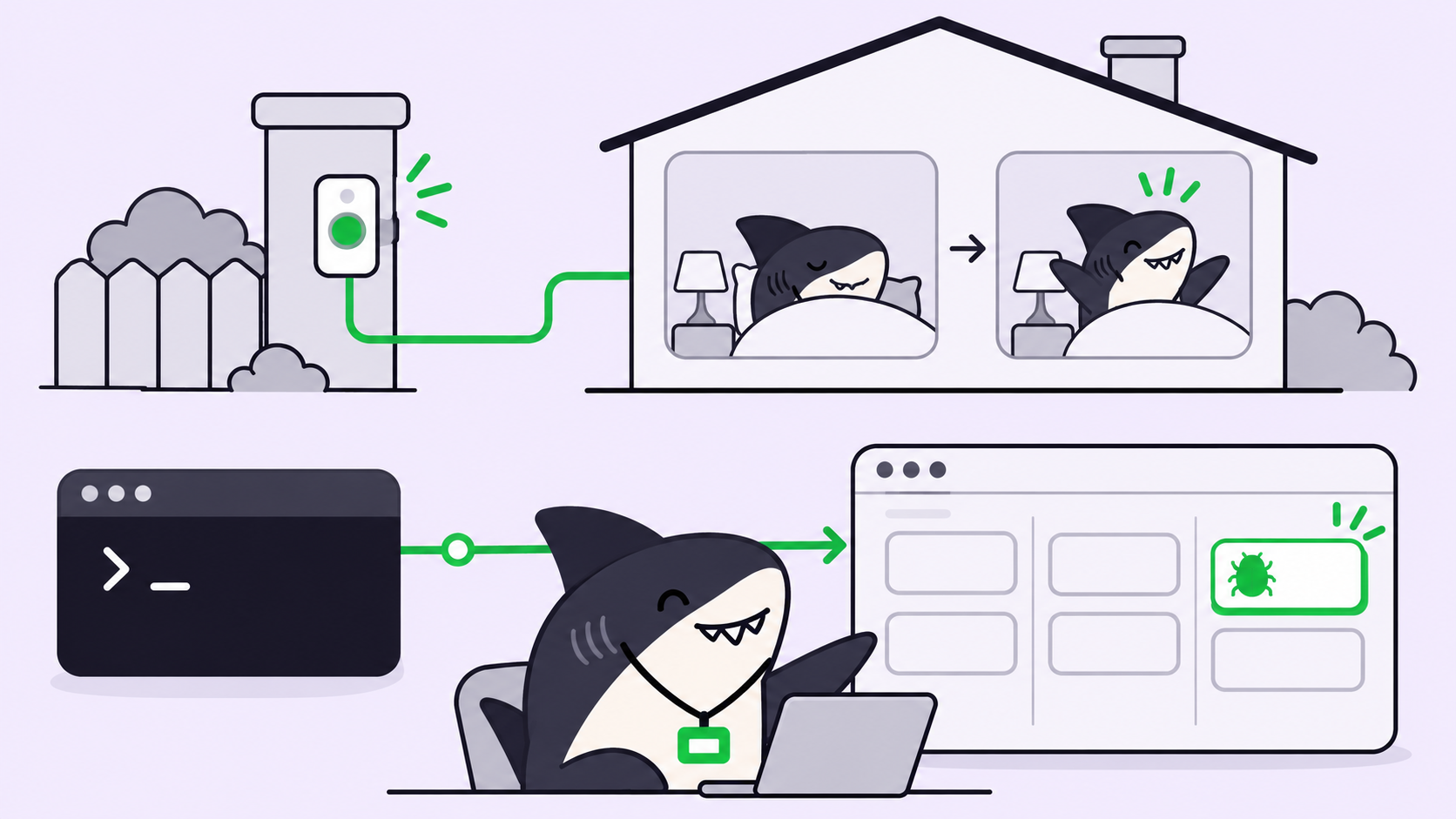
The awkward moment comes after the first review. An agent pushes a fix, CI starts again, and the person who approved the earlier diff goes back to another task. Give that person one place to find the latest revision, the evidence, and the decision they owe. If you already assign work to coding agents, Sharkly can keep that handoff with the original task.
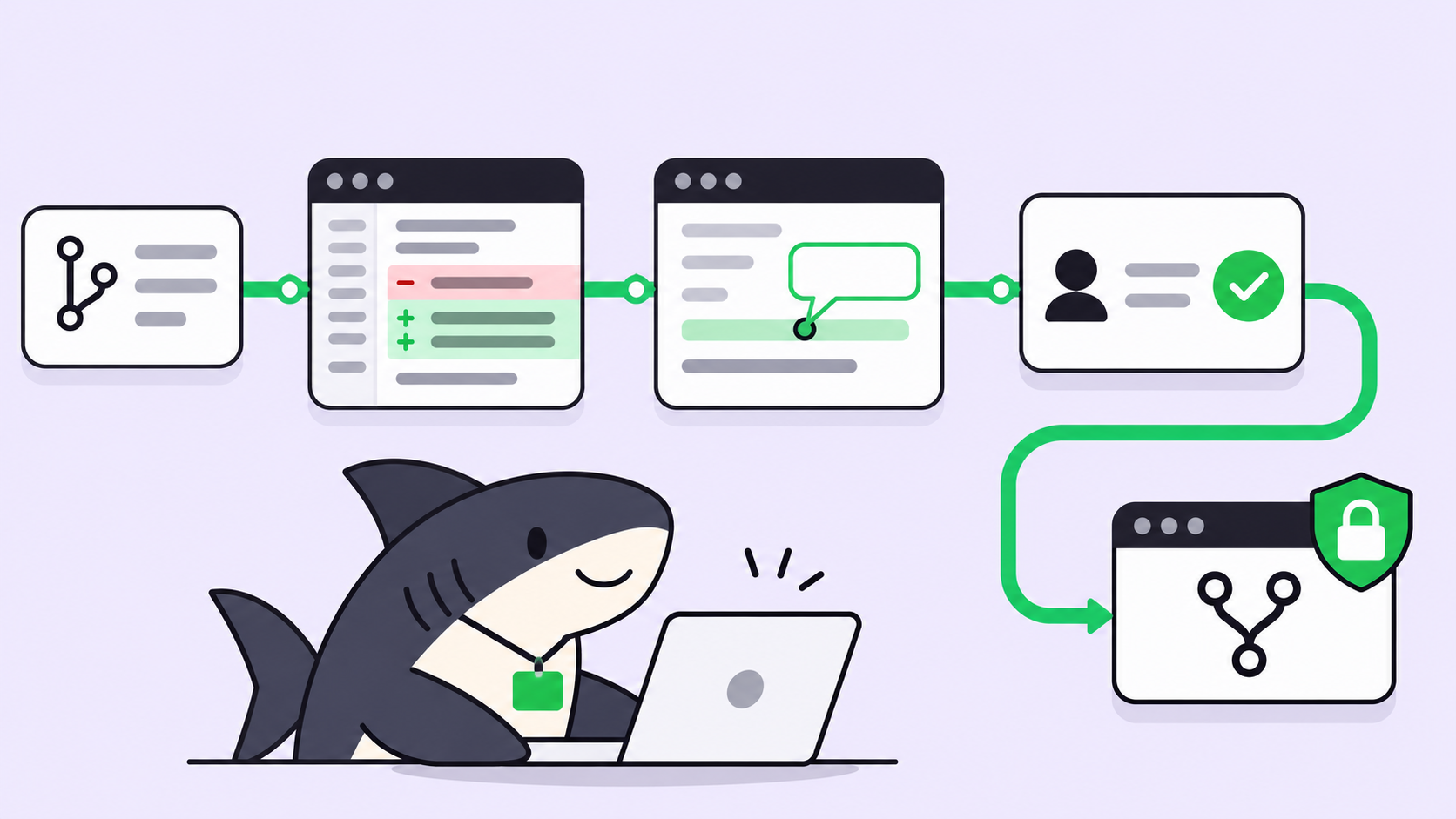
An AI code review workflow in five steps
- Scope the task. Pick one change you can describe in terms of behavior. Say what should happen, what must stay the same, and which checks would demonstrate both. Name the person responsible for the merge before the coding agent starts.
- Open a pull request (PR). Have the coding agent link the task, summarize the change, and list the checks it ran. Ask it to call out anything it couldn’t verify. The PR description becomes the starting point for both reviewers.
- Run the first review. Give the AI reviewer the diff and the acceptance criteria. Ask it to cite the affected code, explain the observed behavior, and distinguish a blocking issue from an optional cleanup. If a finding warrants a change, the coding agent pushes a fix and explains how it checked it.
- Hand off the revised PR. Record the latest commit, the required check results, resolved findings that matter, and any open decision. If CI is still running or a material finding is unresolved, leave the work in progress. See GitHub’s workflow run history guide for where to inspect the logs.
- Review and merge. The human reads the latest diff against the task, confirms the required checks passed, and decides whether to approve. Once the protected branch accepts the merge and the PR shows it landed, move the task to Done.
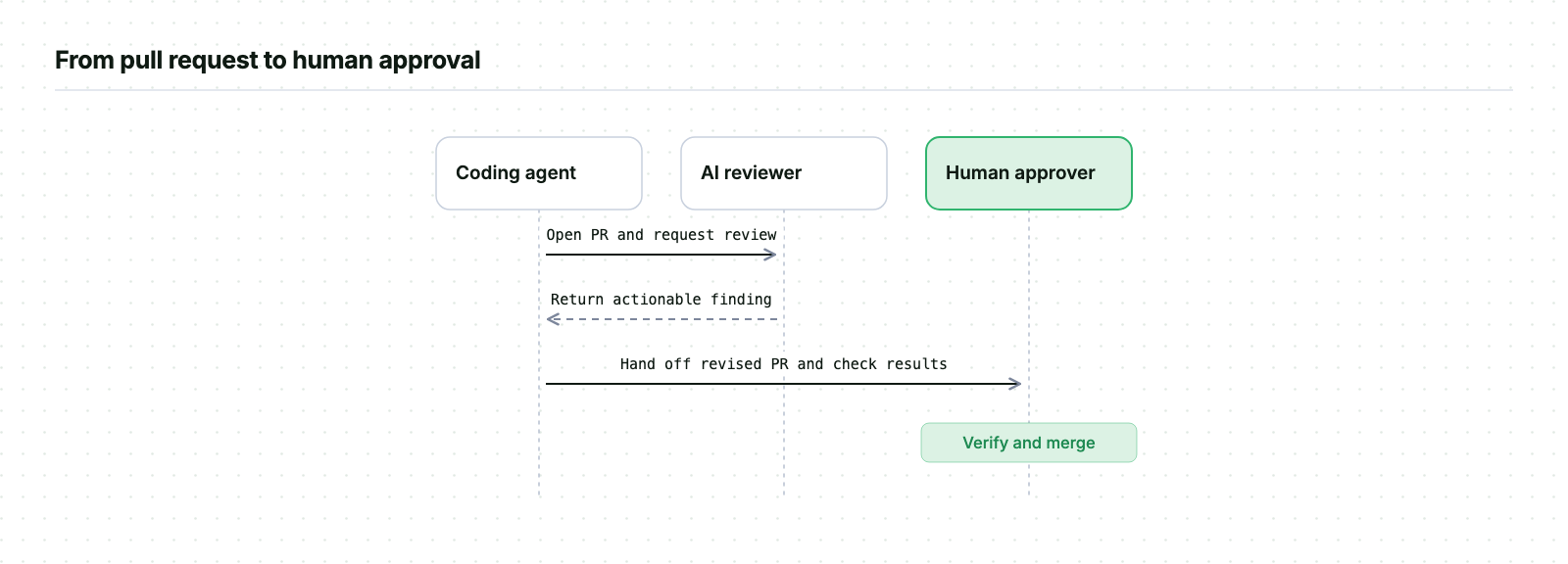
Keep follow-up fixes on the same PR so the human can follow the review history. If the fix changes the scope, update the task and send it back through review. For a compact handoff format, see these coding agent handoff templates.
Set the merge gate in GitHub
Configure GitHub branch protection to require your CI checks and the approval your team expects on its default branch. For this workflow, keep bot approvals off and require an approving review from a teammate. If a new commit should prompt another look, configure GitHub to dismiss stale approvals when the diff changes. Review who can bypass the rule before you rely on it.
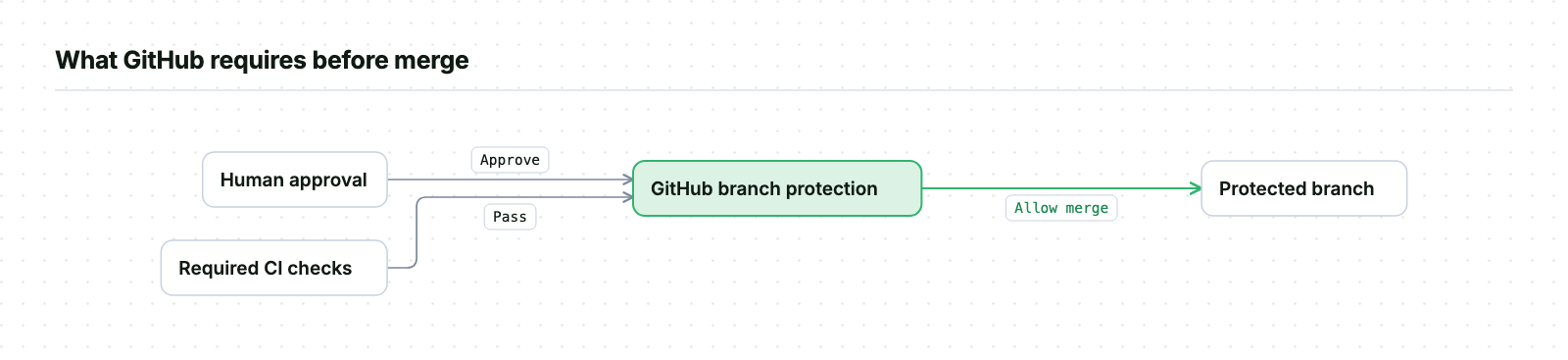
Treat feedback, CI, and approval as separate evidence. A passing test suite tells you which tests passed. A review finding gives you a line of inquiry. The approver still needs to decide whether the behavior fits the task and whether the test covers the change. For changes to permissions or deploy configuration, route the PR to the person who owns that area. See what AI code review agents can verify for examples of evidence gaps.
Where Claude Ship fits
Anthropic introduced Claude Ship in beta on November 23, 2026. Its repository setup for Claude Team and Enterprise bundles three roles your team can adopt separately. Code Review is generally available and posts findings on a GitHub PR. PR Steward, in beta, can push fixes for review feedback, failing checks, and merge conflicts. Claude Approvals, also in beta, evaluates a policy your team writes. Anthropic cautions that AI review can miss defects. Claude Ship documentation
A review request alone gives you findings to triage. The documented Claude Code CLI path uses /ship in a local clone to open an eligible PR, review it, and work on follow-up fixes. The developer merges when it is ready. Repository-level Claude Approvals reads .claude/approvals.yml and can post an approving review where policy permits. GitHub can count a bot approval toward a required approval, so check how your rules count reviews before you enable it.
Start with review-only if a developer can still handle feedback between tasks. Add a stewardship step when check failures and small fixes repeatedly leave PRs waiting. Either setup can return the same evidence to the human approver.
Track the handoff on a Sharkly board
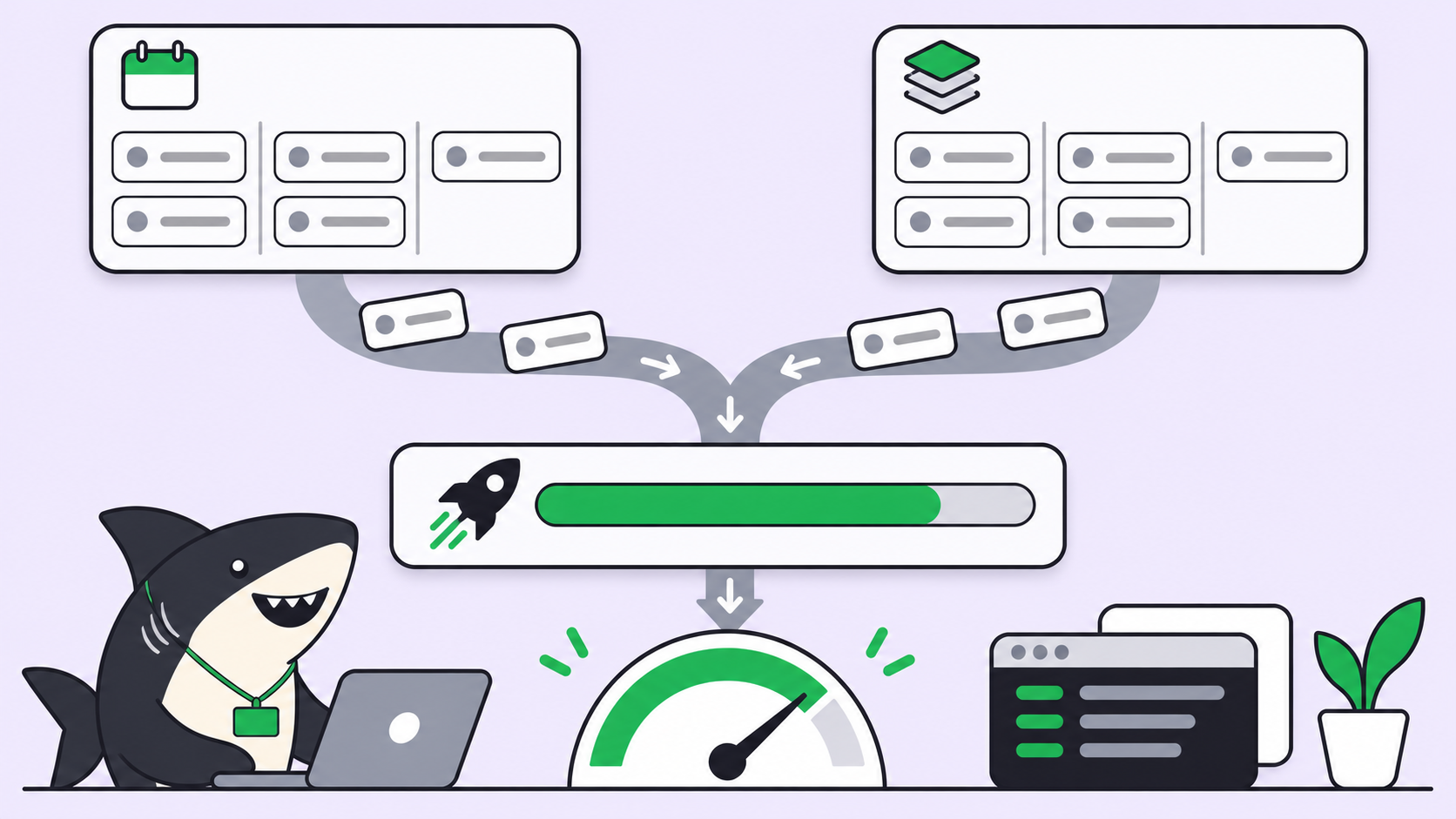
Create a Task with the expected behavior and assign it to the coding Agent. Use a board View grouped by status so the team can see which Tasks need implementation and which are waiting for a decision. Use In Progress, Ready for Release, and Done as workflow stages in your Space.
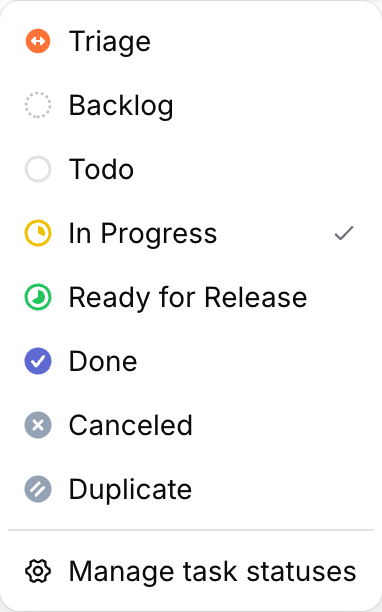
Have the Agent link the PR in the Task and return the review summary and CI results in the task conversation. Move the Task to Ready for Release when the named human can review the current revision. If review sends it back for changes, put the Task in In Progress again. Move it to Done after GitHub shows the merge.
The PR holds the diff, checks, and approval. The board gives the team a queue of work awaiting someone, with the original requirement still attached. Open Sharkly and try the handoff with a bounded change before adding more status transitions.
How a duplicate CSV row gets caught
Suppose a customer export duplicates one row when two filters match the same record. Ask the coding agent to add a regression test with one record that matches both filters, then fix the export. The AI reviewer spots that the test only checks row count. It asks for an assertion on the exported record ID so the test can catch a different row being dropped.
The coding agent updates the test, reruns CI, and hands the human the PR link, current commit, and the reason for the new assertion. The human checks that exports still preserve their documented order. If ordering is a requirement and the diff leaves it unclear, the human requests a test. The task returns to Ready for Release once the revised code and checks are available.
What goes in the handoff?
Write the handoff so the approver can pick up the task after a day away. The commit tells them which version the evidence covers. Give them the check names they can find in GitHub and the remaining decision in plain language.
PR: #184
Revision: 8c1f4e2
Required checks: export-tests passed, lint passed
Review finding: test now checks the exported record ID
Decision: confirm that the expected row order is preserved
Copy these fields into the task conversation and link the PR directly. If another commit lands before approval, refresh the revision and the check results together. For a change that needs a second reviewer, name the owner of that decision in the same update.
Start with one pull request
Choose a PR small enough for someone on your team to read in one sitting. Name the coding agent, reviewer, and merge owner before work starts. After it merges, ask the approver which evidence they had to look up themselves. Add that item to the next handoff. Keep the GitHub gate in place while you refine how your team gets to it. If you use Sharkly, save the handoff fields in your first Task and reuse them on the next PR.
Frequently asked questions
Can two people use this workflow?
Yes. One person scopes and runs the work with the coding agent. The other reviews and approves the final diff. Rotate those roles across tasks.
Should the coding agent review its own PR?
Have it run a self-check before opening the PR. A separate review session can then examine the diff with the acceptance criteria and report what it finds. Keep the human approval for merge.
Does a passing AI review count as a CI check?
Only if your review integration reports a check to GitHub and you configure that check as required. Keep build and test jobs visible so the approver can inspect their results independently.
When should a Task move to Ready for Release?
Move it after you link the PR and current revision, confirm that required checks passed, and identify who decides next. If a material fix lands, rerun the checks and refresh the handoff.
How do you handle a disputed AI finding?
Ask for the input or scenario that would demonstrate the problem. Use a focused test or have the human owner explain why the finding doesn’t apply. Record the disposition on the PR so the next reviewer can follow it.