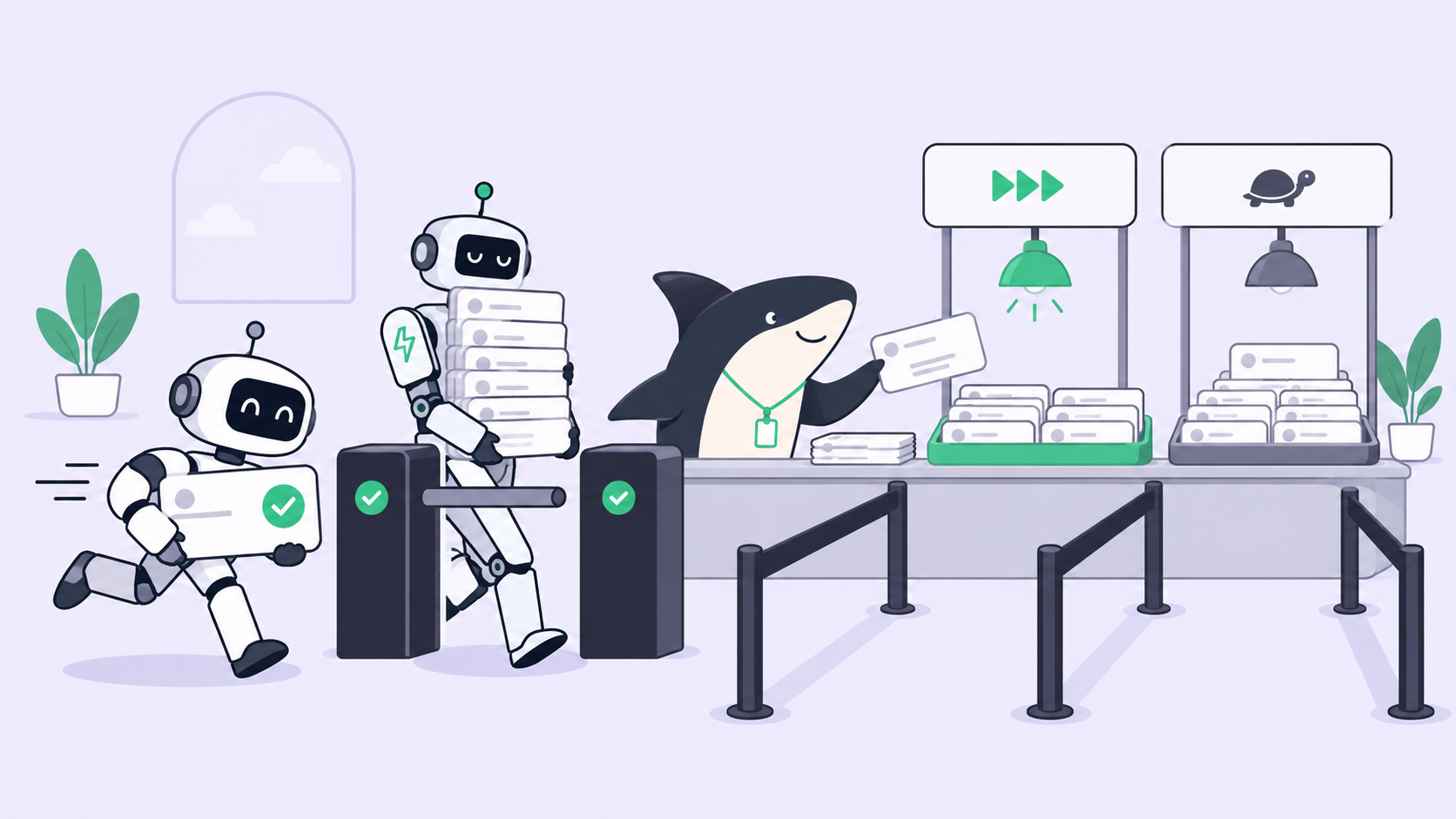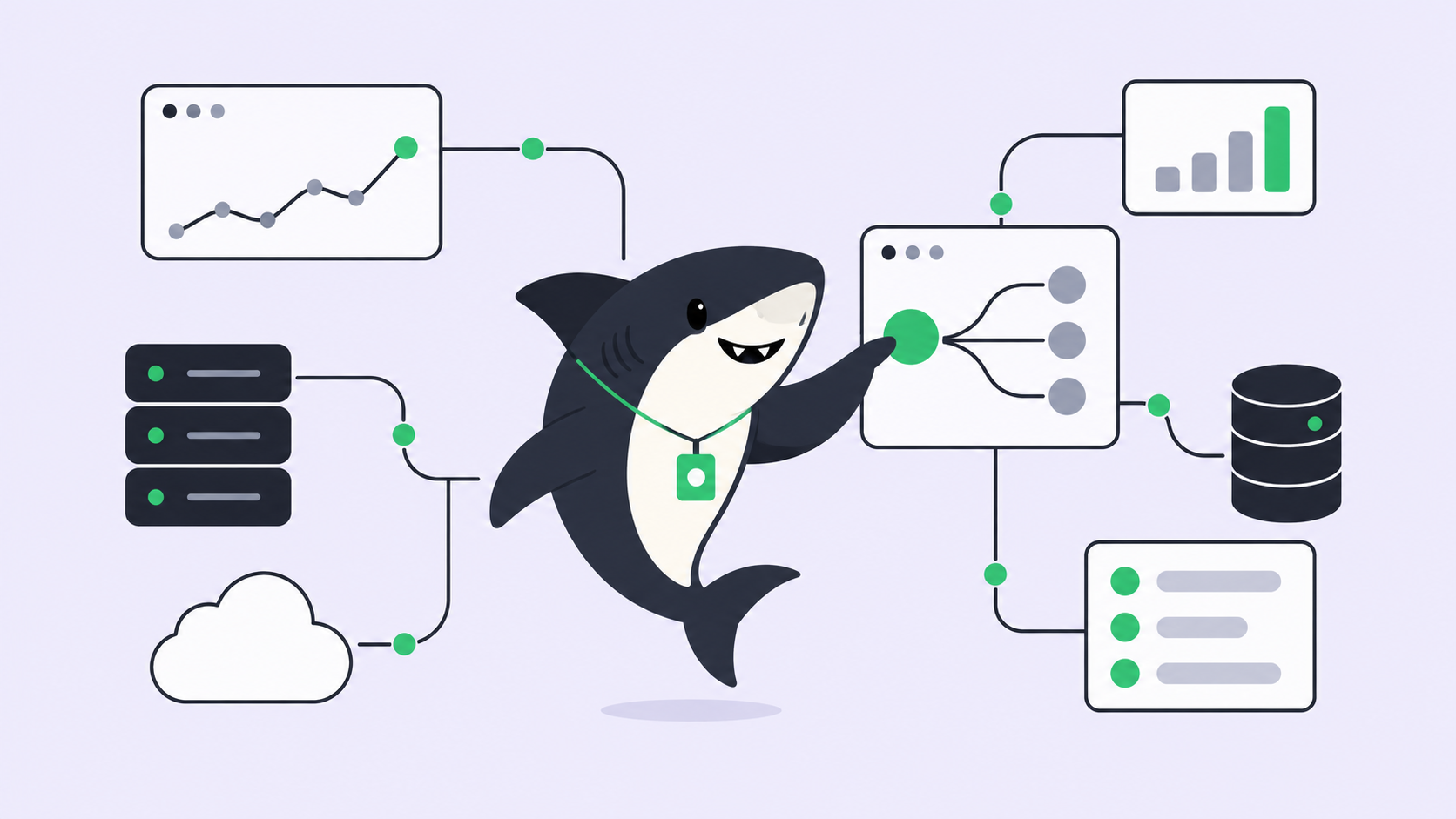
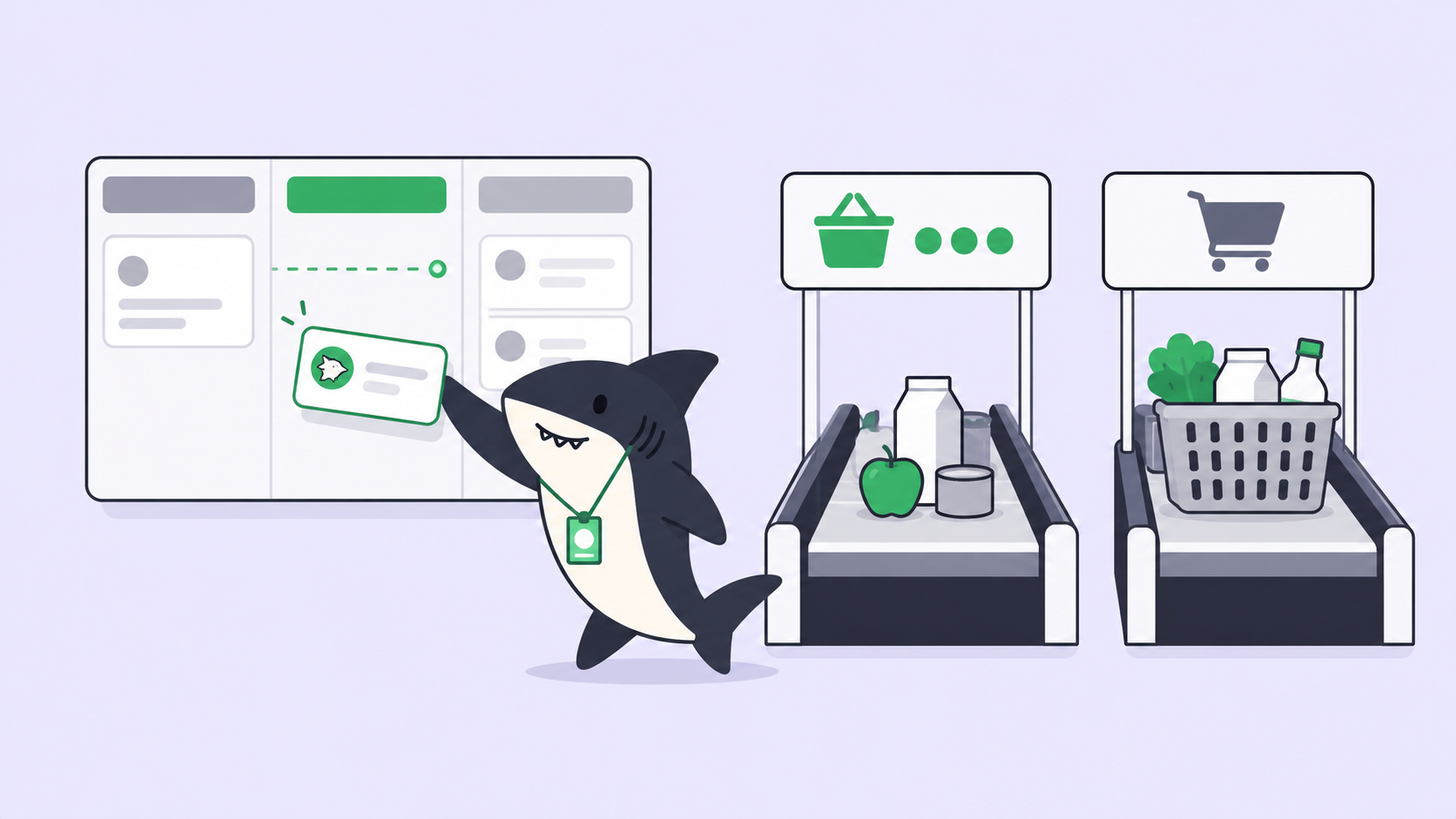
Anthropic shipped Claude Haiku 5.5 on October 7 at $0.10 per million input tokens and $0.50 per million output for prompts up to 100K tokens, and $0.50 / $2.50 once a prompt goes over 100K. Under that line it lists at exactly what GPT-6 Luna costs, and Anthropic’s launch post is specific about the job: summaries, compactions, database queries, classification, browser use, and subagent work under Opus 5.5 or Sonnet 5.5. For a team running several coding agents, that is a cheap lane with Claude Code around it, on the same board as everything else.
The friction sits in two places. Claude Code’s haiku alias means Haiku 5.5 only on the Anthropic API; on Bedrock, Google Cloud, Microsoft Foundry and Claude Platform on AWS it still means Haiku 4.5. And the price is not one price. A Claude Code session accumulates context, and Claude Code auto-compacts Haiku 5.5 only at about 967K tokens, so a run that keeps going can spend most of its turns above the 100K line at five times the rate. A cheap lane that quietly stops being cheap, on a model nobody can see from the Task, is the kind of drift a board exists to catch. This guide takes the smallest useful path: one Computer, one cheap-lane Agent, one real Task.
TL;DR
Update Claude Code on the Computer to v2.1.293 or later, pin claude-haiku-5-5 instead of the haiku alias, and rescan until the Claude Code Runtime reads Available. Give the cheap lane its own Agent, name the model in that Agent’s Custom arguments, and keep its Tasks narrow enough that a run finishes before its prompt passes 100K tokens. Claude Code runs Haiku 5.5 at medium effort by default and cannot turn its thinking off. Anthropic says Sonnet 5.5 and Opus 5.5 remain the better choices for complex agentic coding, so the lead and the reviewer stay on them. Agents research, execute, test, and report. People set direction, grant authority, and accept the result.
Where the model setting lives
Sharkly does not pick models, and the Agents documentation has changed how you point an Agent at one. It now reads: “The Agent follows the Runtime’s default model. It does not promise or display a specific model name. To change models, specify one in Custom arguments on the Agent or Runtime.” You can still change the Runtime or Computer tool configuration instead. There is no separate model dropdown on the Agent, and no thinking-depth control.
That matters more for a cheap lane than anywhere else. Our Sonnet 5.5 guide set the model in Claude Code’s configuration on the host, which made one Computer per model tier the straightforward setup. With the model named in an Agent’s Custom arguments, a Haiku 5.5 Agent and an Opus 5.5 Agent can share one Computer, each with its model written on the Agent instead of in a config file someone edits on a Tuesday. The Agent defines how work should be handled; the Computer supplies the host; the Runtime, Claude Code here, performs the session; the Task remains the shared record.
Step 1: put Haiku 5.5 in Claude Code on the Computer
Haiku 5.5 needs Claude Code v2.1.293 or later, per the model configuration docs; claude update gets you there. Sign in with a paid plan or an API key that has access. Claude Code is not on Claude Free, and the new monthly API credits for Max and Team subscribers do not cover Claude Code, so they will not pay for a Runtime on a Computer. Then run claude --model claude-haiku-5-5 in a plain terminal on that host. If a session starts, Sharkly can use it.
Pin the full id, not the alias. This is what haiku resolves to in Claude Code today:
| Where Claude Code gets the model | haiku alias resolves to |
Pin this instead |
|---|---|---|
| Anthropic API | Haiku 5.5 | claude-haiku-5-5 |
| Claude Platform on AWS | Haiku 4.5 | claude-haiku-5-5 |
| Amazon Bedrock | Haiku 4.5 | claude-haiku-5-5 |
| Google Cloud | Haiku 4.5 | claude-haiku-5-5 |
| Microsoft Foundry | Haiku 4.5 | claude-haiku-5-5 |
On Bedrock and Google Cloud, Claude Code maps that id to the provider’s own model id. A Computer that reaches Claude through a cloud provider and asks for haiku gets the previous generation at the previous price, and nothing on the Task says so.
Back in Sharkly, open Computer detail and run the rescan or connection test. The Claude Code Runtime should read Available. A Computer showing online only means its local service is sending heartbeats; the Runtime status is what says a run can start.
Step 2: a cheap-lane Agent with the model on it
Open Agents, select New Agent, choose the Computer and the Claude Code Runtime, and name it for the lane rather than the model. In Custom arguments, specify the model, claude-haiku-5-5, the same value you tested with --model in the terminal. Set the default working directory to Create temporary directory so each Task runs in an isolated directory, and set a per-Task timeout sized for narrow work. A Haiku Agent that runs for an hour is a sign the Task was the wrong shape.
Three model behaviors shape the instructions. Effort defaults to medium in Claude Code, and Anthropic’s prompting guide calls it the place to start “for most work, including agentic coding,” keeping xhigh and max for cases where your evals show a gain. Thinking cannot be switched off in Claude Code on Haiku 5.5, so telling the Agent to answer directly will not make a run cheaper. And Haiku 5.5 runs safety classifiers that can decline a request with no server-side fallback; for teams moving from Haiku 4.5, those refusals are new.
Sharkly does not display a model name, so the instructions ask the Agent to write it on the Task:
You are the cheap lane. Take only the Task as written.
State the model id you ran on at the top of your report.
Read only the files the Task names, plus what you need to verify them.
If the work needs a broad codebase read, a design decision, or
changes across more than a few files, stop and say so in a comment
instead of continuing.
Run the closest relevant check before reporting done, and report
failures without hiding them.
If a refusal or safeguard notice appears, say so in your report.
Stop and ask before anything destructive or outside the attached
repositories.
Step 3: keep runs under the 100K line, then assign one Task
Here is the price step, from Anthropic’s pricing docs, per million tokens:
| Haiku 5.5 | Prompts up to 100K | Prompts over 100K |
|---|---|---|
| Input | $0.10 | $0.50 |
| Output | $0.50 | $2.50 |
| Cache reads | $0.01 | $0.05 |
| 5-minute cache writes | $0.125 | $0.625 |
Anthropic notes that prompts up to 100K made up around 90% of requests to the previous Haiku. An agent session is not a typical request. In Claude Code the prompt for each turn carries the session so far, and it grows with every file read and tool result. The docs put it plainly: “a prompt of over 100,000 tokens pays higher prices.” With auto-compaction waiting until about 967K, a run that crosses 100K can stay above it for the rest of the session.
That gives the routing rule, written down as a decision pair:
- Use the Haiku Agent when the Task names its files, has a result a person can check in a minute, and is the kind of work Anthropic positions the model for: summaries, classification, lookups, a scoped fix.
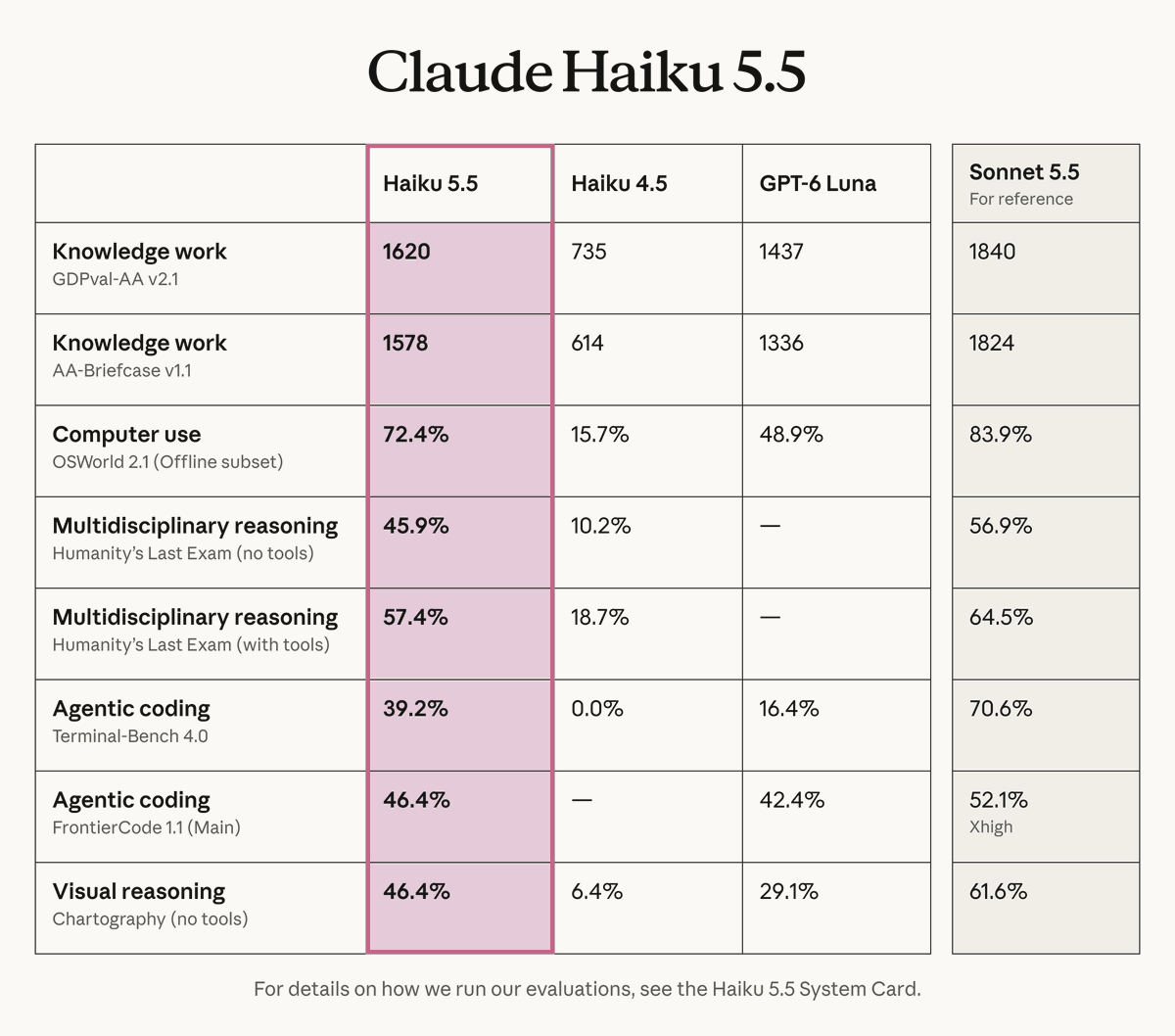
- Do not use it when the run has to read a large repository, work through a long debugging session, or make a call a reviewer will have to reconstruct. That run crosses the line, pays $0.50 / $2.50, and is the work Anthropic sends elsewhere: its Terminal-Bench 4.0 figures put Haiku 5.5 at 39.2% against Sonnet 5.5 at 70.6%. When cheap models cost more covers the rest of that math.
Then pick a Task with a clear acceptance criterion, select the Haiku Agent as Assignee, and move it out of Backlog, where assigned Tasks wait, into a status that is ready for work. The run moves through queued, dispatched and running, and the Task’s execution log records tool calls and Runtime events. If the Agent stops to say the Task is too broad, that question returns to the Task as a comment and routes to the Inbox. That is the lane working as designed.
What Haiku 5.5 adds to the cheap lane
The case for a cheap lane is already made in Luna for the boring 80 percent and GPT-6 Luna in Sharkly, and the placement rule from mixed-model Crews still holds: cheap members, an expensive leader and reviewer. Haiku 5.5 changes three things.
A second vendor at the same price. Below 100K, Haiku 5.5 and Luna list identically, and they run inside different Runtimes, Claude Code and Codex. Their thresholds differ: OpenAI prices Luna prompts over 272K input tokens at 2x input and 1.5x output, while Haiku 5.5 steps up 5x from 100K. Haiku 5.5 vs GPT-6 Luna compares the two as Runtimes.
It is built to be a subagent. Anthropic and launch customers such as Rogo and Cognition describe Haiku 5.5 working under a bigger lead model. Inside a Claude Code run, that subagent’s work never appears on the board as a Task with its own owner. Subagent or its own Agent draws the line between the two.
Cheap computer use, expensive checking. Anthropic’s system card puts Haiku 5.5 at 72.4% partial credit on its OSWorld 2.1 subset but a 37.1% strict pass rate, so many runs finish partly done. Cheap browser agents covers what that does to the review queue.
None of this lands on Sharkly’s bill. Model usage continues through the subscriptions or API keys configured in those tools, so the Haiku 5.5 rates above are paid to Anthropic or your cloud provider.
The model changed this week. Context, progress, blockers, results, and human review stayed visible from request to release. You can build this manually with worktrees, or use Sharkly to manage the workflow.