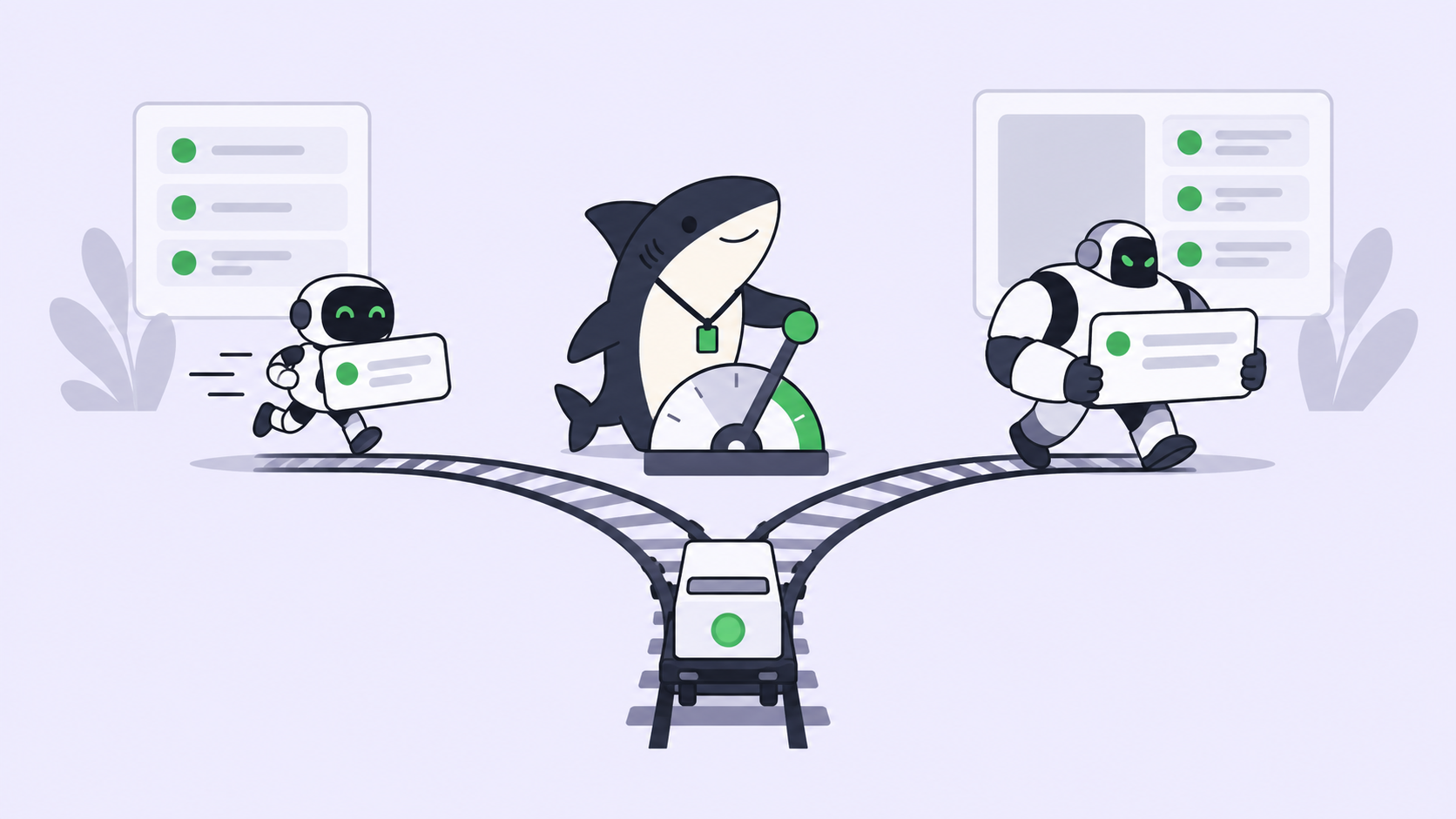

Anthropic shipped Claude Sonnet 5.5 on September 28 at $2 per million input tokens and $10 per million output, the same list price as Sonnet 5 and half of Opus 5.5. Anthropic says it runs 30%+ faster than Sonnet 5 and costs up to 30% less per task. For a team running several coding agents, the news is that the model you would put on everyday Agents now sits a few points under the flagship on most rows of Anthropic’s launch table.
Getting it onto the board is less automatic than it sounds. Claude Code’s default model resolves to Opus 5.5 on Pro, Max, Team, Enterprise and the Anthropic API, so a Computer running Claude Code stays on the flagship until someone changes it. The sonnet alias means Sonnet 5.5 only on the Anthropic API; on Bedrock, Google Cloud and Microsoft Foundry it still resolves to Sonnet 4.5. A team that “moved to Sonnet” can end up with three models on three Computers and no way to say which run used which. This guide takes the smallest useful path: one Computer, one Agent, one real Task, then a decision about where Opus 5.5 still earns its price.
TL;DR
Update Claude Code on the Computer to v2.1.284 or later, pin the full id claude-sonnet-5-5 instead of the sonnet alias, and rescan until the Claude Code Runtime reads Available. Write Agent instructions that head off Sonnet 5.5’s early check-ins and unrequested additions, keep the working directory Temporary, size the timeout for well-scoped work, and assign one Task. In a Crew, put routine members on Sonnet 5.5 and keep Opus 5.5 as leader and reviewer. Agents research, execute, test, and report. People set direction, grant authority, and accept the result.
Where the model setting lives
Sharkly does not pick models. The Agents documentation says so directly: “The Agent follows the Runtime’s default model. It does not promise or display a specific model name. Change models in the Runtime or Computer tool configuration, not on the Agent.” The same page adds that the Agent exposes no model picker and no thinking-depth control.
That matters for Sonnet 5.5, because effort is where this model’s behavior shifts most, and effort lives where the model lives: in Claude Code on the Computer. The Agent defines how work is handled, the Computer supplies the host, the Runtime (Claude Code here) performs the session, and the Task remains the shared record.
Step 1: put Sonnet 5.5 in Claude Code on the Computer
Sonnet 5.5 needs Claude Code v2.1.284 or later, per the Claude Code model configuration docs. Update it on the Computer and sign in with a paid plan or an API key that has access; Claude Code is not on Claude Free (what a chat seat can and cannot run). Then run claude --model claude-sonnet-5-5 in a plain terminal on that host. If a session starts, Sharkly can use it.
Pin the full id, not the alias. This is what sonnet resolves to in Claude Code today:
| Where Claude Code gets the model | sonnet alias resolves to |
|---|---|
| Anthropic API | Sonnet 5.5 |
| Claude Platform on AWS | Sonnet 4.6 |
| Amazon Bedrock | Sonnet 4.5 |
| Google Cloud Agent Platform | Sonnet 4.5 |
| Microsoft Foundry | Sonnet 4.5 |
The id is claude-sonnet-5-5 everywhere except Bedrock, where the model runs through the global cross-Region profile global.anthropic.claude-sonnet-5-5. opusplan inherits the alias problem too: it plans on Opus and executes on whatever sonnet currently means.
Then make the choice stick: set the model in Claude Code’s configuration on that Computer, so every run the local service starts picks up Sonnet 5.5 instead of the Opus 5.5 default, and repeat the terminal check.
Back in Sharkly, open Computer detail and use the rescan or connection-test action. The Claude Code Runtime should read Available. A Computer showing online only means its local service is sending heartbeats; the Runtime status is what says a run can start.
Step 2: build the Agent around how Sonnet 5.5 behaves
Open Agents, select New Agent, and choose the Computer and the Claude Code Runtime. Anthropic’s Sonnet 5.5 prompting guide describes habits that land directly in a review queue.
Effort decides which model you bought. Claude Code runs Sonnet 5.5 at medium effort by default, and thinking cannot be switched off there. Most headline launch numbers were measured at max. Anthropic’s charts put Sonnet 5.5 at 39.2% on CursorBench 4.0 at medium and 55.5% at max, at an estimated $0.70 and $9.67 per task. Those are different budgets, not a right and a wrong setting. The guide suggests medium for agentic coding on well-specified tasks and saving xhigh and max for measured gains.
It checks in early. At low and medium effort, Sonnet 5.5 tends to stop and check in on long agentic tasks. In Sharkly that check-in returns to the Task as a comment, the Task shows waiting for human reply, and it sits in someone’s Inbox until they answer. Tell the Agent to proceed on stated assumptions. At low effort it can also report code as done without running tests, so require checks.
It adds things nobody asked for. The guide notes unrequested tests, docs and small files at every effort level, plus extra review rounds or reviewer subagents at xhigh and max. Anthropic’s launch footnote shows the cost: Sonnet 5.5 scored lower on FrontierCode at max than at xhigh because it more often ran Claude Code’s code-review skill, which fans out to many subagents, and in two cases Cognition examined that caused a timeout or out-of-scope edits. For a reviewer, that is a bigger diff with edits outside the Task.
Timeout and directory. Anthropic positions Sonnet 5.5 for “well-scoped everyday tasks”, so size the per-Task timeout for that, and when a run hits it, split the Task before raising the limit. Keep the working directory Temporary: each Task gets an isolated directory, and repository-backed runs prepare a fresh worktree, so parallel runs cannot write over each other. Leave concurrency at its default, 50% of the Computer limit, until the Computer has handled real load.
Instructions to adapt:
Read the Task description and recent comments before editing.
Keep changes limited to the requested behavior. Do not add tests,
docs, or new files unless the Task asks for them; list any you
think are missing in your report instead.
Do not stop to ask whether to continue. When a detail is ambiguous,
proceed with a stated assumption and record it in your report.
Ask only when different interpretations would materially change
the result.
Run the closest relevant checks before reporting done, and report
failures without hiding them.
Do not start extra review rounds or reviewer subagents.
If a safeguard notice or refusal appears, say so in your report.
Stop and ask before anything destructive or outside the attached
repositories.
Step 3: assign one Task, then build a two-tier Crew
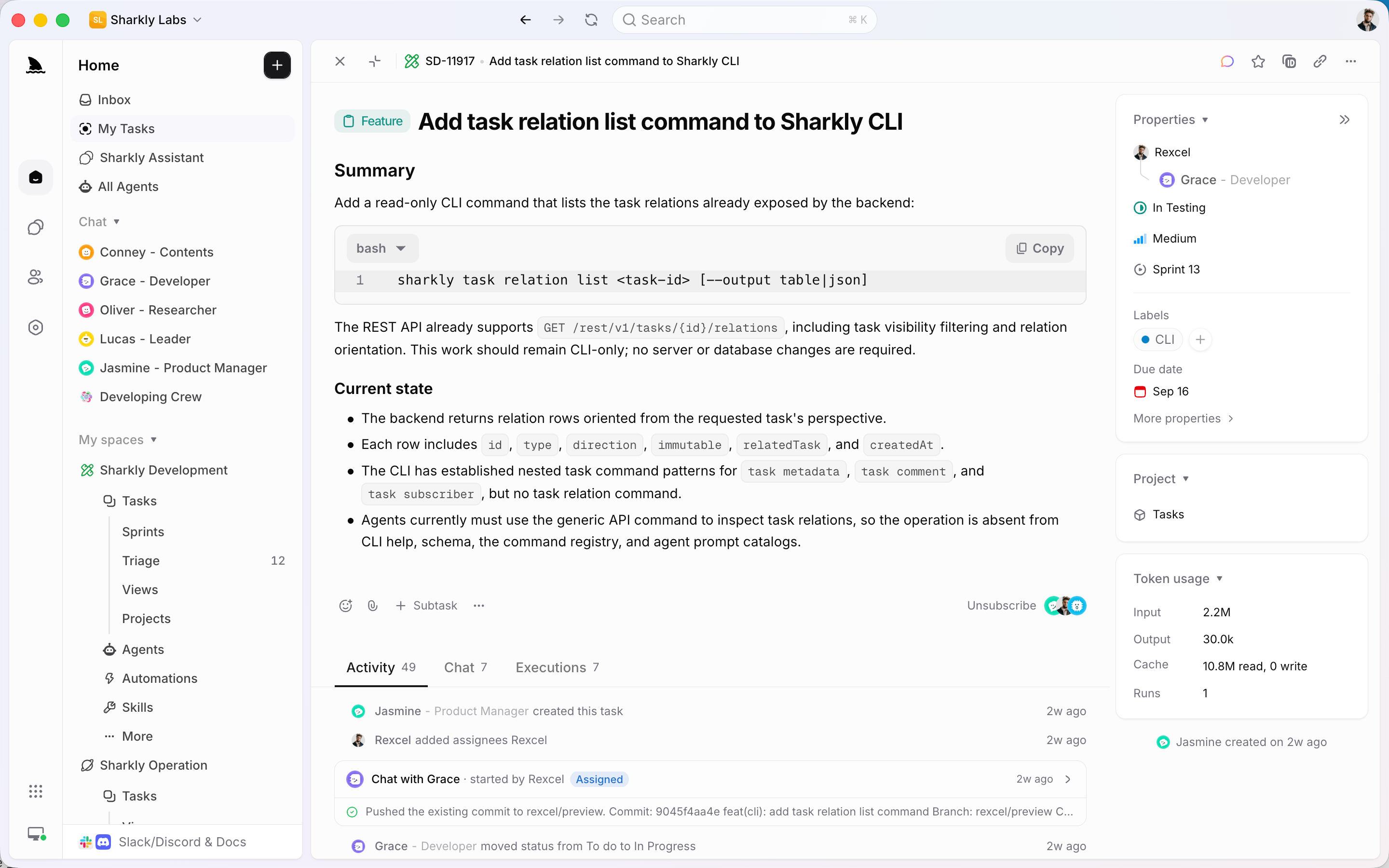
Pick a Task with a clear acceptance criterion, select the Agent as Assignee, and move it out of Backlog, where assigned Tasks wait, into a status that is ready for work. The run moves through queued, dispatched and running, and the Executions tab streams the log.
Keep that first Task on one Agent. A Crew is a reusable group of People and Agents coordinated by one leader Agent, and it earns its place when the leader has to interpret a goal and bring several members’ results back into one Task. For a bounded bug fix, one Agent is the right call.
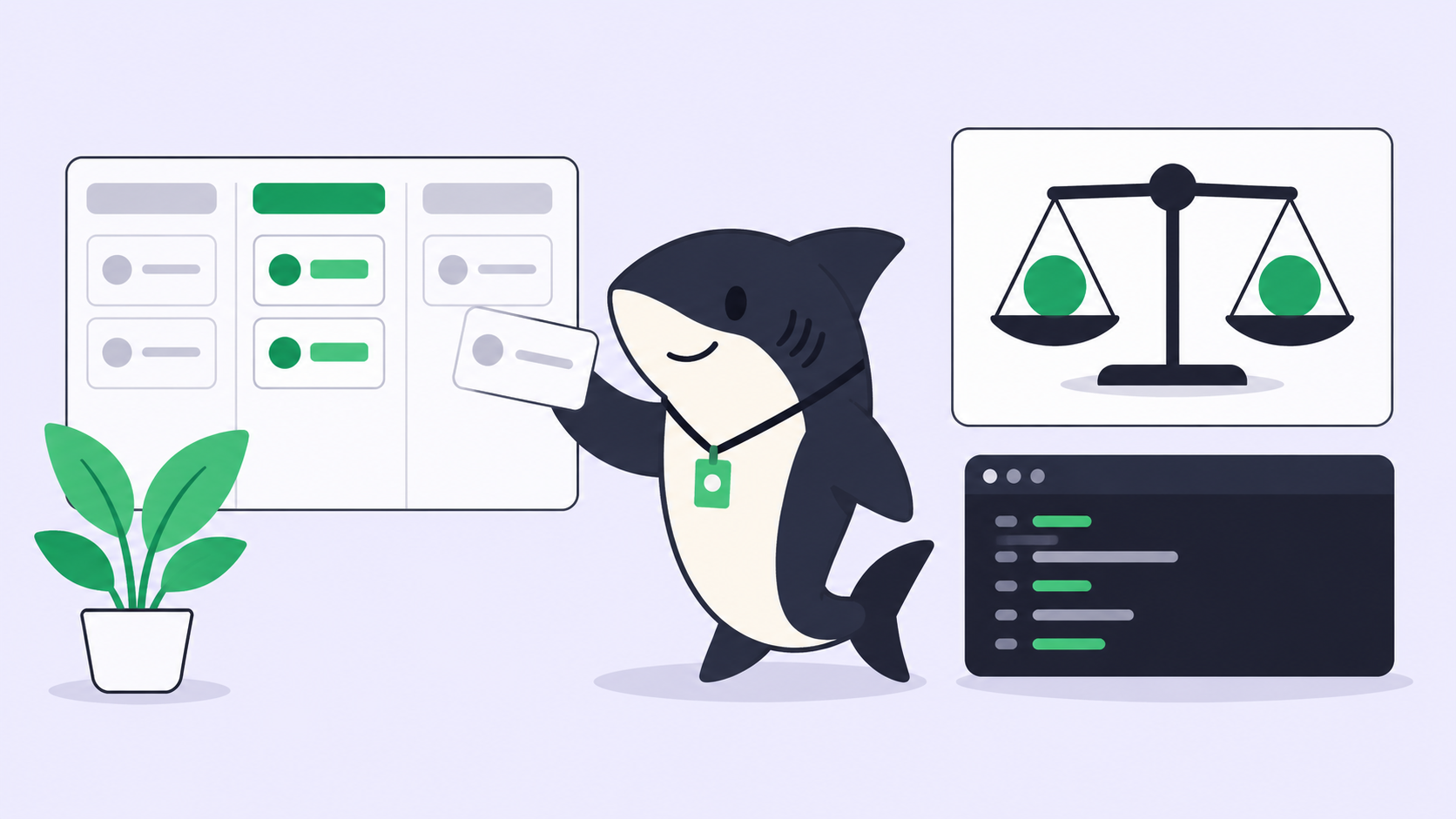
In a Crew, the split follows Anthropic’s own positioning. Opus 5.5 “remains clearly stronger at complex, open-ended work”, which describes the leader’s job: plan, assign, review. Member work is the well-scoped kind Sonnet 5.5 is positioned for, and one early tester quoted on the launch page describes the same split, with Sonnet 5.5 implementing an architecture Opus 5.5 set.
| Runtime model | API id | Input / output per 1M | Where it fits |
|---|---|---|---|
| Claude Sonnet 5.5 | claude-sonnet-5-5 |
$2 / $10 | Routine members: bug fixes, scoped features, docs |
| Claude Opus 5.5 | claude-opus-5-5 |
$4 / $20 | Leader, reviewer, open-ended work |
| Claude Sonnet 5 | claude-sonnet-5 |
$2 / $10 | The previous Sonnet; where flagged cyber requests fall back |
| GPT-6 Sol | gpt-6-sol |
$2 / $10 | A second Runtime, on Codex, at the same price |
Because the documented place for the model is the Computer’s tool configuration, the straightforward two-tier setup is two Computers: one where Claude Code keeps its Opus 5.5 default for the leader, one pinned to claude-sonnet-5-5 for the members. Where the line between them falls is a routing rule worth writing down; Sonnet 5.5 or Opus 5.5 walks through it, and Sonnet 5.5 against GPT-6 Sol covers the other Runtime at that price. Model usage continues through the subscriptions or API keys configured in those tools, so these rates land on your provider bill, not on Sharkly.
What changes on the board
Faster runs land on the same reviewers. More finished work per day on the same budget comes with no extra reviewer hours, and the habit of adding tests and docs makes each diff larger. Plan around review capacity, not model price.
A flagged run may not be a Sonnet 5.5 run. This is the first Sonnet with cyber safeguards. Anthropic says higher-risk cyber tasks “will visibly fall back to Sonnet 5”, and the system card warns of more refusals even on benign security work. Visible in the session is not visible on the board: Sharkly does not display a model name, so nothing on the Task says which model answered unless the Agent writes it down. That is why the instructions above ask for it.
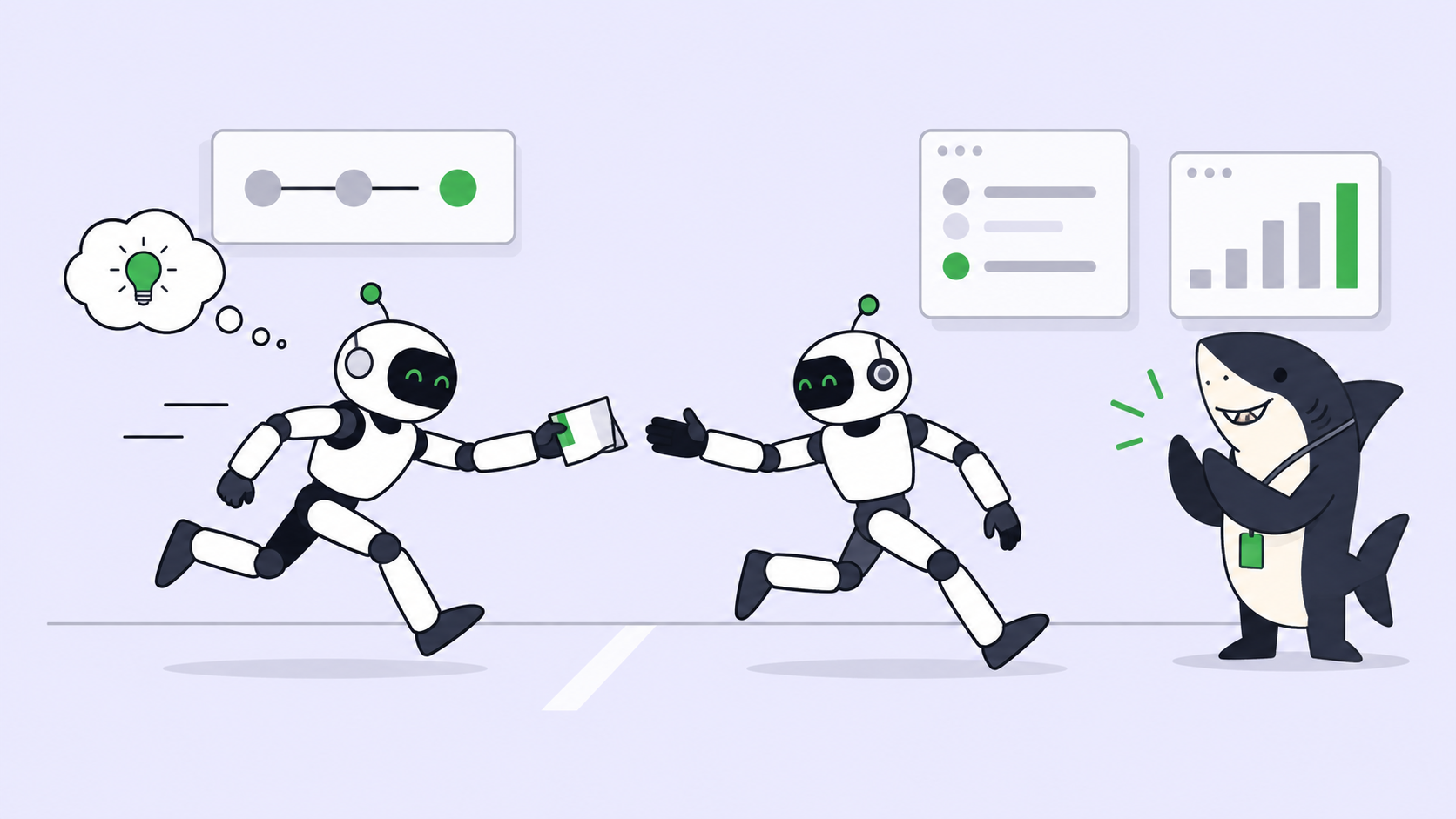
Reasoning stays with the model that produced it. Sonnet 5.5 cannot read Opus 5.5’s thinking blocks, no other model can read Sonnet 5.5’s, and unreadable blocks are dropped without an error. Even inside one Claude Code session, switching between the two keeps the visible text and loses the reasoning behind it. Between Agents on a Crew, reasoning never traveled: the reviewer gets what the member wrote on the Task. Model handoffs lose the reasoning covers the fix, and handoff templates give it a shape.
The model changed this week. The assignment, context, progress, blockers, results and human review stayed where the team can see them. You can build this manually with worktrees, or use Sharkly to manage the workflow.