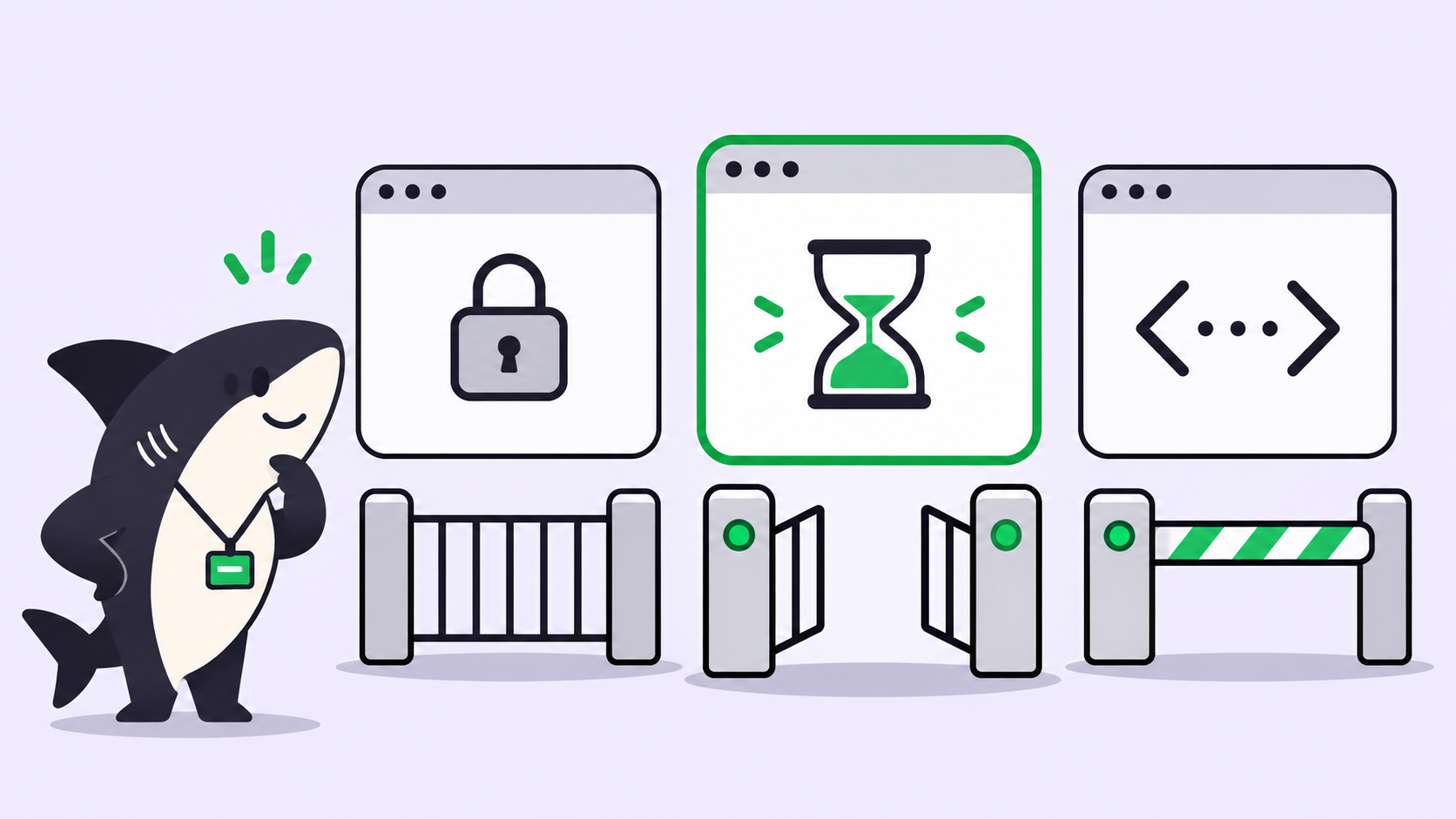
TL;DR: Goldman Sachs pulls Claude Code from most of its bankers and traders, according to Bloomberg. Internal guidance updated in October limits Anthropic’s Claude Code and GitHub’s coding tools to engineers and strats, citing productivity and risk management. The lesson for other teams is narrower than “ban the tool”: decide who assigns agent work, which code and credentials it touches, where it runs, and who accepts the result.
What Goldman Sachs changed, and what it didn’t
Goldman Sachs pulls Claude Code back to the people who write software for a living. On November 2, 2026, Bloomberg reported that the bank had restricted AI coding tools for most traders and bankers. The Decoder and The State of AI followed with the same facts.
Here is what the reporting describes:
- The tools: Anthropic’s Claude Code and Microsoft’s GitHub coding tools.
- Who keeps access: engineers, plus strats, the hybrid staff who work across trading, quantitative research and software.
- When: internal guidance updated in October 2026.
- Why: a Goldman spokesperson, Nick Carcaterra, pointed to “a variety of factors including productivity and risk management.”
- What traders used it for: following client trading flows, modeling market moves and positions, and building written and visual material.
- What stays: Goldman’s in-house AI assistant, which uses models from several companies, remains available firm-wide.
Two boundaries matter. Goldman did not ban AI. It did not drop Claude Code either: its engineers still use it. The bank changed who runs a coding agent, and that question deserves a better answer than a license list.
The story drew a long Hacker News thread. Under the headline sits an operational problem most engineering teams share.
Why pulling a coding agent only answers one question
Coding agent governance is the set of rules that decides who can start an agent, on which work and which code, with which credentials, and who reviews what it produces. A license restriction answers the first question. It leaves the other three to whoever still holds a license.
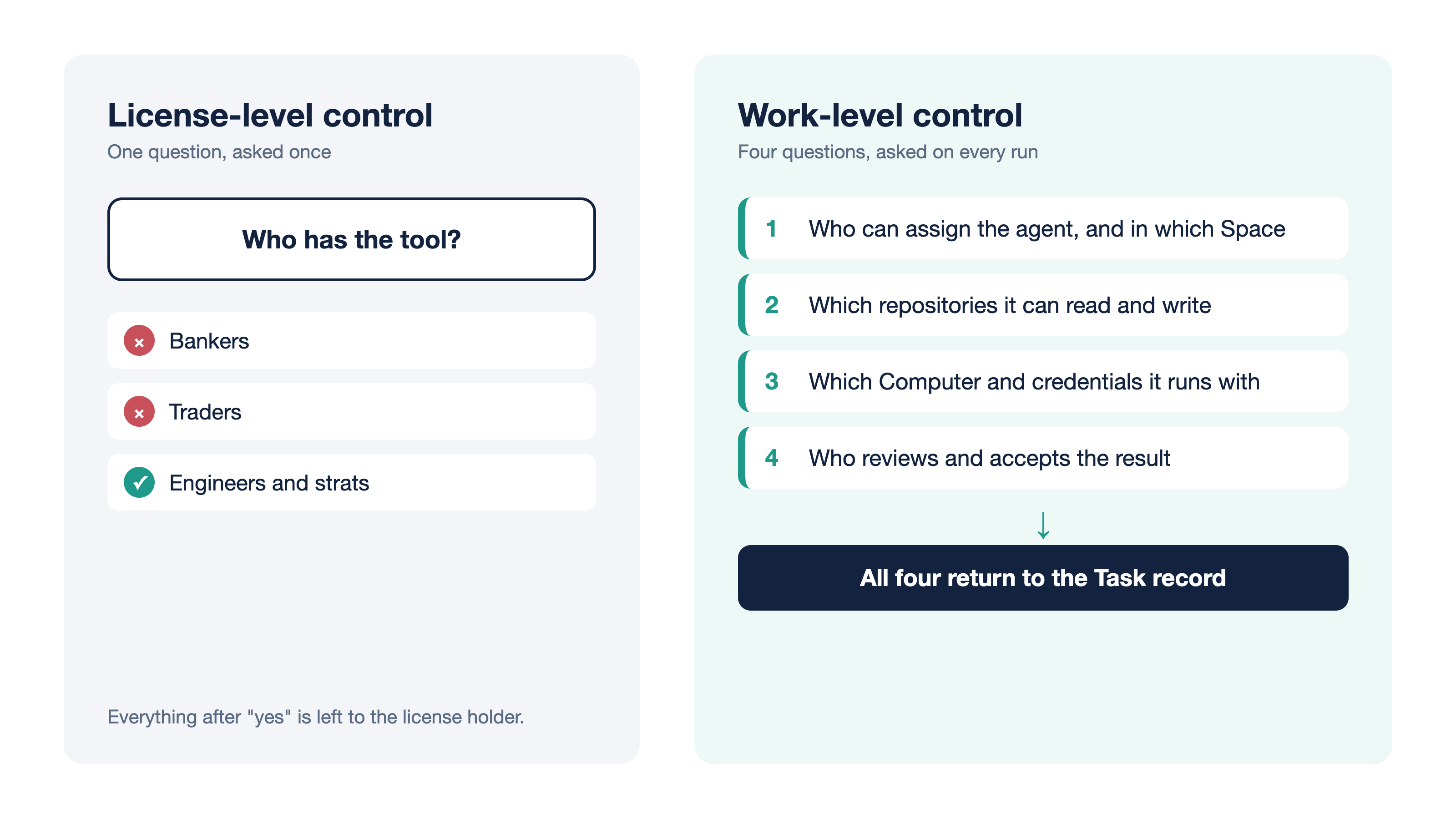
Consider a hypothetical trading-desk workflow, not a reconstruction of Goldman’s systems. One person opens a terminal, points Claude Code at a folder, and asks for a script that models a position. The agent writes code, runs it, and prints a number. Nobody else sees the request, the code, or the check that was or wasn’t run. If the number feeds a client conversation, the review step happened inside one head.
That workflow makes agent results difficult to review. At team scale, a shared record lets you compare the request, verification, and accepted outcome. This is our operational recommendation, not a finding about Goldman’s internal tracking.
The same pattern shows up at software companies with no regulator in the room. Five developers run agents in five terminals. Ask the team lead which agent touched the payments service last week, and the honest answer is a Slack search.
What teams should do instead: govern the work, not the seat
If you already run coding agents across a team, the fix is a work system around them, not a smaller user list. Here are six controls, ordered from cheapest to most involved. Sharkly is one place to run them; the controls hold whichever tool you use.
1. Route agent work through a shared Task
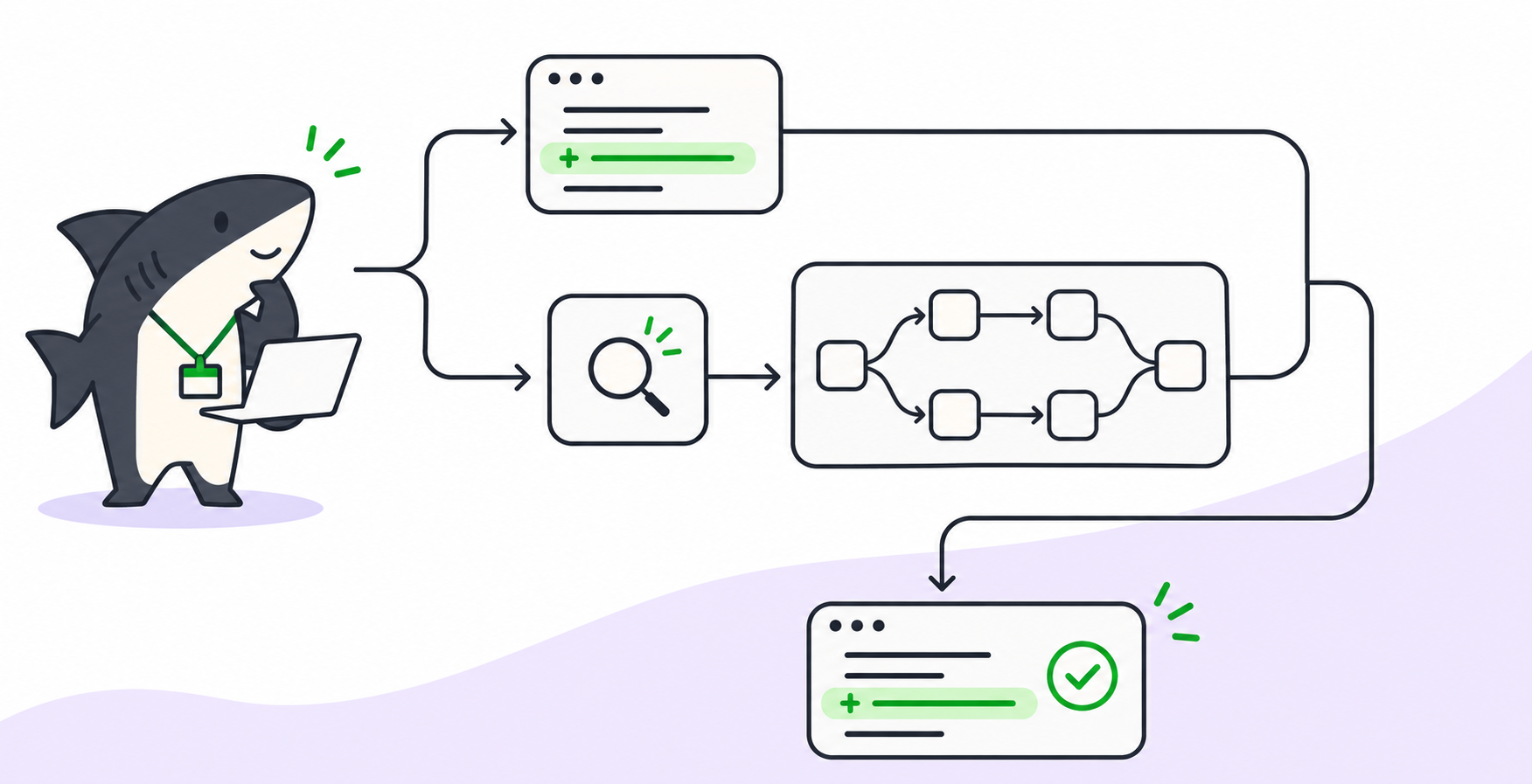
Every agent run should start from a Task with an owner, a status and acceptance criteria. Ad hoc chat is fine for exploring. Once the output matters, the request, the progress, the blockers, the result and the review belong on the Task, from request to release.
In Sharkly, a Task run combines the Task, its assigned Agent, and a Runtime on a connected Computer, and progress, trace events and the result return to the Task. A productivity review like Goldman’s becomes a query instead of a survey.
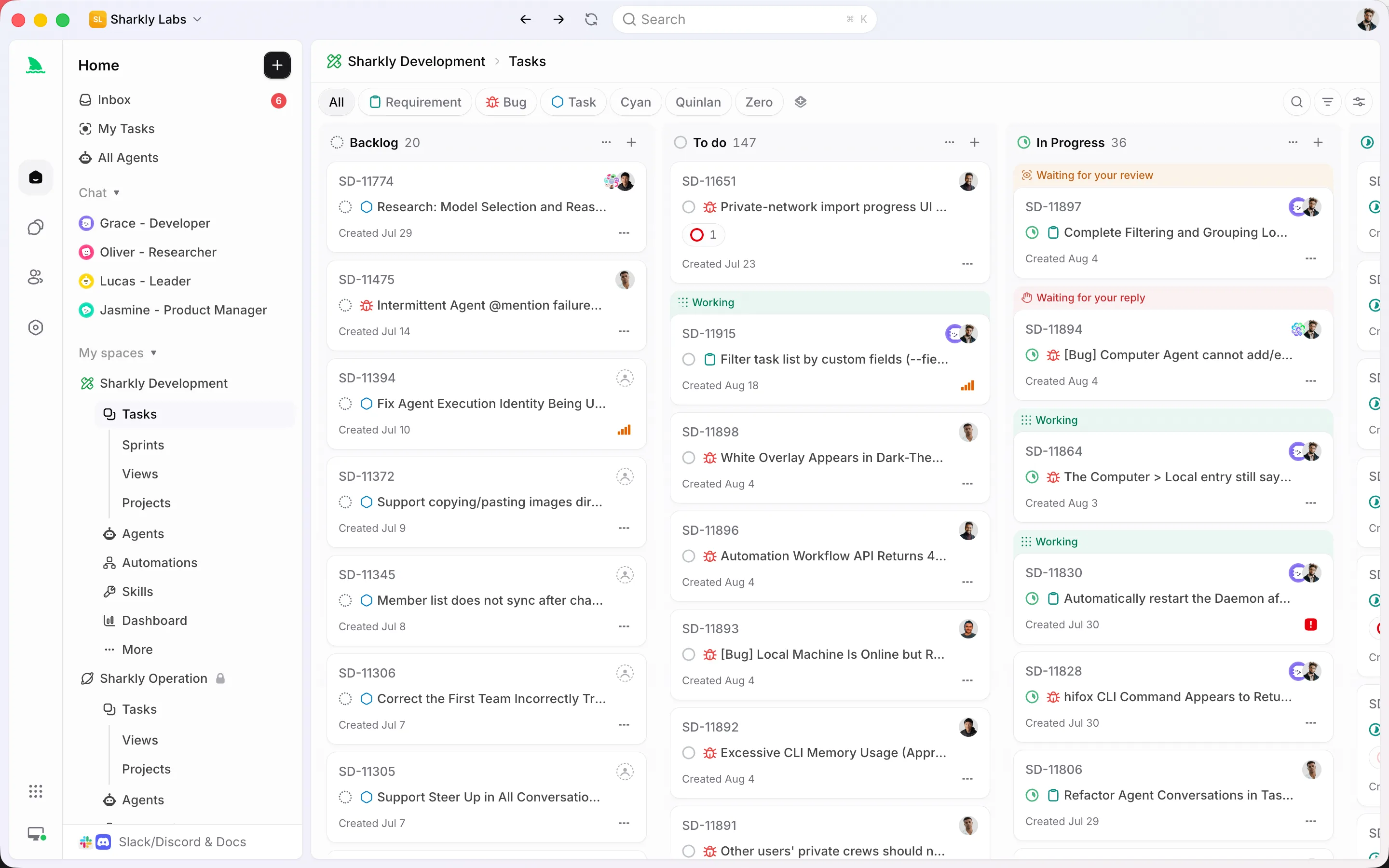
2. Give Agents a Space and a visibility, not a seat
A seat model asks “does this person have the tool?” A better question is “which Agents can this person assign, and in which Space?” In Sharkly, every Agent belongs to one Space and is either Personal or Space-visible, and that visibility decides who can assign it or start a chat with it.
Space roles add a second boundary. In a Private Space, a Viewer can’t create or edit tasks but can still comment and attach files. That can support a request-and-review workflow. A Viewer role alone does not establish command permissions or a security sandbox.
3. Put limits on the Agent
Limits on a person stop at “yes” or “no.” Limits on the Agent can be specific: how many tasks it runs at once, how long one run may take, and how long a request may sit in the queue.
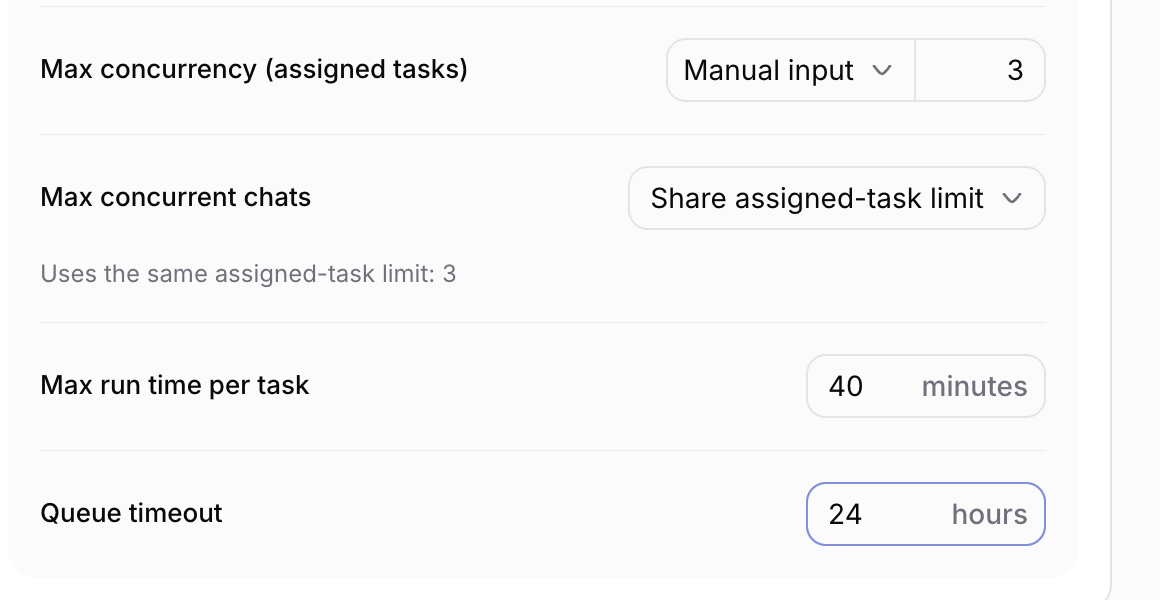
These settings belong to the Agent, so every person who assigns it inherits them. You change one number, not a hundred laptops.
4. Scope repositories and credentials to the run
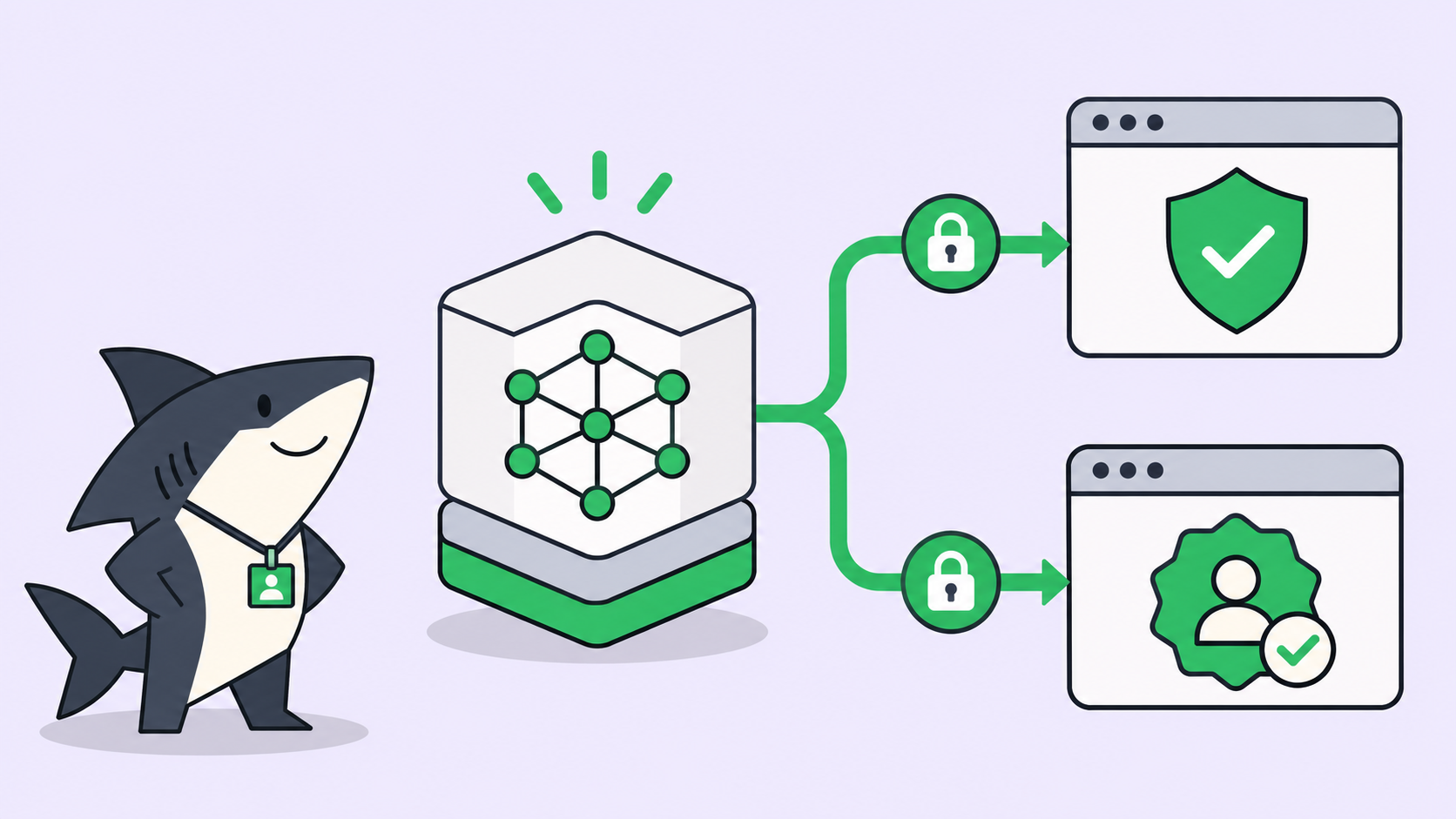
The risk half of Goldman’s reason lives here. An agent on a personal laptop sees whatever that laptop sees. Scope it instead: a Space keeps default repositories, an Agent can narrow them, and Sharkly’s docs limit repository management to people with Space or Organization administration access.
Credentials follow the same rule. Agents carry plain and secret environment variables, and the local service projects only the allowed environment into each run. For the per-command side, read what a coding agent should and shouldn’t be allowed to do, and check how coding agents leak secrets before you widen access.
5. Make review a status, not a favor
Agents research, execute, test and report. People set direction, grant authority and accept the result. Write that contract into the workflow: an Agent can leave a Task waiting for human review, and the reviewer’s Inbox surfaces it next to failed or blocked work.
When review is a status, you can count it. You know how many runs wait for acceptance and how long they sit there, which is where most teams find their real bottleneck. We covered the mechanics in how to review AI-generated code with task-level evidence.
6. Let non-engineers file the request
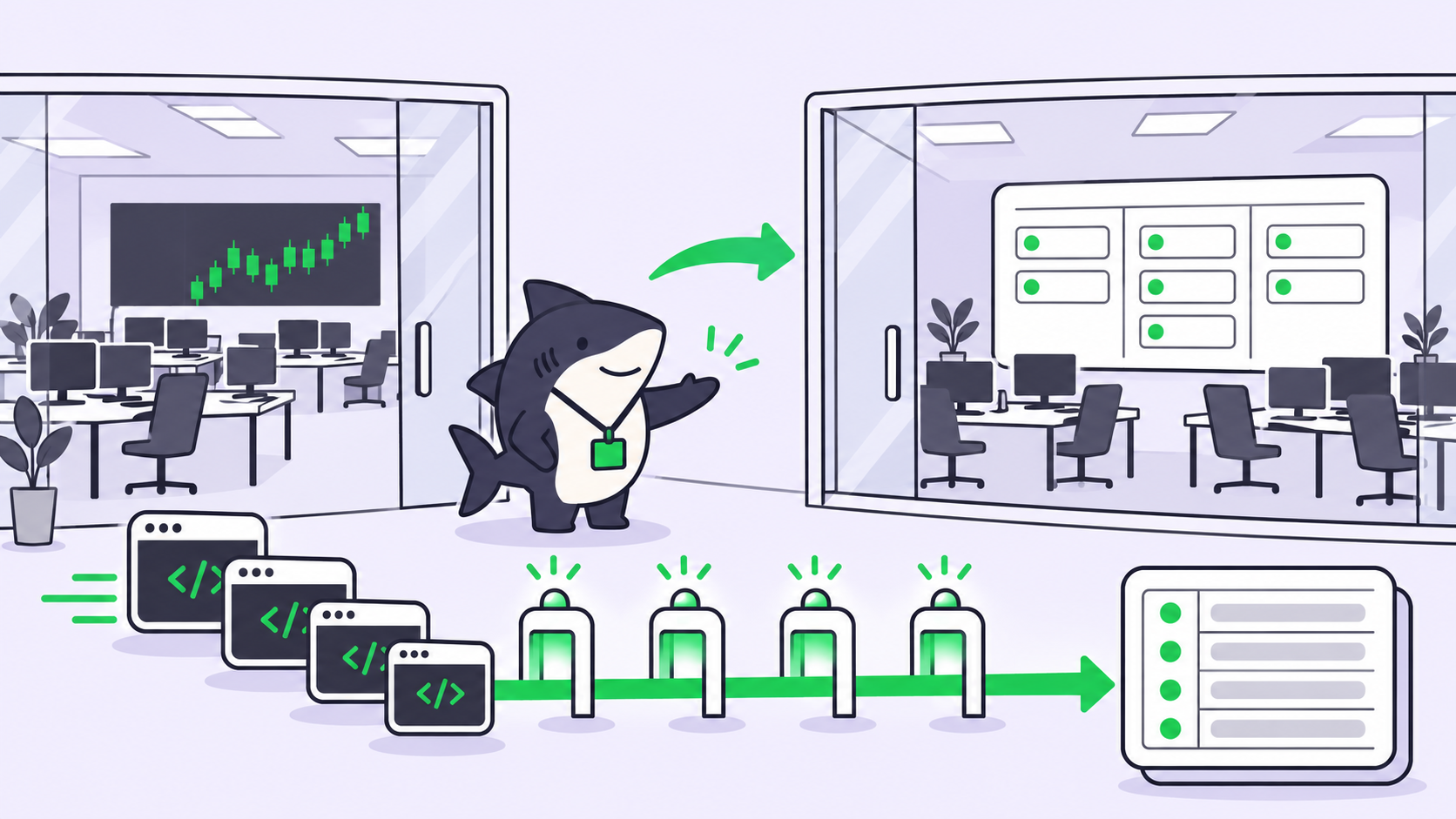
According to The State of AI, Goldman’s CIO Marco Argenti praised tools that non-technical staff built with AI and handed to engineers back in July. That handoff is the useful part. Keep it, and move the execution.
A trader describes the model they need on a Task. An engineering-owned Agent builds it in a scoped repository. An engineer reviews and accepts it. The trader gets the tool, and the firm gets a record of who asked, what ran and who signed off.
When restricting the tool is the right call
Restrict access outright when the work touches data that can’t leave a controlled environment and you have no review capacity yet. A shared work record does not override provider availability, data-handling rules, or your organization’s access policy.
Use the work-level controls when the value is real but the oversight is missing. That describes most engineering teams running Claude Code, Codex or Gemini CLI today. If you want to keep several agents in play rather than bet on one vendor, that’s the problem Sharkly is built around.
A Task is not a compliance program. It doesn’t replace your legal review or a framework like the NIST AI Risk Management Framework. It gives those programs something to inspect.
The takeaway for teams running coding agents
Goldman’s move is a reminder that “who has the tool” is the easiest governance question and the least informative one. Productivity and risk both depend on what happens after someone starts a run: the code it touches, the credentials it holds, the checks it runs and the person who accepts it.
Start small. Connect one Computer, create one Agent with a narrow role, scope it to one repository, and assign it a low-risk Task that ends in human review. When that record works for one team, extend it to the next. You can run your existing coding agents through Sharkly and keep Claude Code doing the execution.
FAQ
Did Goldman Sachs ban Claude Code?
No. Bloomberg reported that Goldman limited Claude Code and GitHub’s coding tools to engineers and strats. Most traders and bankers lost access; engineers kept it.
Why did Goldman Sachs restrict AI coding tools?
A Goldman spokesperson cited “a variety of factors including productivity and risk management.” The bank hasn’t published a longer explanation.
Can non-engineers safely use coding agents?
They can request work through an engineering-owned workflow with scoped access, testing, and human review. Those controls reduce specific risks; they do not establish that every task is safe.
What is coding agent governance?
It’s the set of rules that decides who can start an agent, on which work and code, with which credentials, and who reviews the output. License lists cover only the first part.
Does Sharkly replace Claude Code?
No. Claude Code, Codex and similar tools perform execution. Sharkly manages assignment, connected Computers, task context, progress and human review across those tools.