TL;DR: Most AI agents fail for reasons the model can’t fix: they start without the team’s know-how, without working plumbing (repository, credentials, the right computer), and without a cheap way to try a change and see if it helped. A smarter model raises the ceiling. A shared board that hands every run the same context raises the floor.
Here’s why AI agents fail on real teams, and it’s rarely the model. On November 20, 2026, Anthropic researcher Levent Alpoge released a four-page note saying that, working with Claude, he had found a proof of the Riemann hypothesis, and that the method also covers the generalized version. The claim has not been independently verified, and mathematicians expect weeks of reading. Still, the shape of the work is worth studying: a person who knew the field set the direction, the model did enormous volumes of work, and a proof checker judged the output.
That same week, Alexandr Wang argued on X that the gaps left are know-how, plumbing, and experimentation, not intelligence. If you run coding agents on a team, you’ve seen that sentence play out. This article maps those three gaps onto the agent runs that stall in your week, and shows how Sharkly closes each one on a shared board.
Why AI agents fail when the model is smart enough
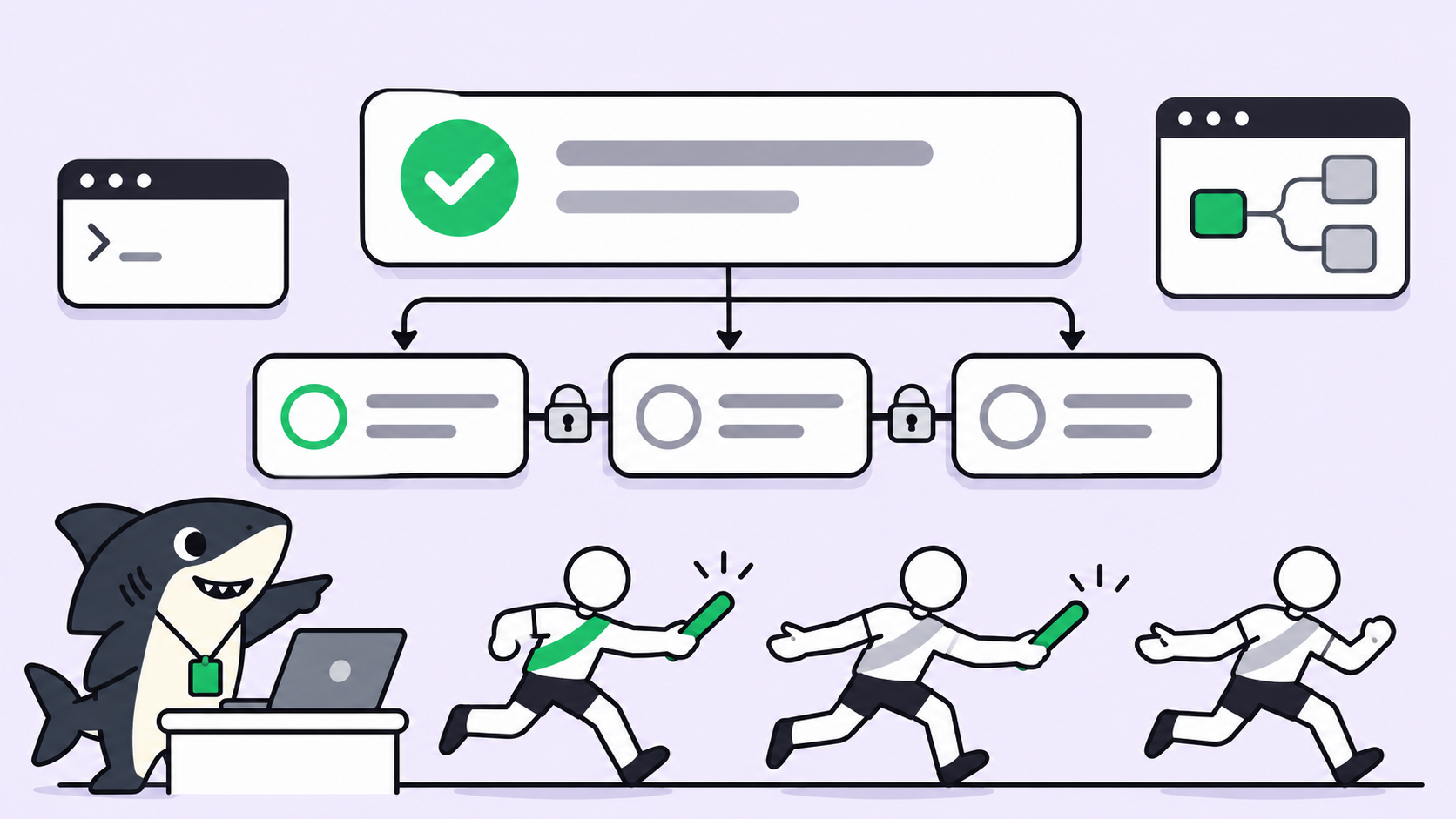
An AI agent fails on a team when the run starts missing something a human colleague would have had. In practice, five gaps cause most stalls:
- Missing know-how: the house rules for reviews, tests, and naming live in someone’s head.
- Missing task context: the ticket says “fix login” and nothing else.
- Broken plumbing: wrong repository, stale branch, no Git credentials on the host.
- No feedback loop: nobody can tell which instruction change made runs better.
- No review capacity: finished work piles up faster than people read it.
None of these improves when you swap in a stronger model. A smarter agent with no repository access still can’t push, and a smarter agent with no review rules still guesses. If the run fails on access alone, start with our checklist for agents missing access. The rest of this article covers the team-level version of the problem.
What the Riemann claim shows about agent teams
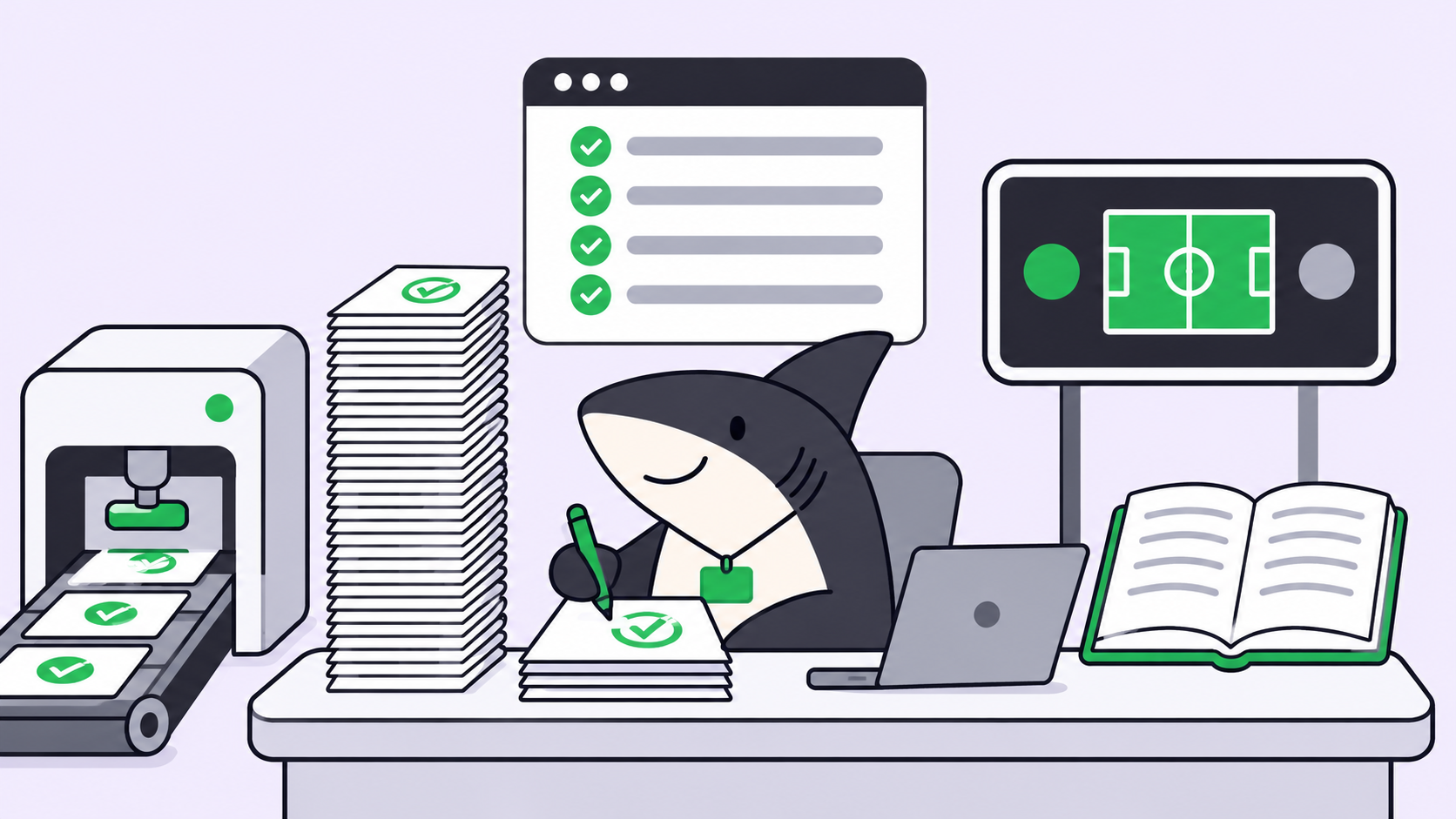
The useful lesson from the Alpoge story isn’t “models can do math now.” It’s the division of labor. According to Al Jazeera’s report, Alpoge wrote that Claude “far outpaced me near the finish line,” while number theorist Abhishek Saha said a strong mathematician can “direct and orchestrate AI.” The proof was released in Lean, a language where software checks every step. Kevin Buzzard put it at 17 million lines of Lean.
Read that as a team setup:
| Role | Riemann claim | Your agent team |
|---|---|---|
| Direction | A mathematician picks the problem and the approach | A person writes the task and the acceptance criteria |
| Volume | Claude produces the bulk of the work | Coding agents write the diffs |
| Checking | Lean verifies each step | Tests, CI, and a human reviewer |
| Shared record | The Lean file everyone can read | The task, its comments, and its run history |
The model was the volume. The person supplied know-how, and the checker supplied trust. Take either away and 17 million lines become noise. Your agents work the same way, at a smaller scale.
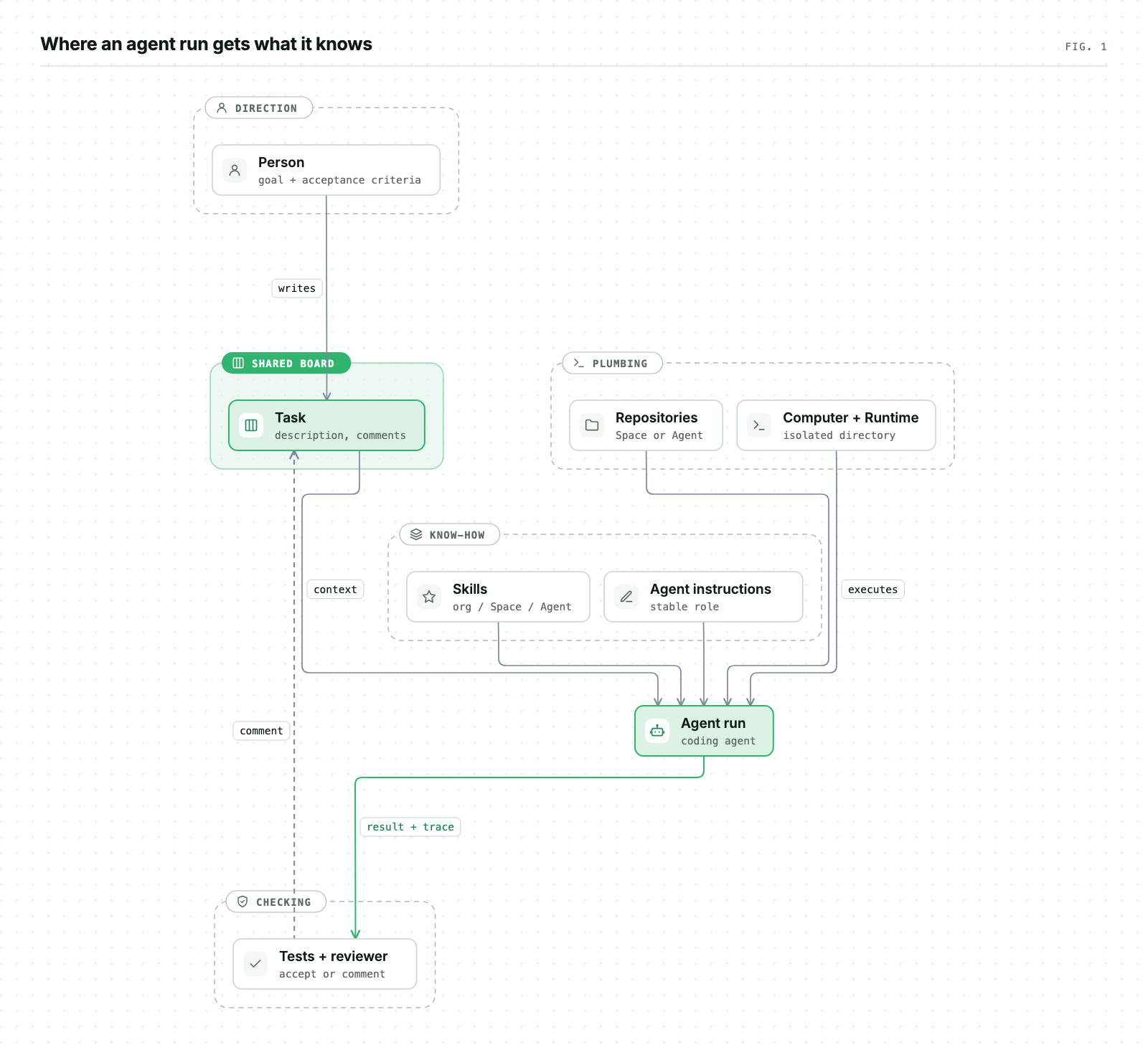
The three gaps behind stalled agent teams
Each gap shows up in a specific, recognizable way. Once you can name the gap, the fix is usually configuration, not a new model.
Know-how: where do your team’s rules live?
Know-how is everything your senior engineer does without thinking: run the narrow test first, never touch the migrations folder, write the changelog line. When an agent skips one, the fix tends to be a sharper prompt typed into one person’s terminal. The next run, on a teammate’s laptop, never sees it.
The cure is to store know-how where every run reads it. That means stable instructions per agent and reusable, versioned procedures shared across agents. Our guide to keeping context when you switch coding agents covers the handoff side of this.
Plumbing: can the agent reach what it needs?
Plumbing is the boring layer: which repository, which branch, which host, which credentials, which working directory. It breaks quietly. Two agents write to the same checkout, or a run starts on a laptop that’s asleep, or the token expired last Tuesday.
You fix plumbing once, at the right level, so individual runs stop inheriting someone’s local setup.
Experimentation: how do you know a change helped?
Teams tweak a prompt, watch one run, and call it better. That’s a sample of one. Experimentation means you change one rule, let the next ten runs use it, and compare outcomes against the runs before the change. You need a record of what each run received and what it produced, or you’re guessing.
How Sharkly closes the gap on a shared board
Sharkly is a task board where People, Agents, and Crews (an agent team with a leader) take work side by side. It doesn’t replace your coding agents. Claude Code, Codex, and the others still write the code; Sharkly decides what each run starts with and where the result lands.
Each gap maps to a part of the product:
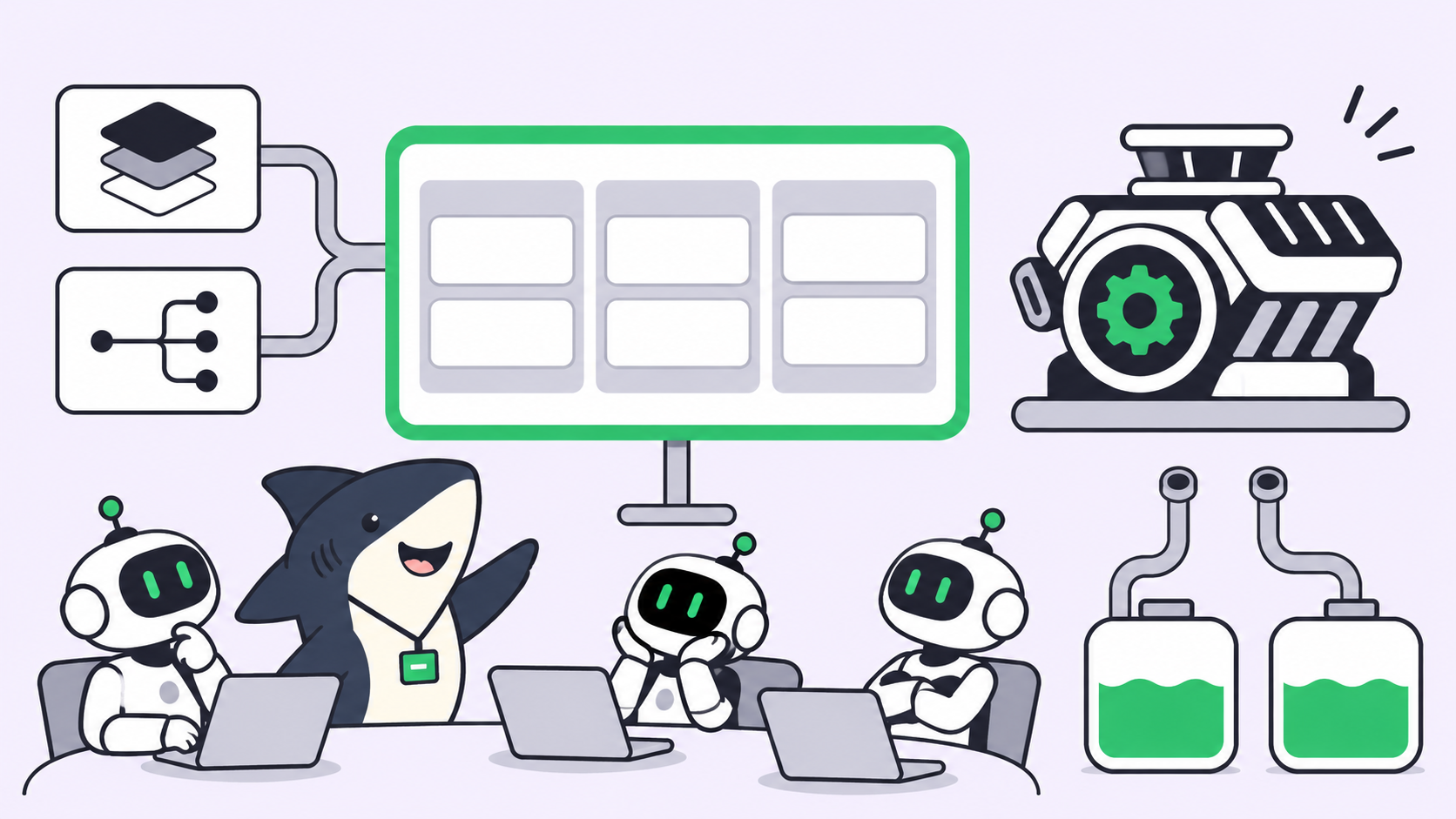
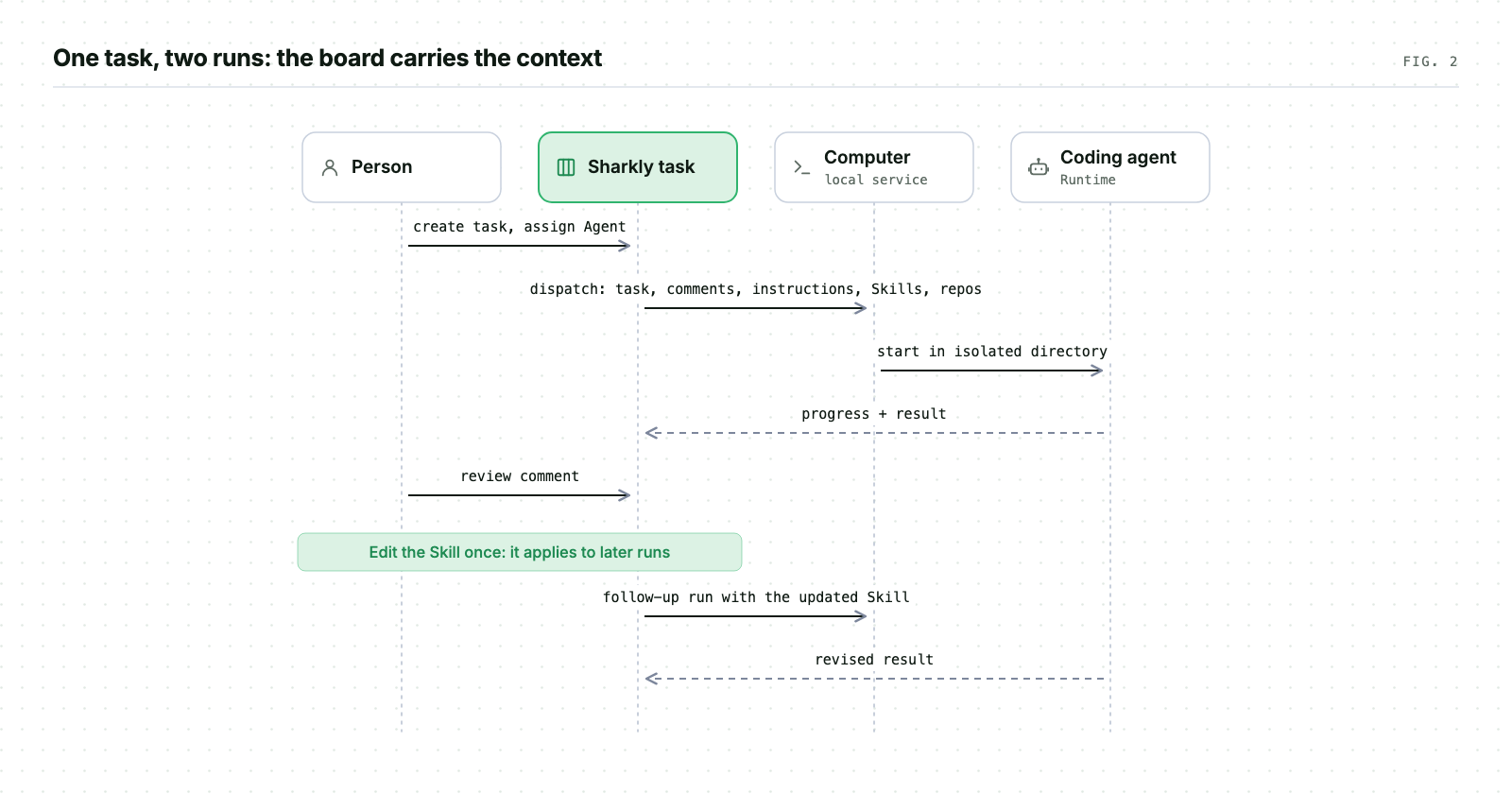
- Know-how goes into Agent instructions and Skills. Per the Sharkly docs on Skills, a Skill packages reusable instructions and supporting files, scoped to the organization, a Space, or one Agent. Changes apply to later runs, so one edit reaches every future run. See how teams turn prompt craft into Skills.
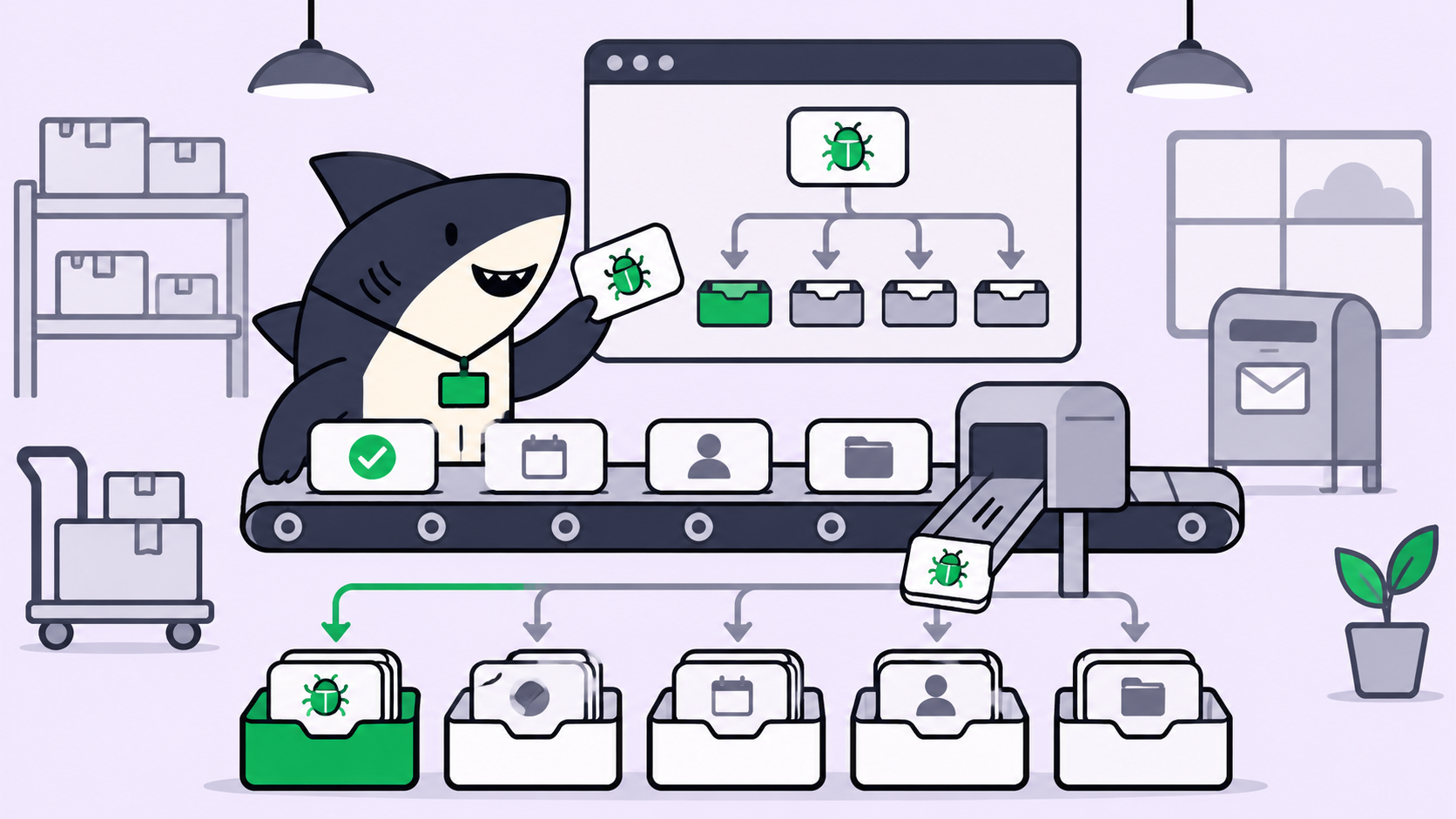
- Task context comes from the board. A run includes the task title and description, recent comments, status, labels, and the workflow’s allowed statuses.
- Plumbing lives in Repositories and Computers. Space repositories are the defaults; Agent repositories narrow them. Runs execute on a connected Computer through a Runtime, and Temporary mode gives each task an isolated directory.
- Experimentation is readable. Every task keeps its Executions history next to the comments, so you can compare runs before and after a Skill change.
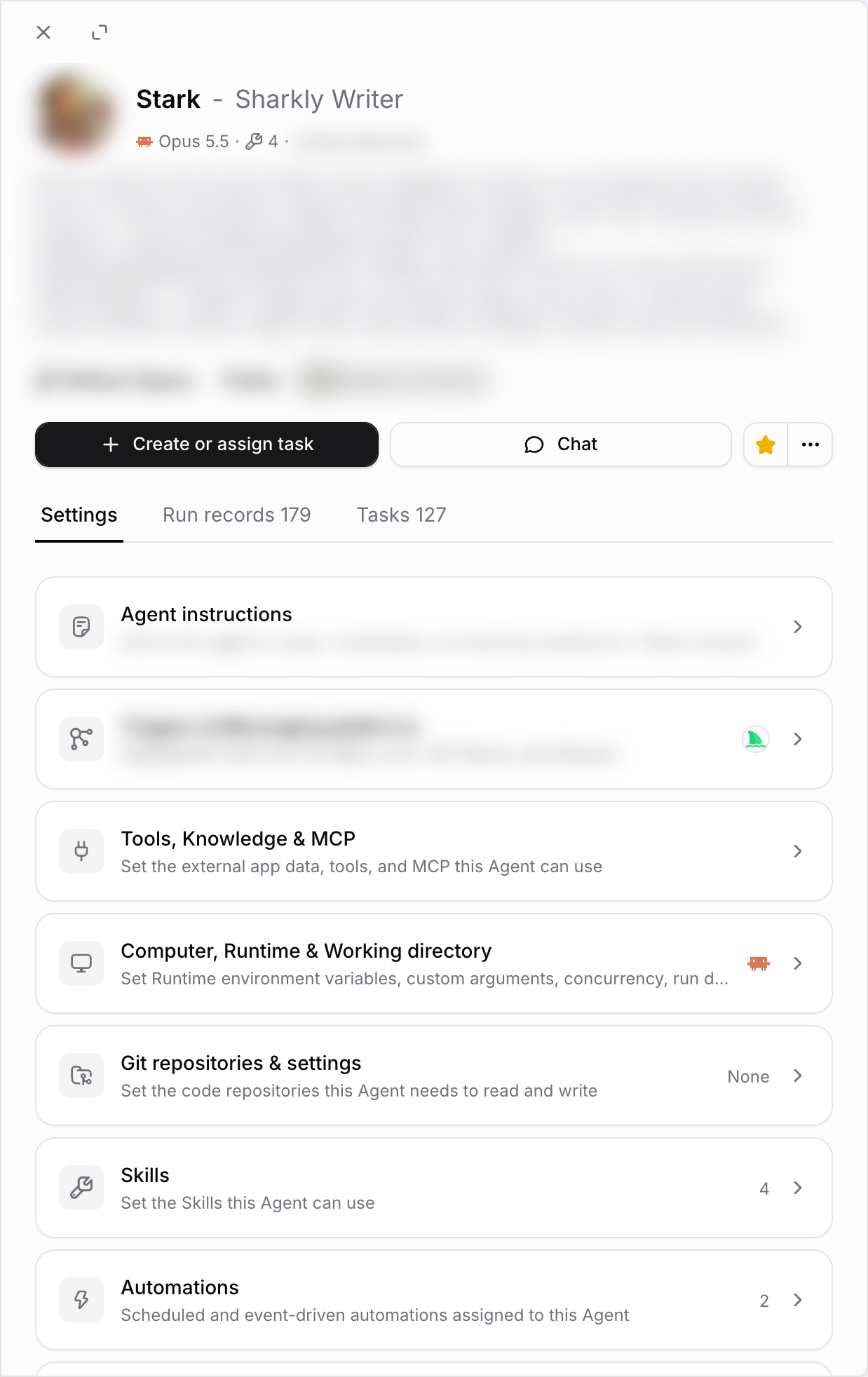
The Sharkly docs on agent task execution list everything a task-backed run can include. That list is the point: context is assembled by the platform, not retyped by whoever launched the agent.
A one-week plan to unstick your agent team
You don’t need a reorg. Run this sequence over five working days:
- Day 1: List your last ten stalled runs. Tag each with its gap: know-how, context, plumbing, feedback, or review.
- Day 2: Write down the top three rules your reviewers keep repeating. Turn them into one Skill and bind it to the agents that need it.
- Day 3: Fix plumbing at the Space level. Set the repository and baseline branch once. Use isolated directories for parallel work.
- Day 4: Write a task template with a goal, acceptance criteria, and the test command.
- Day 5: Compare. Read the runs since Day 2 against the ten from Day 1. Keep what helped and delete what didn’t.
Watch review load while you do this. Better context means more finished work, and our review-capacity math shows how fast that queue fills.
Alternatives to a shared board
You can close these gaps without a dedicated platform. A repo-level instructions file such as CLAUDE.md or AGENTS.md carries know-how for one codebase. Issue templates in your tracker carry task context. Scripts that clone a fresh worktree per run handle plumbing; Git’s worktree command does most of the work.
These hold up for one person and one agent. They strain when several people run several agents on several hosts, because each piece lives in a different place and nothing records which run saw which rule.
Conclusion
The Riemann claim still needs checking, and that’s the lesson. Raw model power produced the volume; a person’s direction and a strict checker made it worth reading. Your coding agents are already capable. Feed every run the same know-how, fix the plumbing once, and keep a record you can learn from. To try that on your own agents, set up a Sharkly workspace and assign your first task.
FAQ
Why do AI agents fail on simple tasks?
Usually because the run lacks context a person would have: the team’s conventions, the right repository, or clear acceptance criteria. Check what the run received before you blame the model.
Will a smarter model fix my agent’s mistakes?
It fixes reasoning errors. It doesn’t fix missing credentials, a wrong branch, or unwritten team rules. Those need configuration.
Was the Riemann hypothesis solved by AI?
Levent Alpoge claims a proof found while working with Claude, released as Lean code. As of late November 2026 it hasn’t been independently verified, and a Stanford postdoc has a separate claim.
What is know-how for an AI agent?
The rules and habits your team applies without writing down: test order, folders to avoid, review standards. Store it in instructions or Skills so every run reads it.
How do I measure whether an agent change helped?
Change one rule, let several runs use it, then compare their outcomes and review comments with the runs before the change.