

Linear is genuinely excellent, and a list of Linear alternatives that opens by pretending otherwise is not worth reading. It is the fastest, most opinionated issue tracker most engineering teams will use, and it has moved toward AI agents faster than any human-first rival. Teams rarely leave because it is bad. They leave for a reason: seat cost, self-hosting, heavier governance, or a need for AI coding agents to execute inside the plan.
That last reason now sorts the category: can the tool treat an AI coding agent as a real assignee, a worker that claims the Task, reads the context, runs the work on a host, and returns a reviewable result, or is it project management for humans only? The gap is narrower than most comparison posts claim, because Linear already does part of this, and getting the boundary right is the whole of AI agent project management.
TL;DR
If your reason for leaving is agent execution, Sharkly is the agent-native pick: an Agent is an Assignee, runs on a Computer your team connects, and returns results to the Task. Otherwise, governance points to Jira, cost to Shortcut, self-hosting to Plane, customization to YouTrack, and specs beside tickets to Notion. Linear is the baseline in the table below.
| Tool | Type | Agent as real assignee? | Best for |
|---|---|---|---|
| Linear (baseline) | Fast opinionated tracker | Partial: delegation only | Teams that live in the tracker |
| Sharkly | Agent command and management platform | Yes: assign, execute, review | Routing work to people and Agents |
| Jira | Enterprise process tracker | No | Governance and cross-team process |
| Shortcut | Lightweight dev tracker | No | Shedding cost and ceremony |
| Plane | Open-source PM | No | Data on your own servers |
| YouTrack | Scriptable JetBrains tracker | No | Unusually specific process |
| Notion | Docs plus database workspace | No | Spec and ticket in one place |
What Linear already does, precisely
Linear’s docs state that you can delegate an issue to an agent while a human teammate stays the assignee: “The assignee remains responsible for the work, while the agent contributes on their behalf.” Delegating starts a coding session through Claude Code or Codex, Linear drafts a pull request and adds a diff to the issue, and you review it in the tracker. That is real agent work, not a summary bot.
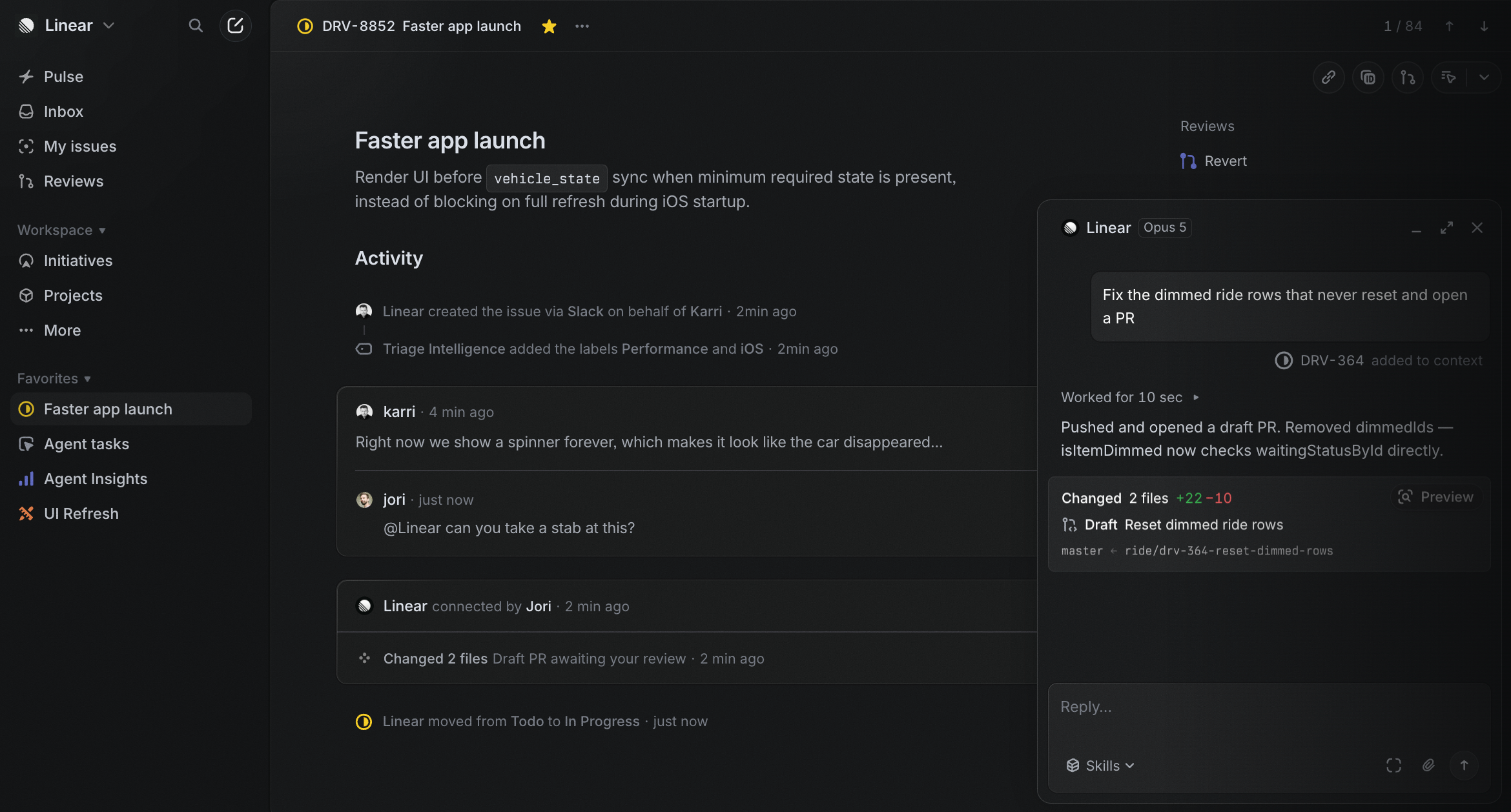
The constraints are just as clear. Sessions run in Linear’s own managed development sandbox rather than on hosts you operate. They are supported on the Basic, Business and Enterprise plans, and usage draws from your workspace’s AI credits, so execution is metered by the tracker rather than by coding subscriptions you already pay for. An environment contains one repository, and a repository can belong to only one active environment. That is a design choice, not a flaw. It becomes a limit only when agent execution is a share of delivery rather than an assist.
1. Sharkly
Sharkly is an all-in-one Agent command and management platform. It is not a replacement for Claude Code, Codex, or other execution tools. It adds the shared Task, Computer, context, control, and review layer around the tools your team already uses. Linear manages what people do. Sharkly manages what people and Agents do.
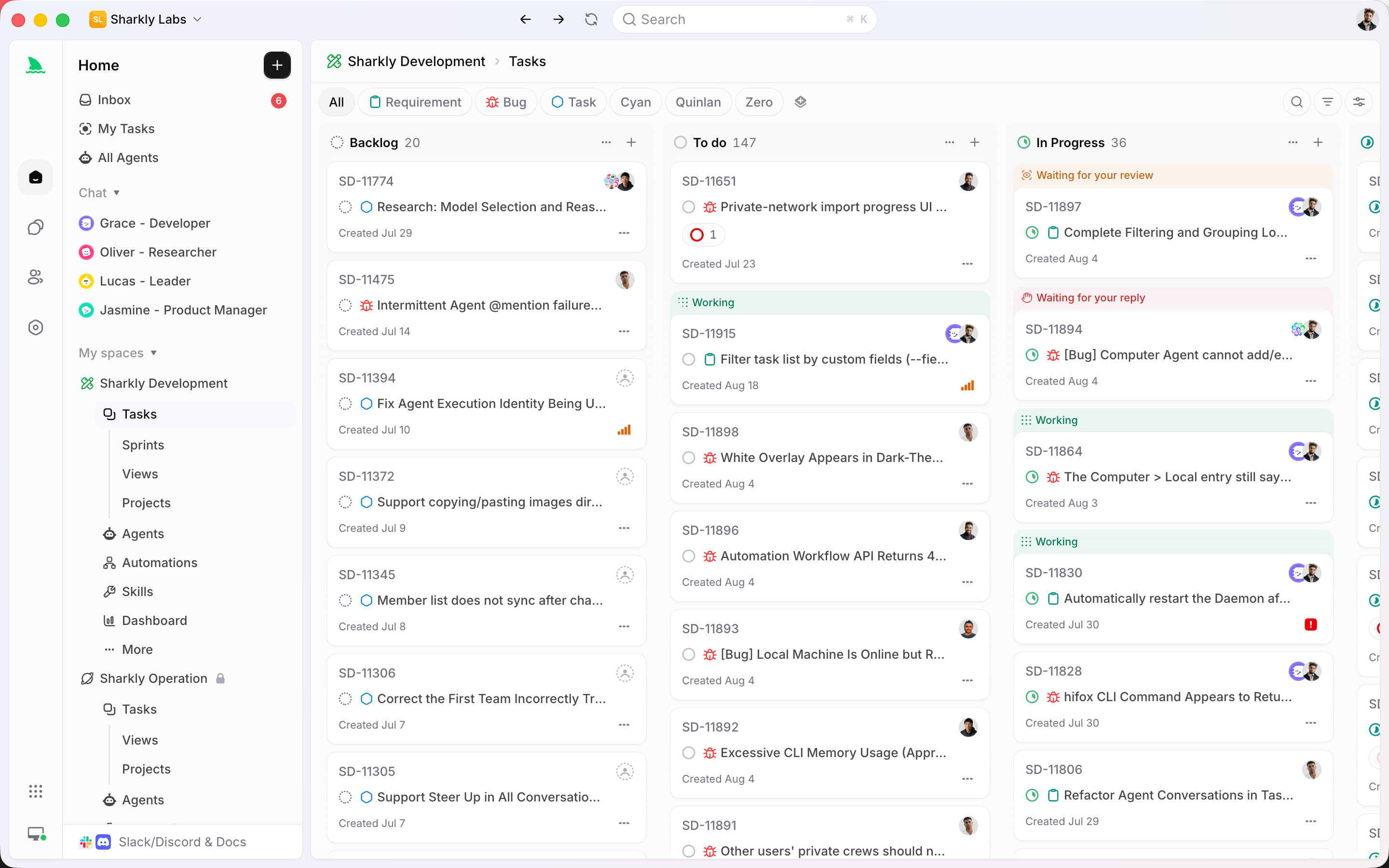
A Task is the main unit of work, and an Agent is an Assignee in the full sense. The Agent runs on a Computer your team connects, works in an isolated git worktree so parallel runs never collide, and its execution, blockers, results, and discussion return to the Task timeline. Agents research, execute, test, and report. People set direction, grant authority, and accept the result.
Sharkly does not sell tokens, so runs bill against the Claude Code, Codex, or API plan attached to the Runtime. It is currently free for organizations up to 10 people and $7 per user per month billed yearly above that, and Agents, Crews, Computers, and Runtimes take no seats.
The honest decision pair: use Sharkly when Agents do a real share of execution and more than one person needs to steer and review it. Do not pick it if your bottleneck is planning polish, because Linear has spent years on that and wins it. Start with getting started with Sharkly, or the Sharkly vs Linear comparison.
2. Jira
Jira is the tool Linear was built against, which makes it a strange but common destination for teams whose company outgrew Linear’s opinions. Its Free plan covers up to 10 users. Paid plans price per user on a scale that shifts with headcount, so use Atlassian’s calculator.
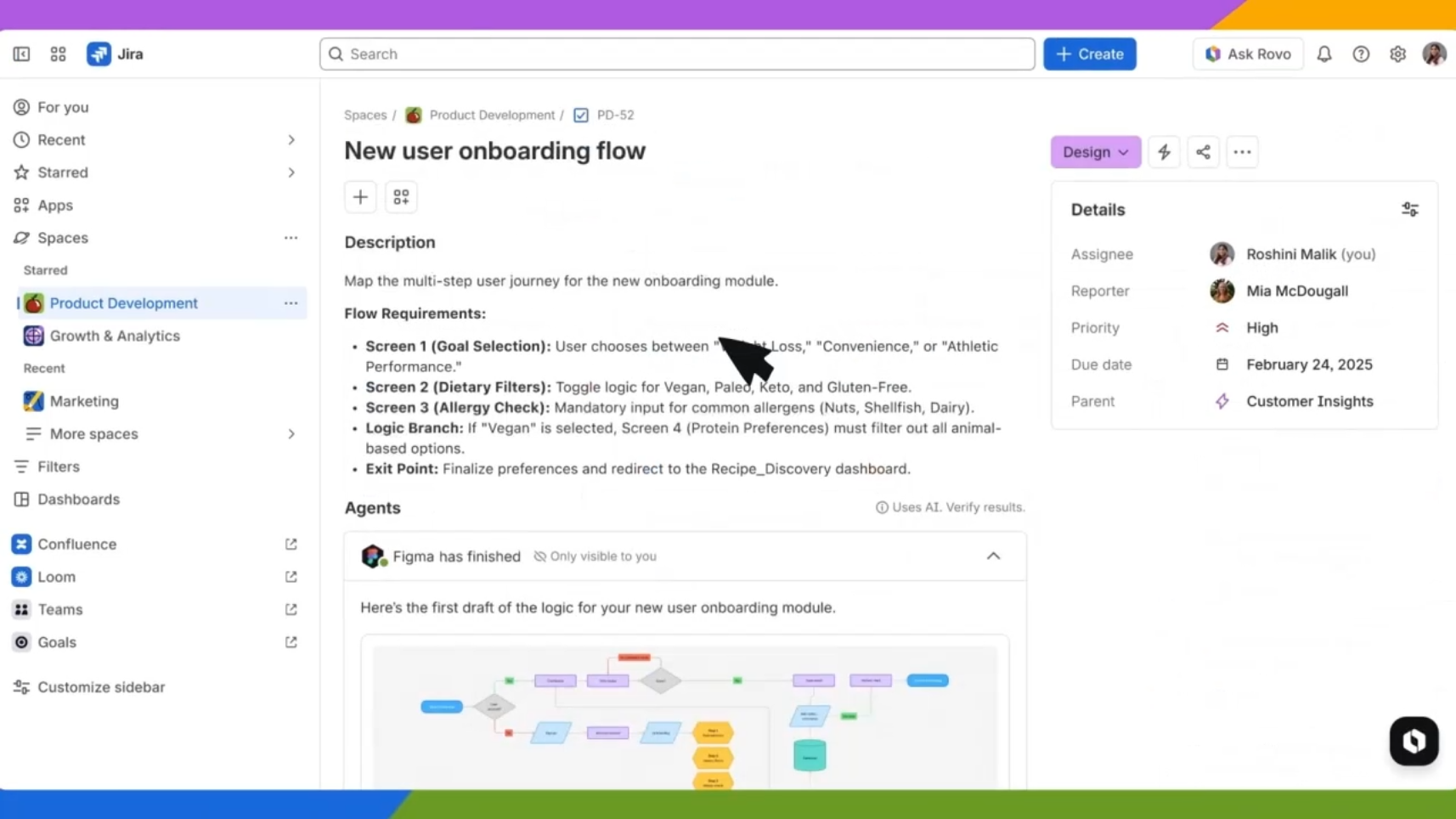
What it does better than Sharkly and most of this list: permission models, audit trails, cross-team process, and reporting a compliance auditor accepts. For agents, it automates issue state. An agent can call its API, but the execution, isolation, and review layer is yours to build. Longer version: Jira alternatives for human and agent teams.
3. Shortcut
Shortcut suits teams who find Linear excellent but pricier than they need. Its Free plan covers up to 10 users with one workspace, Team is $8.50 per user per month billed annually, and Business is $12.
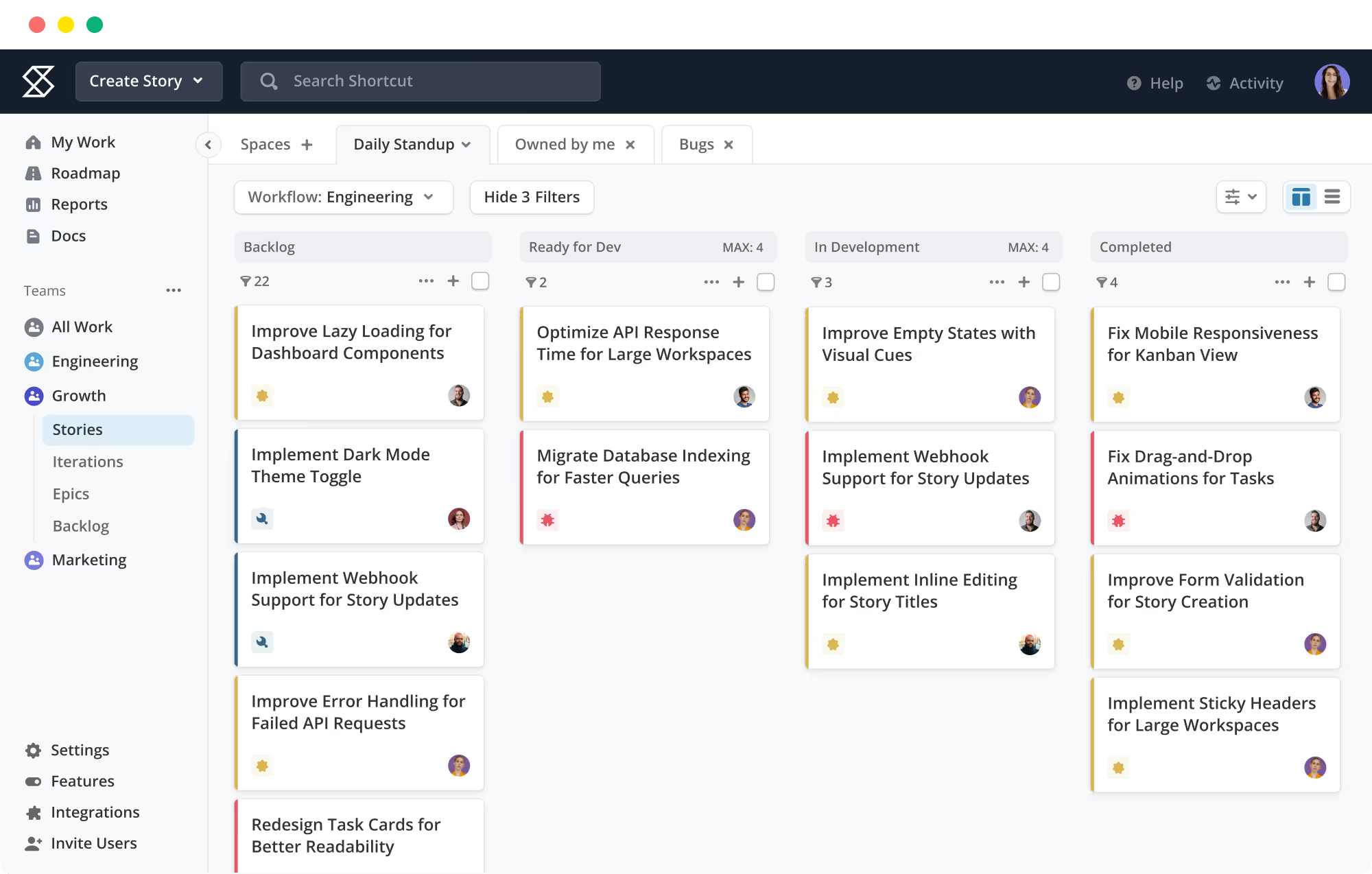
What it does better than Sharkly: it is a calm human tracker whose stories, epics, and iterations a new hire understands in an afternoon. For agents, a coding agent’s work appears only as commits and pull requests linked from a story. Pick Shortcut if agent usage is light enough to track by hand.
4. Plane
Plane is where Linear teams land when data residency is the constraint. The cloud Free plan covers 12 users, Pro is $6 per user per month billed annually or $8 monthly, and Business is $13 annually or $15 monthly. Self-hosting the open-source edition puts the data on your servers.
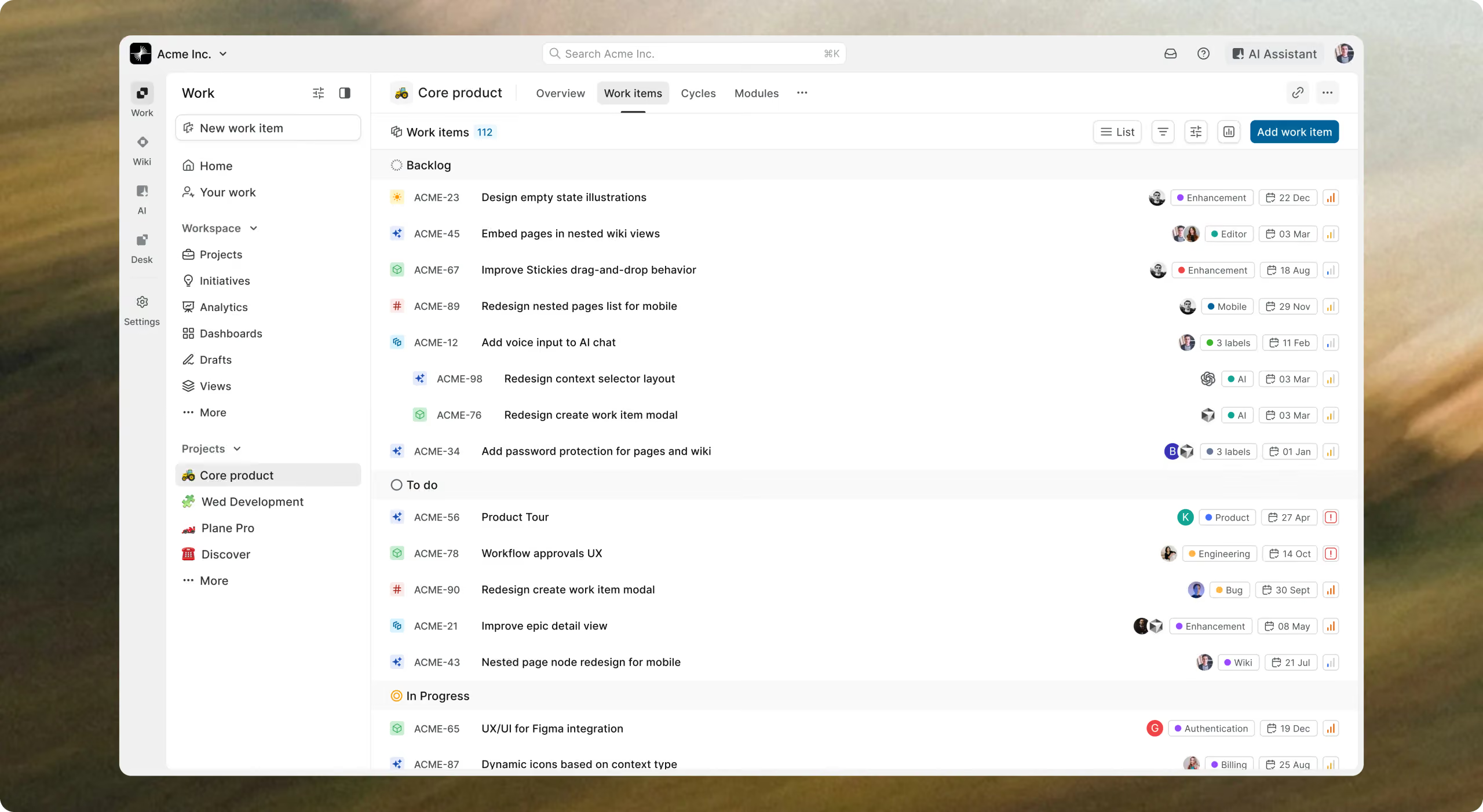
What it does better than Sharkly: it is open source and self-hostable, which Sharkly is not, and its issues, cycles, and modules match habits Linear teams already have. For agents, there is no native concept of one claiming a work item, executing, and returning a reviewable result. Pick Plane when self-hosting is non-negotiable.
5. YouTrack
YouTrack is JetBrains’ tracker and the power user’s exit from Linear’s opinions. Its licensing includes a free allowance for the first 10 users, with paid tiers sold in user packs for cloud and server, so price it on the JetBrains page.
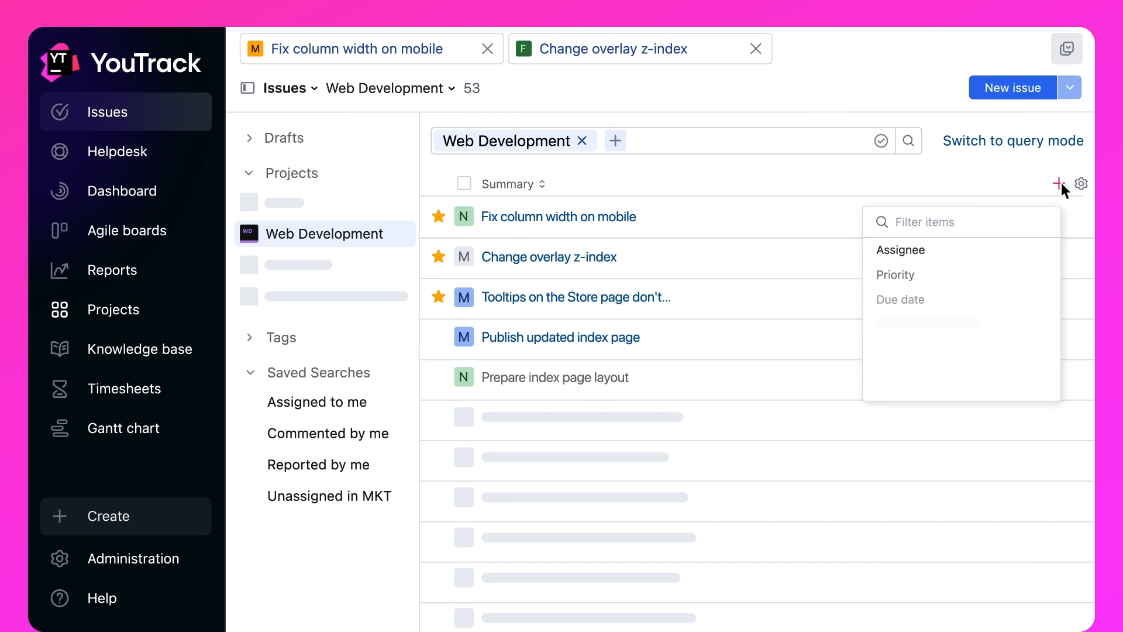
What it does better than Sharkly: query language and workflow scripting. A team whose process genuinely is unusual can express it here without an administrator tending the tool. For agents, scripting automates the tracker, not the work. A rule can transition an issue, but it cannot give an agent a workspace or return a diff with its context.
6. Notion
Notion is the honest pick for small teams whose real problem is that the spec lives in one tool and the ticket in another. Free is $0 per seat, Plus is $10 per seat per month, and Business is $20, discounted yearly.
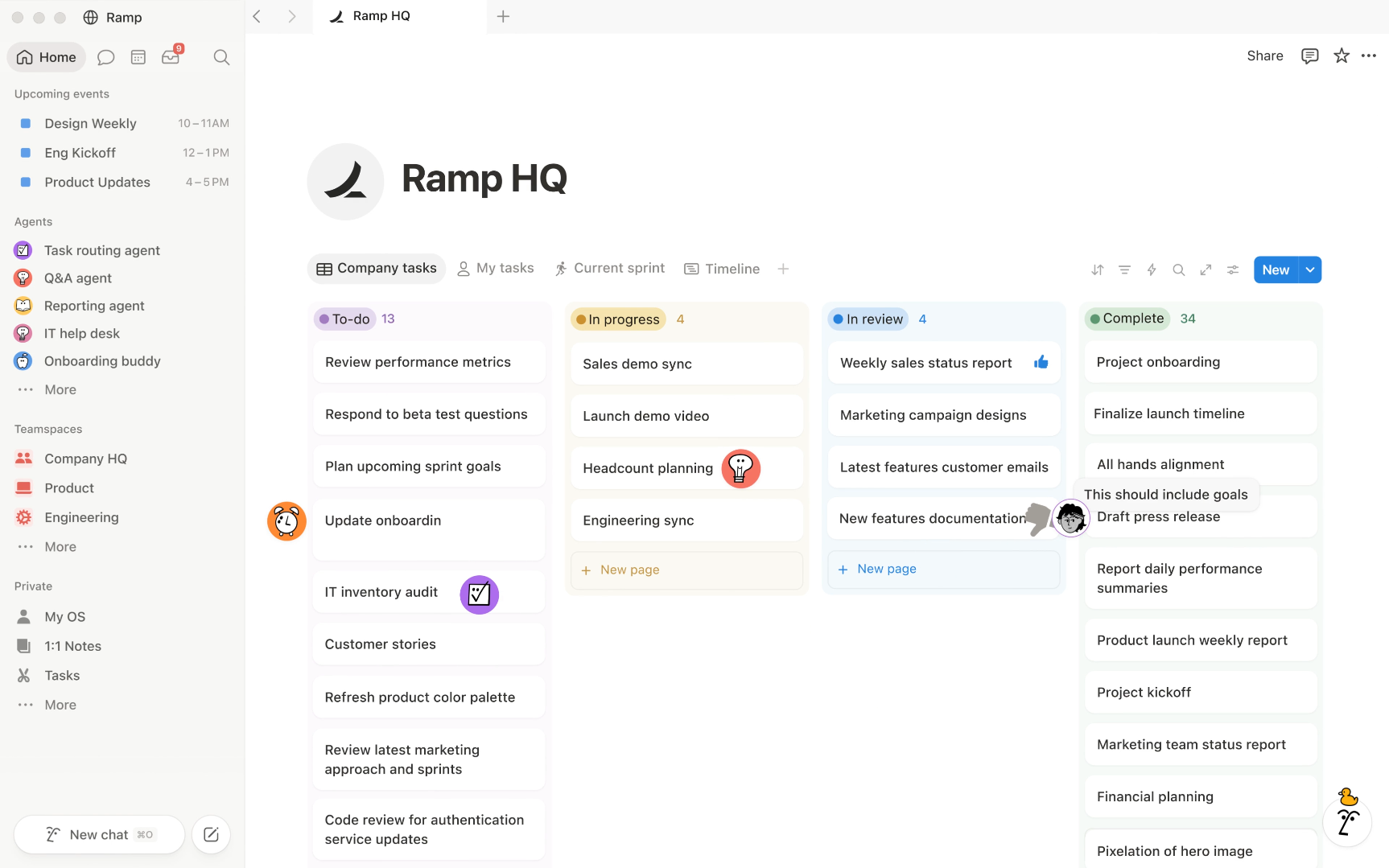
What it does better than Sharkly: writing. Requirements, decisions, and the work database sit on one page, which matters when the hard part is agreeing what to build. For agents, its databases hold records about work, not workers that perform it. Pick Notion when documents matter more than throughput, and accept the trade against tooling built to assign, track, and review agent work.
How to actually decide
Name the reason you are leaving, because each has a different answer and only one concerns agents. Cost points to Shortcut, self-hosting to Plane, governance to Jira, process eccentricity to YouTrack, documents to Notion. If none of those is your reason, you may not need to leave Linear at all, and saying so is more useful than selling a migration. Self-hosting and agent-native execution pull in different directions today, so pick the constraint that actually binds.
If the reason is agents, ask a sharper question: is agent execution part of how your team delivers, or a habit two developers have in a terminal? If it is the second, Linear’s coding sessions are probably enough. If it is the first, you need assignment, execution on hosts you control, and review in one record.
Then check where execution runs and who meters it. A tracker-hosted sandbox with its own credits is simple and fine at low volume. Your own Computers running existing coding subscriptions scale differently, and they let you route work to different runtimes, a decision covered in which coding agent should get this task.
FAQ
Can Linear assign issues to AI agents?
Linear can delegate an issue to an agent, and its docs are explicit that the human teammate remains the assignee while the agent contributes on their behalf. Delegation starts a coding session through Claude Code or Codex, and Linear drafts a pull request and attaches a diff to the issue. So Linear delegates to agents rather than assigning to them, and the work runs in its managed sandbox against your workspace’s AI credits.
What makes a tool agent-native instead of just having AI features?
An agent-native tool treats the agent as an assignee with an execution path: it claims a Task, runs on a connected Computer in an isolated workspace, and returns results, blockers, and evidence to the Task for human review. Summaries and auto-triage assist the humans using the tracker. They do not perform the work the ticket describes. More in project management tools for human and agent collaboration.
What is the cheapest Linear alternative for a small engineering team?
For human-only tracking, Shortcut’s Free plan covers up to 10 users and Plane’s covers 12. Sharkly is currently free for organizations up to 10 people and charges no seat for Agents, Crews, Computers, or Runtimes. Compare on total cost, since execution billed by a tracker’s credits behaves differently from execution billed against coding subscriptions you already hold.
Do we have to leave Linear to give agents real work?
No, and running both for a while is reasonable. Keep planning where your team already plans, and route the work agents actually execute into a system built to assign, run, and review it. Sharkly’s shipped connectors today are Jira, GitHub, and Slack, so check that list against your stack.
Is an agent-native tracker worth it if we run only one coding agent?
Usually not yet. One agent, one repository, and one developer reviewing the output is a workflow a terminal handles fine, and agentic project management starts paying for itself when runs overlap. The signal to watch is the first week two agents touch the same repository, or the first time nobody can say what an agent finished yesterday.


