Several coding agents cost $0 today, but “free” means one of three things: free software that runs a model you pay for, a free hosted model tier with limits, or free software driving a model on your own hardware. The only routes we confirmed at $0 in model costs, checked on October 23, 2026, are OpenCode and Kilo Code with their free hosted models, and Codex CLI, Claude Code, Cline, Aider and Qwen Code pointed at a local model. Cursor and Codex also have $0 plans of their own, with tight limits.
A free coding agent is a tool that reads your repository, edits files and runs commands for you, where neither the tool nor the model behind it sends you a bill.
The comparison
| Tool | What’s free | The catch | Best for |
|---|---|---|---|
| OpenCode + Zen free models | The agent and a rotating set of hosted models priced “Free” | Free “for a limited time”; data terms differ per model; free tier only answers OpenCode itself | A hosted $0 agent with no local GPU |
| Kilo Code + Auto Free | Open source extensions, a $0 individual tier, and kilo-auto/free routing to free models |
“Limited capability”; anonymous use capped at 200 requests per hour per IP; providers may log prompts | VS Code or JetBrains users who want free models without setup |
| Cline | The open source extension is free for individual developers | You bring an API key or run a local model; inference is billed by whoever serves the model | IDE users with their own key or capable local hardware |
Codex CLI with --oss |
Apache-2.0 CLI that can use Ollama or LM Studio | The local model does the work, not OpenAI’s | Codex users who want the same CLI at $0 |
| Claude Code + Ollama | Claude Code is free to install; Ollama serves the model | It is no longer Claude; some tools, such as hosted web search, are not fully supported | Claude Code users who want its workflow without a plan |
| Aider | Apache-2.0 terminal agent that connects to “almost any LLM, including local models” | Ollama’s default 2k context window silently drops data unless sized up | Git-centric terminal work on a local model |
| Qwen Code | Apache-2.0 CLI that supports local models through Ollama or vLLM | The Qwen OAuth free tier ended on 2026-04-15 | A terminal agent on a local or BYOK model |
| Cursor Free | $0 plan with “Agent and Chat with limited usage” | Third-party models are “Not available” | Trying Cursor’s editor before paying |
| Codex on ChatGPT Free | GPT-6 Luna at Standard speed in the desktop app, “subject to rollout” | No CLI or IDE extension until Plus at $20 | Light use of Codex in the desktop app |
What “free” means for each route
Free software, paid model. Cline, Aider and Qwen Code cost nothing to install. The bill comes from the model provider whose key you configure. This is the most flexible route and the least free.
Free hosted model tier. OpenCode Zen and Kilo Gateway each serve some models at $0. You need no GPU and no key, but you accept rate limits, rotating catalogs and the data terms of whichever provider serves the request.
Local model. Any agent that can point at Ollama or LM Studio runs with no model bill at all. You pay in hardware and in quality: agent loops need long context and reliable tool calling, and small local models need more retries than a frontier model. Our post on when cheap models cost more covers why a $0 model is not always the cheapest finish.
OpenCode with free Zen models
OpenCode is the simplest hosted $0 route. The Zen models page lists 13 models priced Free today, including Big Pickle, GLM-5.3-Flash Free, DeepSeek V4.1 Flash Free and three Nemotron models. Each is offered “for a limited time.”
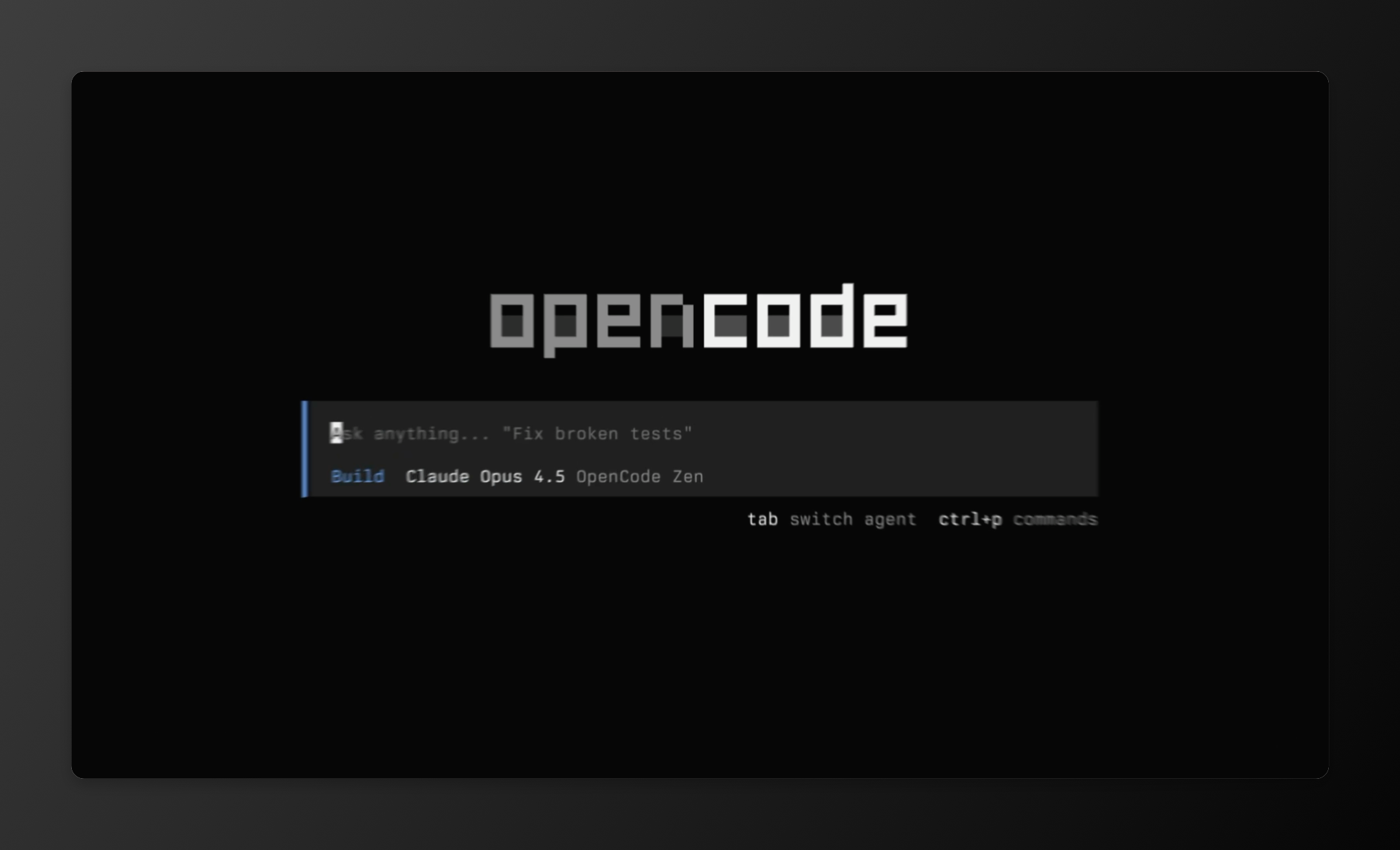
Read the privacy line for the model you pick. GLM-5.3-Flash Free and DeepSeek V4.1 Flash Free come from providers that follow “a zero-retention policy,” while for Big Pickle “collected data may be used to improve the model.” In an earlier test on October 16, 2026, OpenCode 1.19.2 on opencode/deepseek-v4.1-flash-free finished a write-and-run task in 32 seconds with no sign-in, but calling the same free model from our own script returned HTTP 403 FreeTierError. The free tier serves the agent, not your code.
Kilo Code with Auto Free
Kilo’s pricing page lists “Open source VS Code, JetBrains & CLI extensions” on a $0 individual tier, with bring-your-own keys for Anthropic, OpenAI, Google and others. Its gateway docs describe kilo-auto/free as “Free with limited capability. No credits required,” picking a model per session from a curated free set.
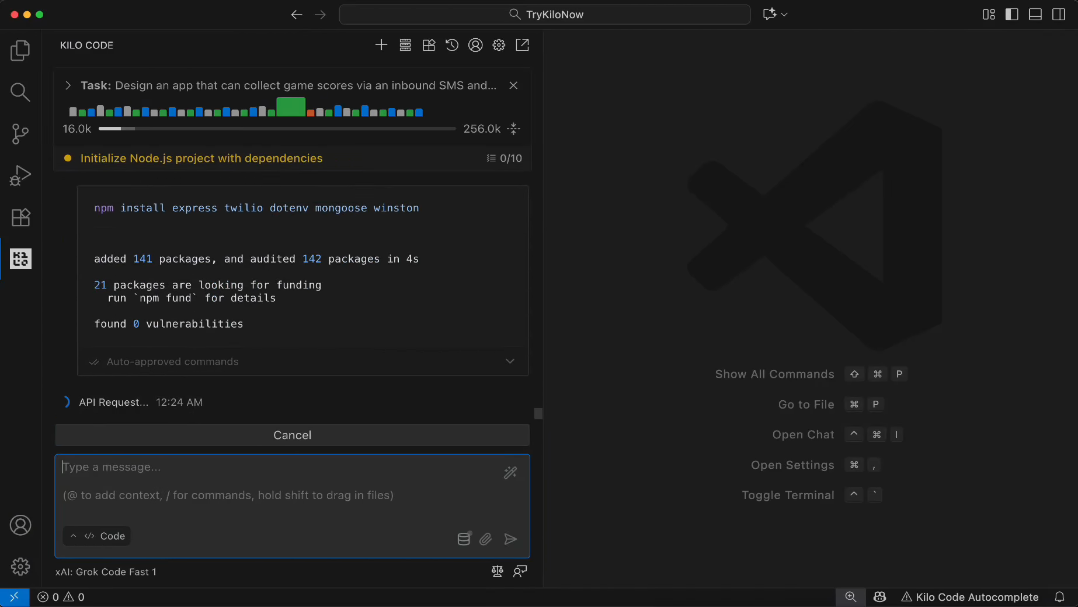
Free models work for “both authenticated and anonymous users,” and “anonymous users are rate-limited to 200 requests per hour per IP address.” The docs warn that Auto Free “may route your requests to providers that log prompts and outputs,” so keep confidential code out of it.
Cline
Cline’s pricing page says the open source extension costs nothing for individual developers. You “bring your own API keys or use the Cline provider,” and “only pay for AI inference credits when you use AI models.” The page names no free models, so the $0 route is local.
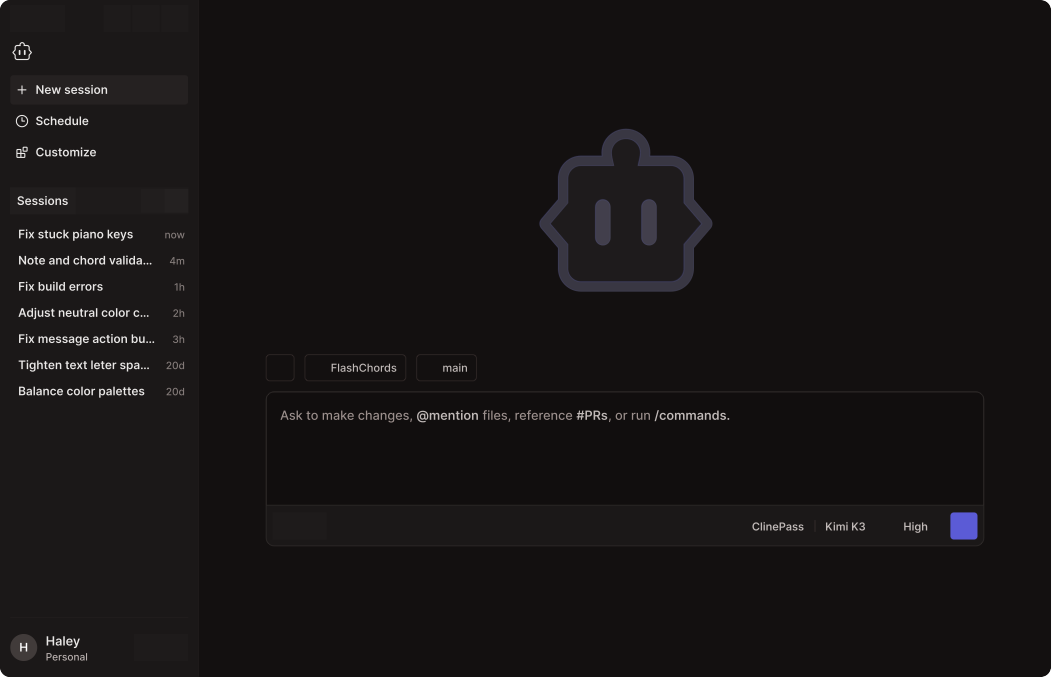
Cline’s local models guide connects to Ollama at http://localhost:11434 or LM Studio at http://localhost:1234, and suggests 32 to 64 GB of RAM for mid-size coding models. Keep tasks narrow and start a new task once context grows.
Codex CLI with a local model (the free Codex alternative)
If you like Codex but not the price, the most direct free Codex alternative is Codex itself. OpenAI’s pricing page gives ChatGPT Free “GPT-6 Luna at Standard speed in the desktop app, subject to rollout,” and puts the CLI and IDE extension in Plus at $20 a month. Our Is Codex free? post has the full plan breakdown.
The Codex repository is “licensed under the Apache-2.0 License,” and the CLI (version 0.140.0, checked today) has two flags for local models:
codex --oss --local-provider ollama
# --oss: "Use open-source provider"
# --local-provider: "lmstudio or ollama"
You keep Codex’s sandbox and approval modes; the reasoning comes from whatever model you load. We did not run a local session today, so treat speed and quality as untested.
Claude Code with Ollama (the free Claude Code alternative)
Claude Code is free to install, but Anthropic’s setup docs say “the free claude.ai plan does not include Claude Code access.” Is Claude Code free? covers Pro at $17 a month billed yearly or $20 monthly. The free Claude Code alternative that keeps its interface is a local model. Ollama’s Claude Code guide sets three variables:
export ANTHROPIC_AUTH_TOKEN=ollama
export ANTHROPIC_API_KEY=""
export ANTHROPIC_BASE_URL=http://localhost:11434
claude --model qwen3.5
Ollama recommends “a context window of at least 64k tokens” and notes that “hosted WebSearch and advanced tool controls are not fully supported.” This is Claude Code’s tools and permission flow driving another model. It is not Claude.
Aider and Qwen Code
Aider is an Apache-2.0 terminal agent that works closely with git. Its Ollama guide runs aider --model ollama_chat/<model> and warns that “Ollama uses a 2k context window by default” and “silently discards context that exceeds the window.” Aider sizes the window per request to avoid that.
Qwen Code is Apache-2.0 and supports “any third-party provider or local model (Ollama / vLLM).” Older guides call it free through Qwen OAuth; its auth docs now say “the Qwen OAuth free tier was discontinued on 2026-04-15.” Today it is free only with a local model.
Cursor Free (and the free Cursor alternative)
Cursor’s models and pricing page lists Free at $0 with “Agent and Chat with limited usage,” and third-party models “Not available.” Plus is $8 a month. Is Cursor free? explains where each plan stops.
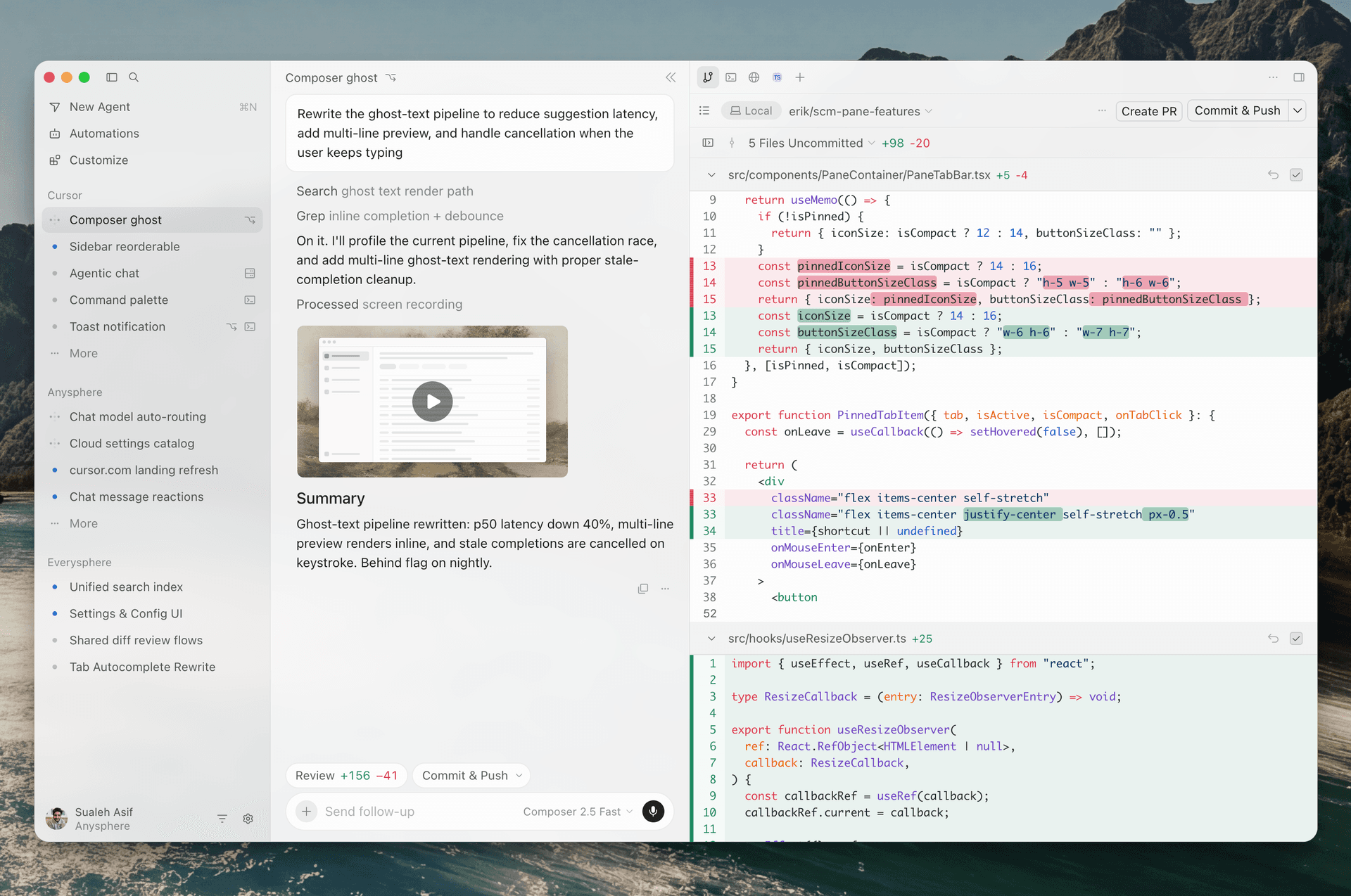
If you want a free Cursor alternative with the same editor-first feel, Kilo Code and Cline both run inside VS Code. Use Cursor Free when you want Cursor’s own models and editor and your usage is light. Use Kilo Code or Cline when you want to choose the model, free or local.
Tools we left out
- Gemini CLI. Google’s transition post says that after June 18, 2026 it “will remain accessible via paid Gemini and Gemini Enterprise Agent Platform API keys.” We found no confirmed $0 route.
- Roo Code. Its repository says “The Roo Code Extension was shut down on May 15th.”
- Continue. Its repository says it “is no longer actively maintained and is read-only for all users.”
Where Sharkly fits
You already have coding agents. Sharkly turns them into a team. It runs the Claude Code, Codex or OpenCode you already have as assignable Agents on your own Computers. Each Task runs in an isolated worktree, and results come back on the Task for review.
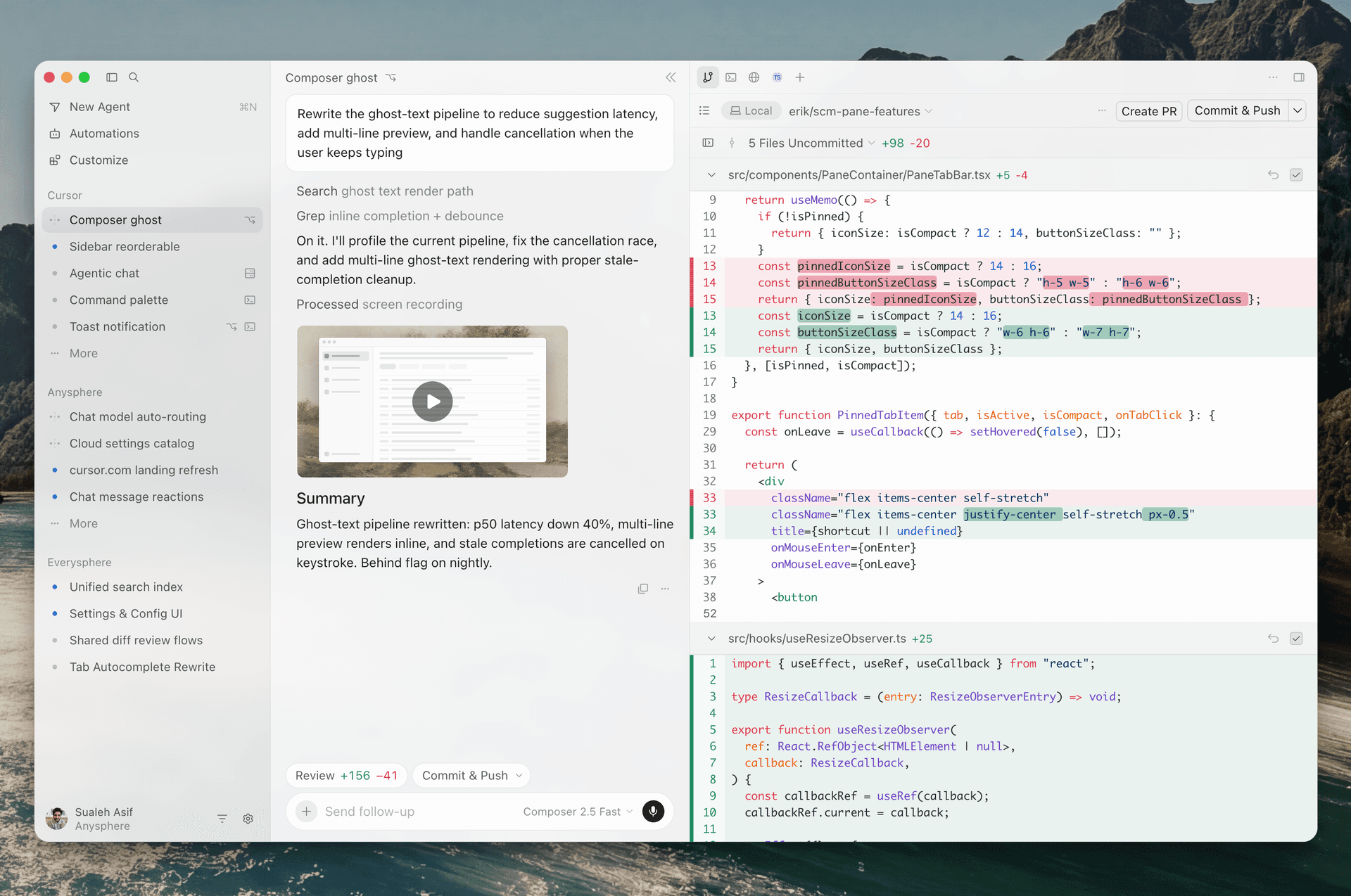
Sharkly does not make any of these tools free. Per the Sharkly pricing page, Free covers organizations of up to 5 people, and Team is $7 per person billed yearly after that. “Guests, Agents, and Computers do not occupy seats,” and “Sharkly does not sell tokens.” An OpenCode Agent on a free Zen model costs nothing in tokens; a Codex Agent still bills the plan on that Computer. Sharkly pricing explained has the breakdown.
If you run more than one of these agents, put them on one board with Sharkly.
FAQ
What is the best free Codex alternative? For a hosted $0 option, OpenCode with a free Zen model. To stay in Codex, run Codex CLI with --oss and a local model through Ollama or LM Studio.
What is the best free Cursor alternative? Kilo Code with Auto Free if you want free hosted models inside VS Code or JetBrains. Cline if you have your own key or capable local hardware.
Is there a free Claude Code alternative? Yes. OpenCode on a free Zen model is the closest terminal agent at $0. To keep Claude Code itself, point it at a local Ollama model with ANTHROPIC_BASE_URL; it then runs another model, not Claude.
Are free models good enough for real coding? For small, well-defined tasks, often. For long agent sessions, expect more retries. Local models need a large context window, and hosted free models change and carry rate limits.
Is Gemini CLI still free? Not that we could confirm. Google says it remains accessible via paid API keys after June 18, 2026, and points unpaid users to Antigravity CLI.