You are trying to decide which coding agent to trust with real work: Claude Code, Codex, Gemini CLI, OpenCode, or two of them at once. So you read the benchmark scores. One agent resolves 68% of a public task set, another 71%, and you are supposed to pick from that. Then the agent lands in your repository and gets stuck on a build step no public dataset has ever seen.
A benchmark measures a fixed, shared set of problems. Your codebase is a private set of problems: your conventions, your monorepo layout, the flaky test everyone ignores, the deploy script one person understands. The score that decides your week is the one you generate on that code, not the one a lab published. This guide walks through a method for comparing coding agents on the software you actually ship, and how to run that comparison without opening five terminals to keep the agents apart.
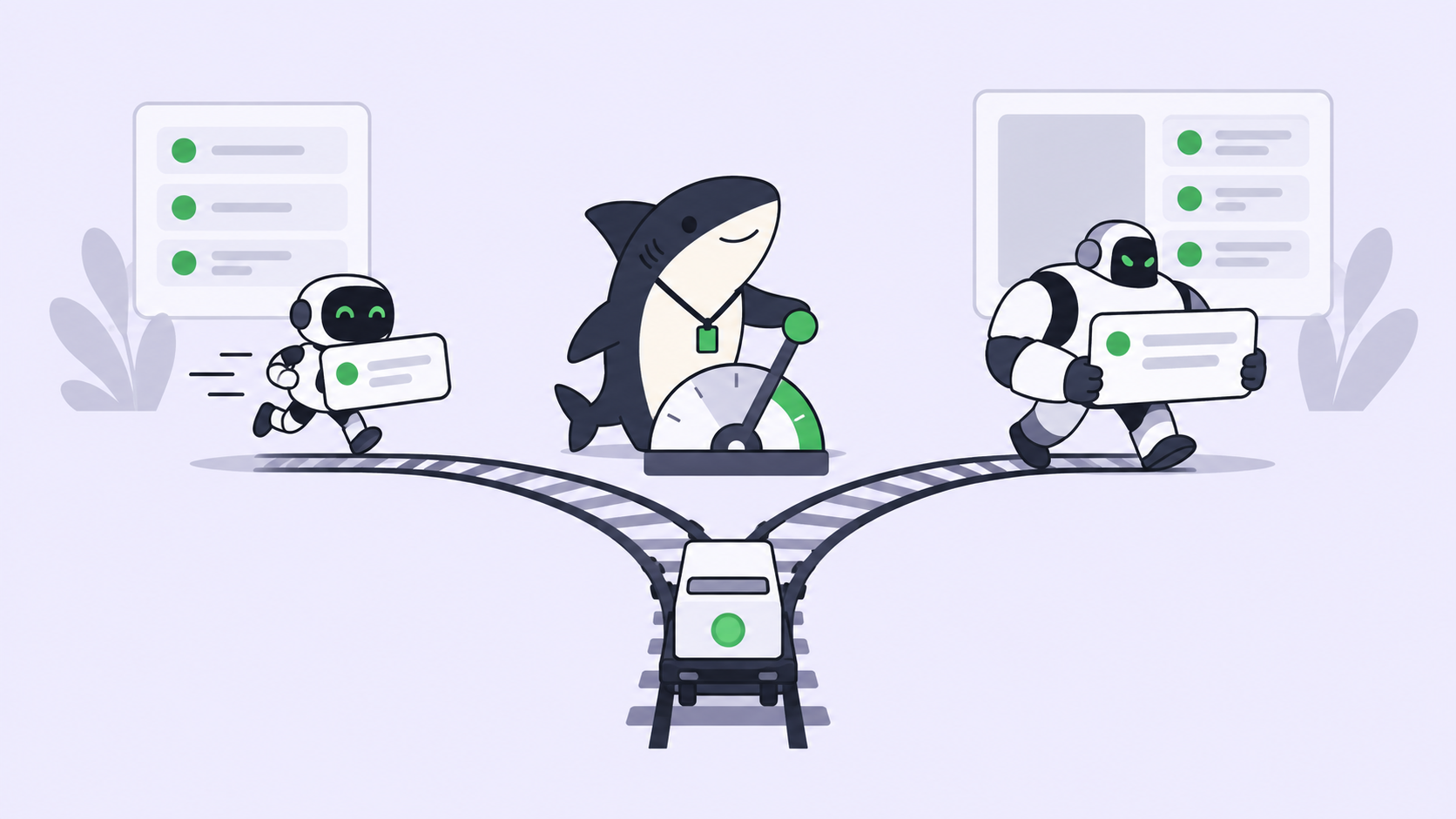
Sharkly is where that method lands. Sharkly is an all-in-one Agent command and management platform: you connect your own Computer, assign the same Task to different Agents, and every run returns its diff, its test output, and its review to one place. That is what makes a fair comparison possible. The variable you want to measure is the agent, not the terminal-juggling you would otherwise do to keep three runs from stepping on each other.
A benchmark score measures a dataset, not your repository
A coding-agent benchmark is a fixed public test set, scored the same way for everyone. That is exactly what makes it useful to the labs building models, and exactly what makes it a weak predictor for you.
Public benchmarks like SWE-bench draw their tasks from well-known open-source projects, with a tuned harness and curated acceptance checks. None of that describes your Tuesday. The things that decide how an agent performs on your code are the things a public dataset can never contain: your internal libraries the model has never read, your lint config, the 400-line context file that explains how the service actually boots, the one module with no tests.
A high benchmark score does not predict how an agent behaves in your repository. It predicts how it behaves in someone else’s. Treat the leaderboard as a rough filter for which agents are worth testing, then do the test that counts. If you are still choosing which model to point each agent at, matching models to agent roles is a better starting question than the raw score.
Pick one real task, not a toy prompt
Start with the smallest useful comparison. Do not benchmark agents on “build a todo app.” Pick one real requirement from your backlog: a contained bug, a small feature on a single module, a migration you were going to do anyway. Something with an acceptance test you can run and a diff you can read in a few minutes.
Then give every agent the identical input: the same task description, the same starting commit, the same acceptance criteria. Write it out the way your tracker would, a task like SH-312: fix the timezone drift in the invoice export. If one agent gets a richer prompt than another, you are measuring your prompt, not the agent.
Use a bug fix when you want to see how an agent reads existing code and stays inside the lines. Use a small feature when you want to see how it structures new code and whether it writes its own tests. Run both over time; a single task tells you about a single task.
Compare every agent at its best, never its worst
Each agent has a setup where it does its strongest work: the right model, the right context file, the permissions it actually needs. Give Claude Code its CLAUDE.md, give Codex its config, give each Runtime the environment its docs recommend. Comparing a well-configured agent against a bare one tells you nothing except which one you bothered to set up.
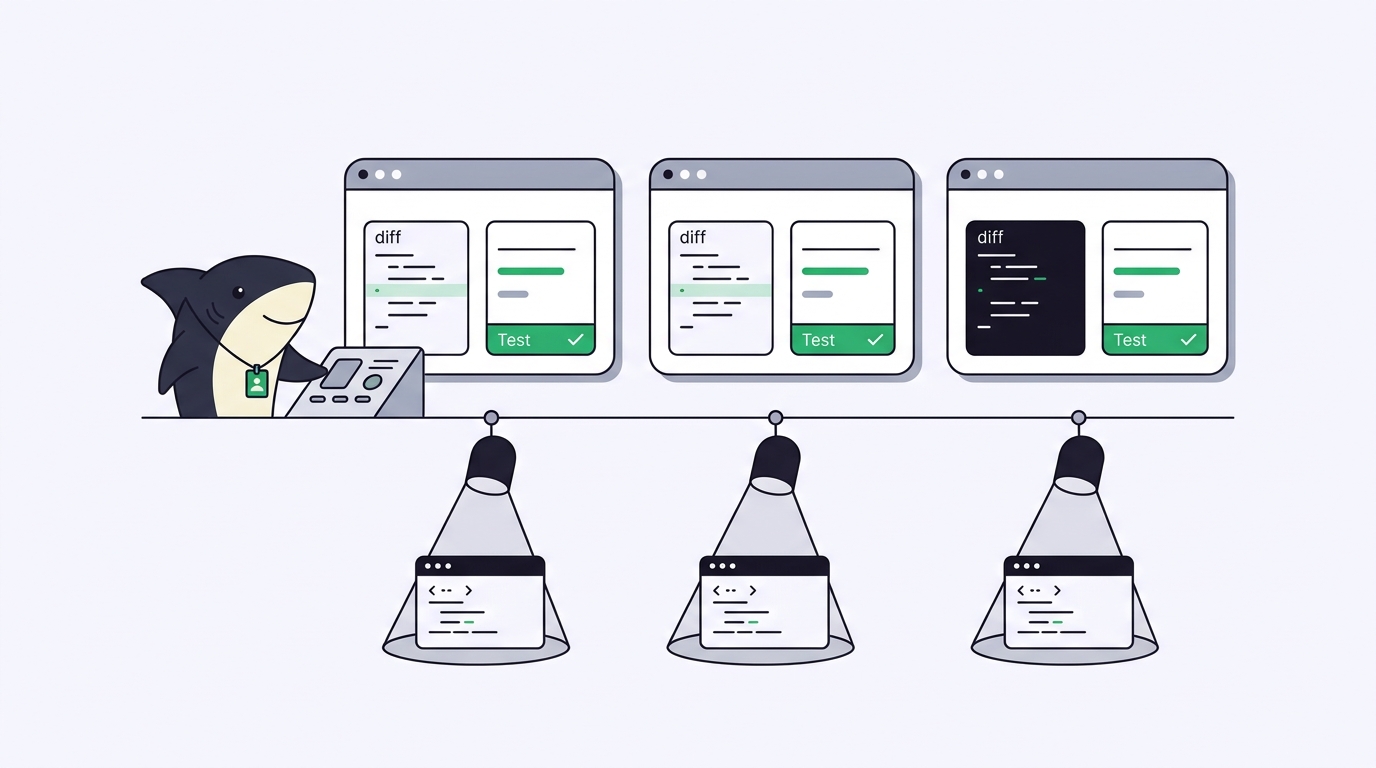
Running them at their best, side by side, is where the terminal approach falls apart. On Sharkly you assign the same Task to each Agent, and each Agent runs on a connected Computer in an isolated worktree, so three agents editing the same repository never touch each other’s files. You get three clean attempts at the same problem instead of one shared working tree and a merge you have to untangle by hand. If you have been doing this manually, running several agents at once is the part Sharkly is built to take off your plate.
If you only use one agent and live in the terminal, a single well-tuned Claude Code session in a worktree is enough, and you may not need any of this. The equation changes the moment you are comparing two or more agents, across more than one task, and you want the results in a form you can actually read side by side.
Five criteria that decide it on real work
A benchmark scores one number: did the task pass. Real work is decided by five things that number leaves out.
| Criterion | The question it answers |
|---|---|
| Parallel execution | Can I run the agents on the same task at the same time, in isolation, without conflicts? |
| Team visibility | Can someone other than me see what each agent did, and why? |
| Review flow | How fast can I read the diff, tests, and known limits and accept or reject? |
| Own-machine execution | Does the agent run on my Computer, against my real environment and secrets? |
| Integrations | Does the result land in the tracker, repo, and review tools we already use? |
The first four are where most agents look identical in a benchmark and behave nothing alike on your code. Own-machine execution in particular is invisible to a public test: an agent that runs against your actual toolchain, your local database, your real CI hooks, is being tested on the thing you ship, not a sandbox that resembles it.
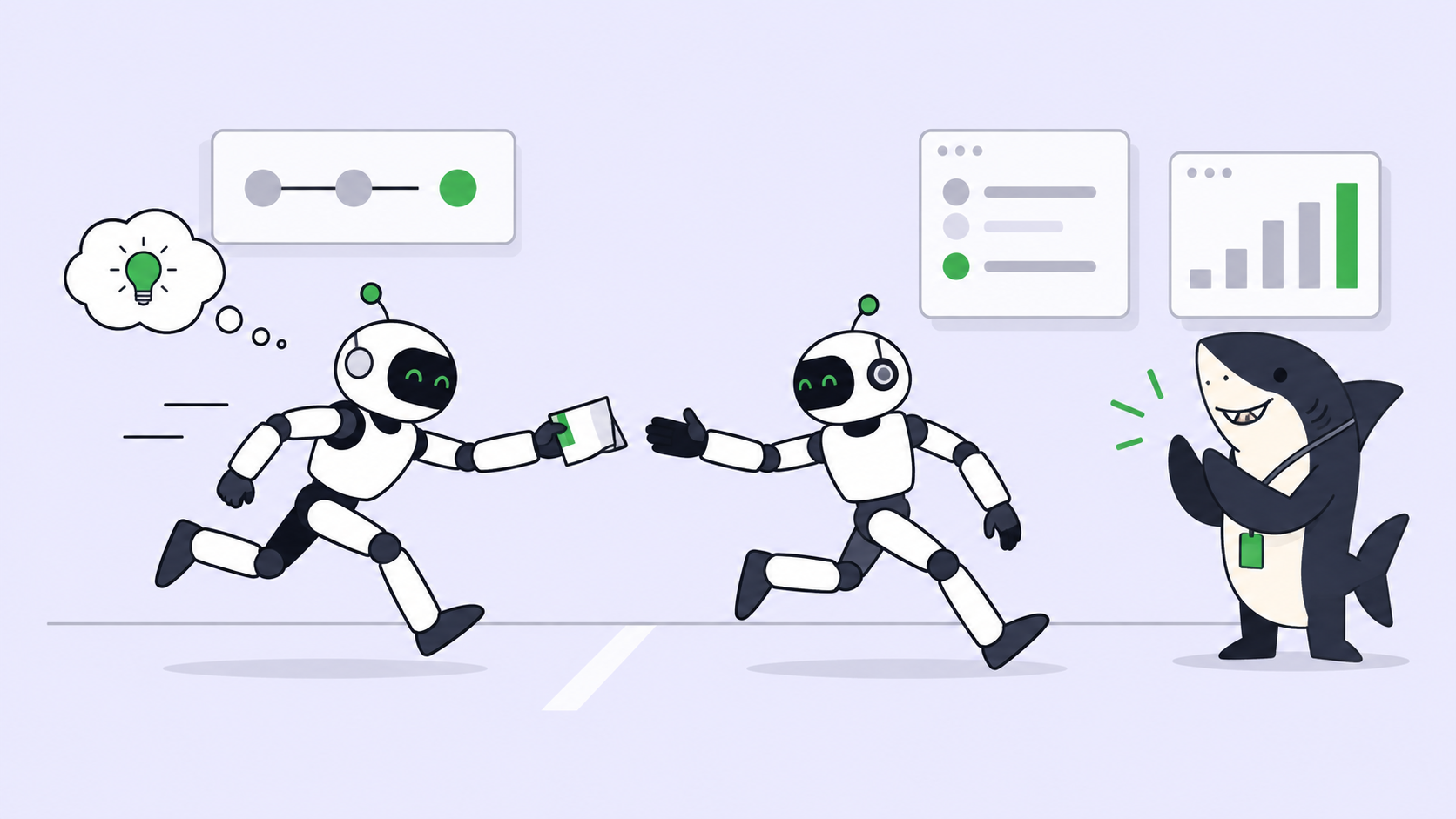
Agents research, execute, test, and report. You set direction, grant authority, and accept the result. A comparison is only honest if you can see every part of that, for every agent, without reconstructing it from scrollback.
Score what returns, not what the agent claims
An agent that prints “done” is not the same as a change that passes. Score each run on what comes back, not on what it asserts. For every attempt, the useful evidence is the same short list: the diff, the typecheck and test results, the change summary, and the limits the agent admits to. Sharkly keeps context, progress, blockers, results, and human review visible from request to release, so the comparison reads like a table of outcomes instead of five terminals you have to remember.
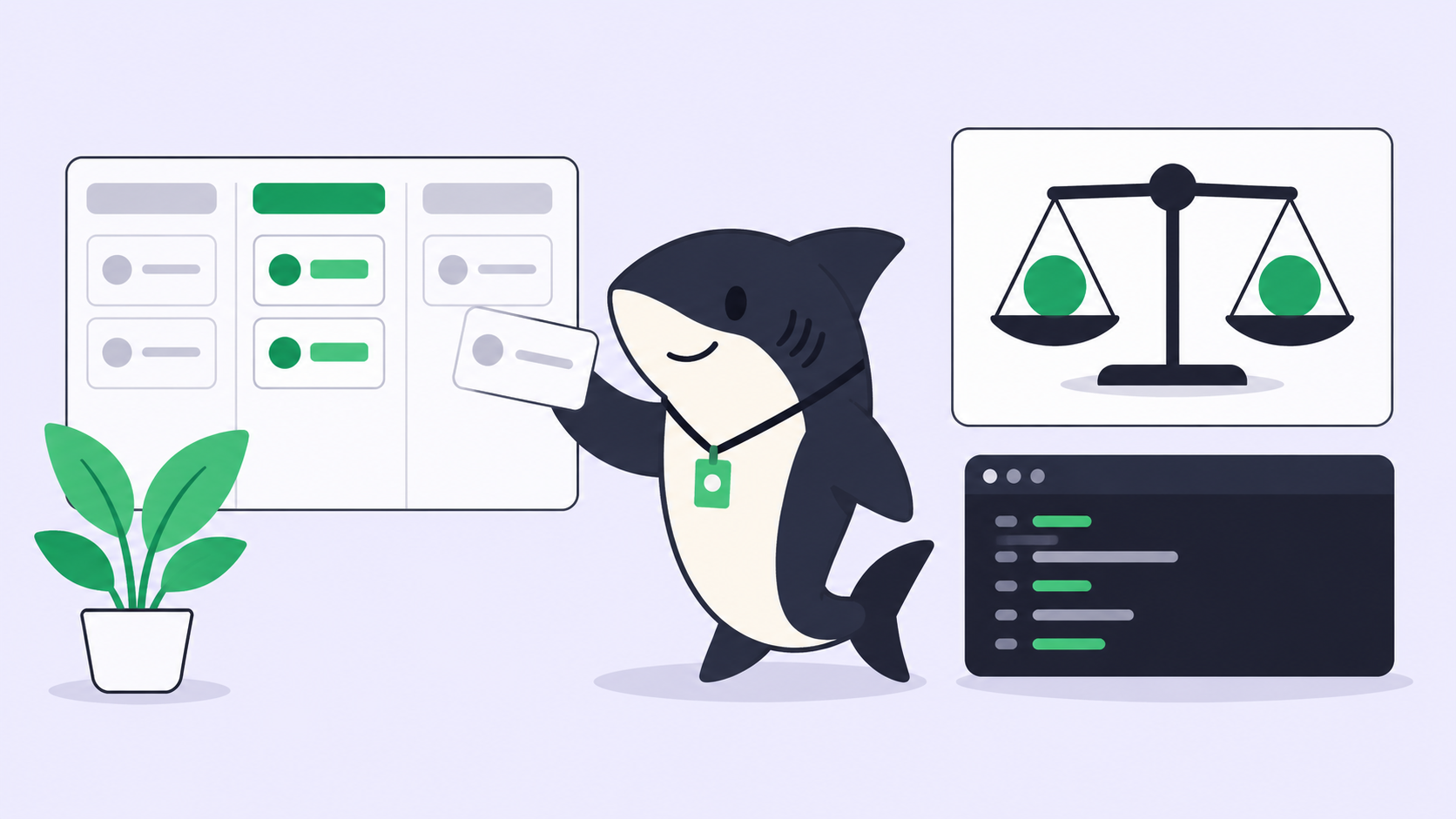
This is also where the real bottleneck shows up. Two agents can both “finish” a task in twenty minutes and still cost you an hour each to review. Reviewing agent output is often the true limit on how much parallel work a team can absorb, and it should weigh heavily in which agent you pick. What to weight depends on who is choosing:
| Choosing for | Weight most heavily |
|---|---|
| Solo developer | Review flow and own-machine execution; you are the only reviewer |
| Small team | Parallel execution and team visibility; several people need to see the same runs |
| Platform team | Integrations and visibility; the workflow has to survive the next best agent |
That last row is the point of comparing at all. The best agent today may not be the best agent next quarter, and rebuilding your workflow every time the leader changes is its own tax. Sharkly is not a coding agent and not a benchmark harness; it is the layer that lets you keep testing agents against your own code without rebuilding the process around them each time.
If you want to keep using multiple coding agents rather than committing to one ecosystem, that is the problem Sharkly is designed around. Download Sharkly, connect one Computer, and assign the same real task to two agents. The comparison you get back is about your codebase, which is the only one that predicts your week.