TL;DR
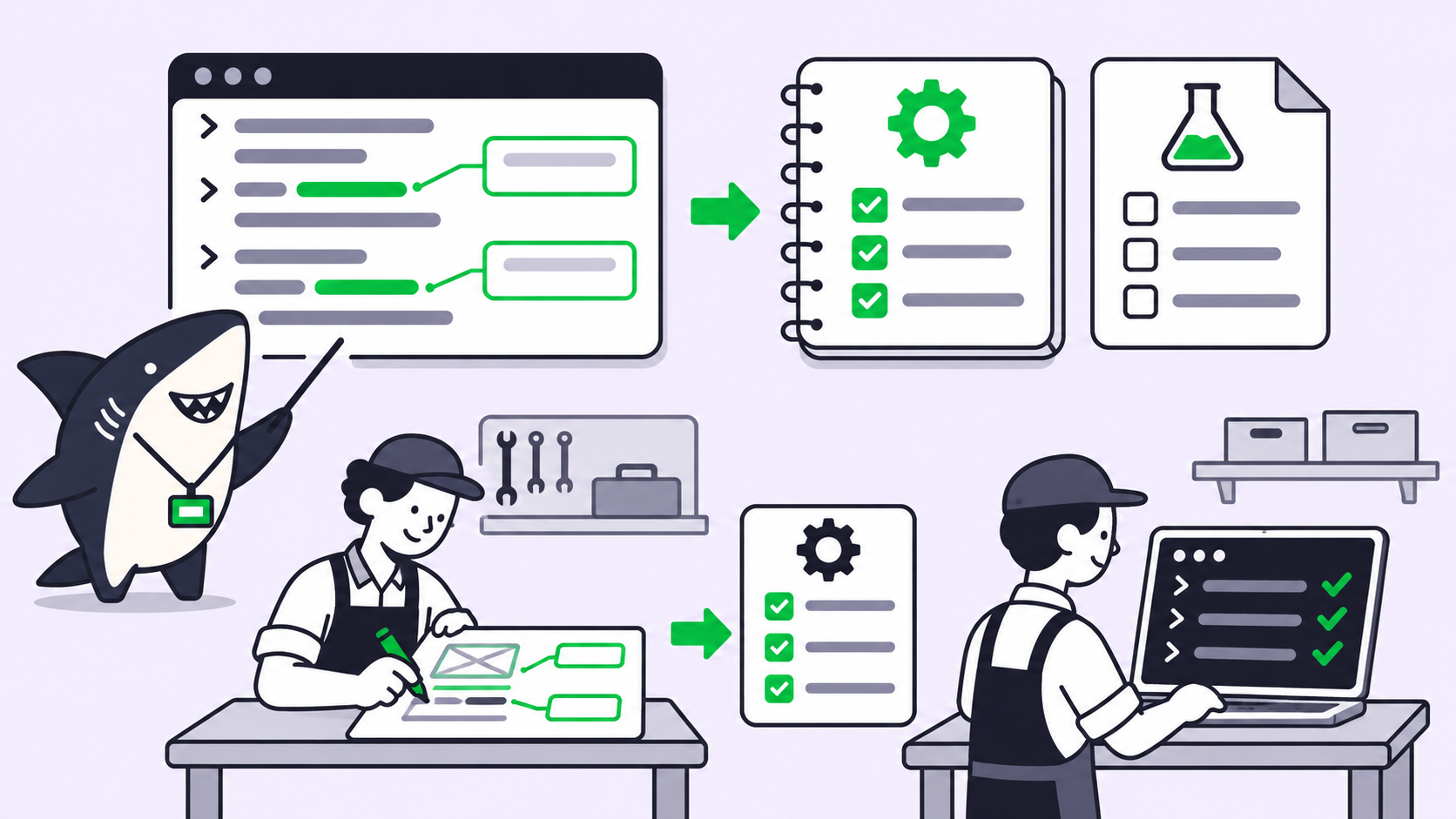
A Claude Code session to skill workflow captures the decisions behind a successful run and tests them with an open-weight model. With skill-distill, the original agent writes a candidate, runs it against the same prompt and starting state, compares the artifacts, and asks you to accept the result.
Suppose Claude Code produced a clean release changelog from a noisy set of commits. Next week, you want the same workflow to work with a different model and a new commit range. Save the criteria that made the changelog useful, then test whether the second model can apply them independently.
If that procedure becomes team policy, Sharkly can give the reviewed Skill a shared home and keep the next run’s evidence on a Task. First, prove the procedure works with the combination you intend to use.
What skill-distill extracts from a successful session
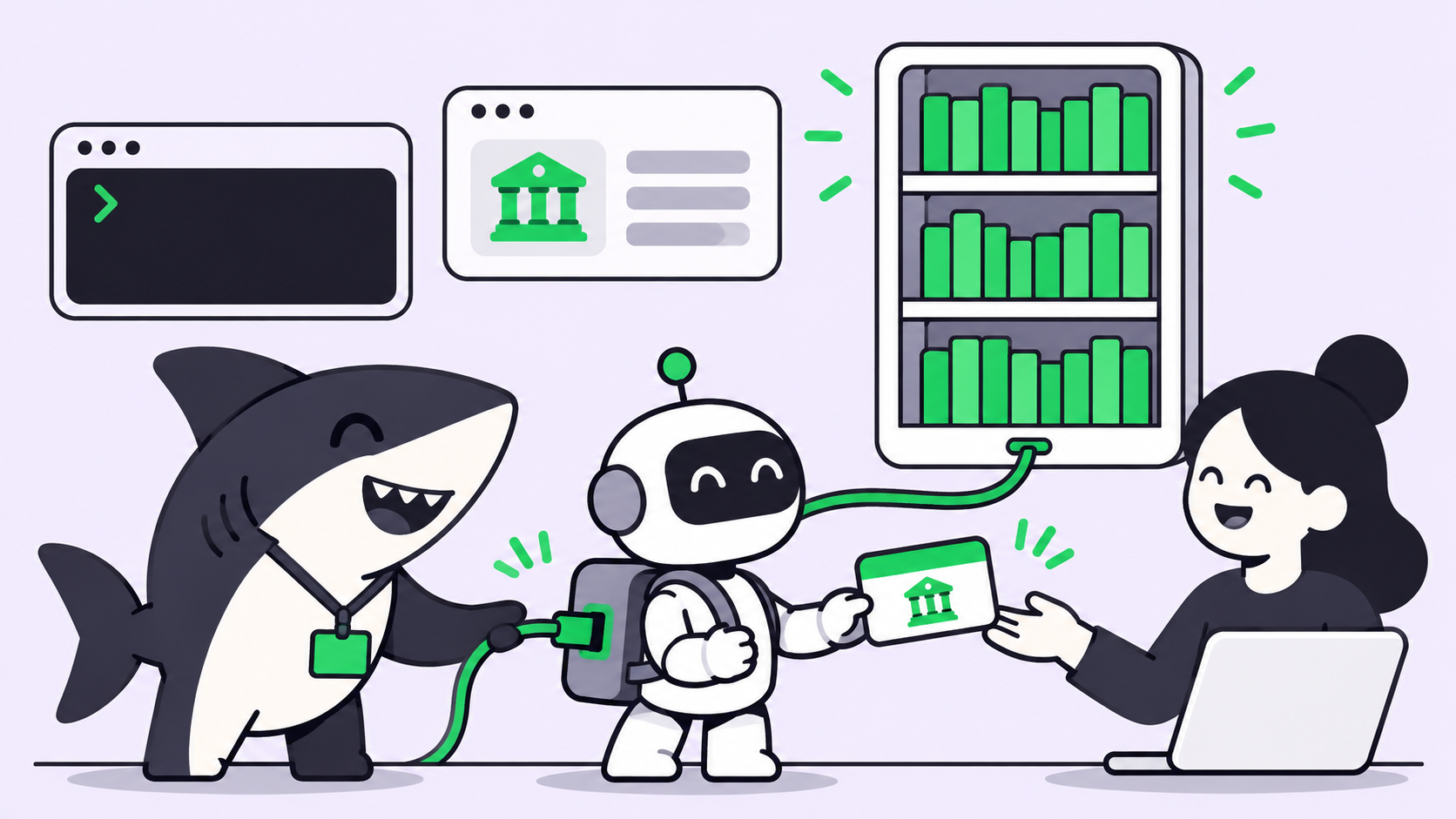
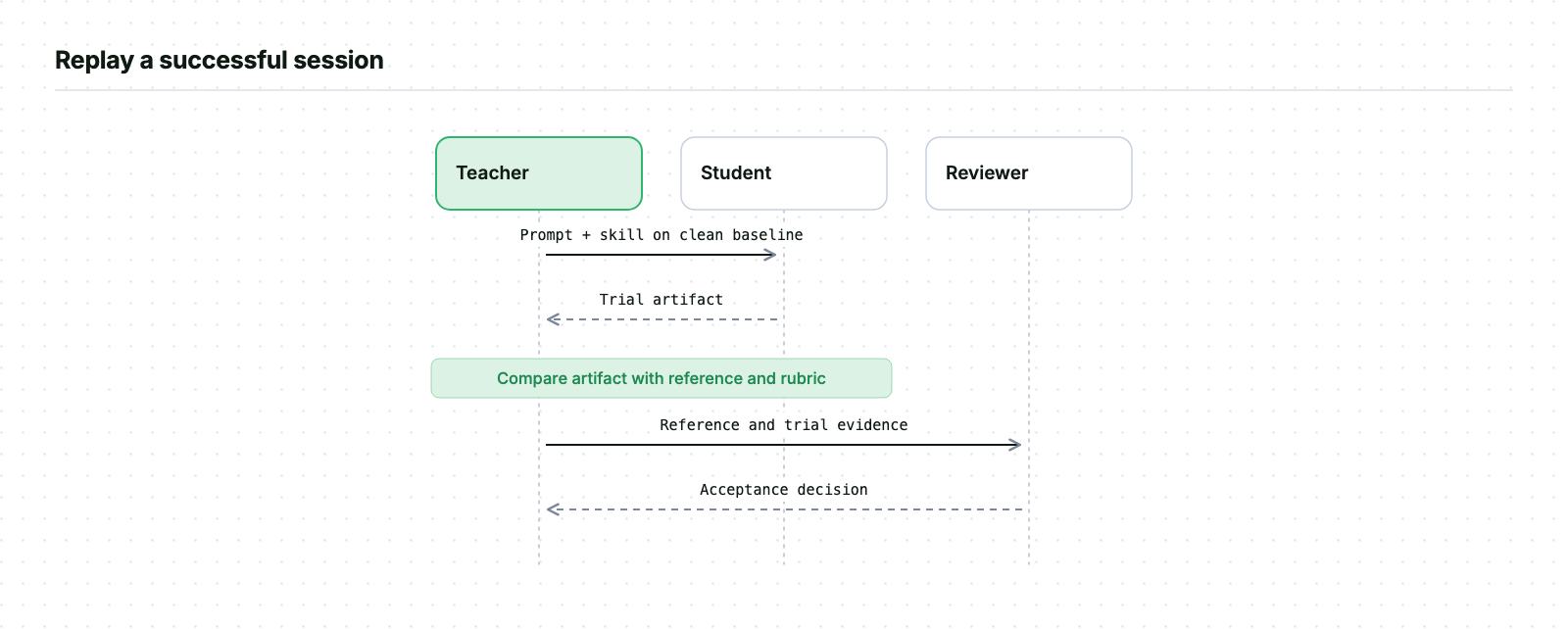
The teacher is the agent that completed the reference run. The student is the open-weight model plus its harness, the program that loads instructions, calls the model, and gives it tools. The teacher turns decisions from the reference run into instructions the student can follow in its own environment. See the skill-distill project.
The product of the exercise is a task-specific skill package. Its SKILL.md should tell the student when to use the workflow, what inputs it needs, and how to check the output. An example or template can support those instructions. Follow the Agent Skills specification for the package structure and the target harness’s rules for loading it.
For the changelog example, the consequential decision might have been to group messages by user-visible change, with several commits collapsing into one entry. The teacher should preserve that decision rule and the evidence used to make it. The finished release notes serve as a comparison artifact. Copying their wording into the skill would give the student answers for one release and little guidance for the next.
How to replay a Claude Code session with an open-weight model
1. Save the baseline and name the student
Record the original prompt, the starting commit, and where the approved output lives. For a changelog, save the two refs that define the commit range and keep the reference output outside the trial checkout. If the job depends on data outside Git, give each trial an equivalent fixture. A clean Git worktree can hold the checkout for a manual evaluation.
Name both the student harness and the exact model it should use. The project documents an omp setup and calls for Git, tmux, and Python 3.10 or newer. Check that the harness can reach the model and write a small file in a disposable directory before starting the larger run. A failed smoke test points you to the harness configuration before you start debugging the skill. See the installation instructions and tmux getting started guide.
Before feeding a reference session to the teacher, check what the transcript contains and where your provider processes it. If the original run used confidential examples, produce a fresh reference from a representative fixture you can share with the chosen provider. Review the candidate’s scripts and examples before giving the student access to the trial checkout.
2. Define acceptance before looking at trial results
Write checks against the output people will use. For example, your changelog rubric could require all four of these outcomes.
| Requirement | How to check it |
|---|---|
| It covers the agreed release range | Compare the refs with the fixture for this release |
| Every entry traces to an included commit | Match each entry’s commit reference against the commit list |
| User-visible changes appear once | Read the entries and check for duplicated changes across sections |
| The output fits the publishing template | Run the formatter and review the rendered Markdown |
A formatter can check structure. A person can judge whether a change belongs in release notes and whether its description matches the diff. Set both checks before the run so a fluent draft cannot move the acceptance criteria after the fact.
3. Invoke skill-distill and inspect the evidence
Install the operator skill using the repository instructions for the teacher. Review the files the teacher will run, then invoke the skill at the end of the successful session. The project’s documented example uses this prompt.
distill this session into a skill for omp with deepseek-v4.1-flash on my local server
The teacher reads the session, inspects its result, and writes a candidate skill. The documented loop runs three student trials per version. Each trial uses the original prompt and a fresh copy of the starting state. The teacher compares the resulting artifacts against your rubric and revises the instructions where the first consequential mistake occurred. You make the final acceptance decision. See the operator workflow.
If the first divergence is the commit range, clarify how the student identifies the start and end refs. If the range is correct and the student exposes internal refactors, add a decision rule for what counts as a user-visible change. Rerun after each meaningful edit so you can see which instruction changed the result.
Keep the trial artifacts and a short record of which checks passed. For changes that vary in wording, look for agreement on the facts, categories, and coverage. Two changelogs can both pass if their phrasing differs. An entry describing behavior the release never shipped should fail even if the format is perfect.
How to tell whether the skill transfers
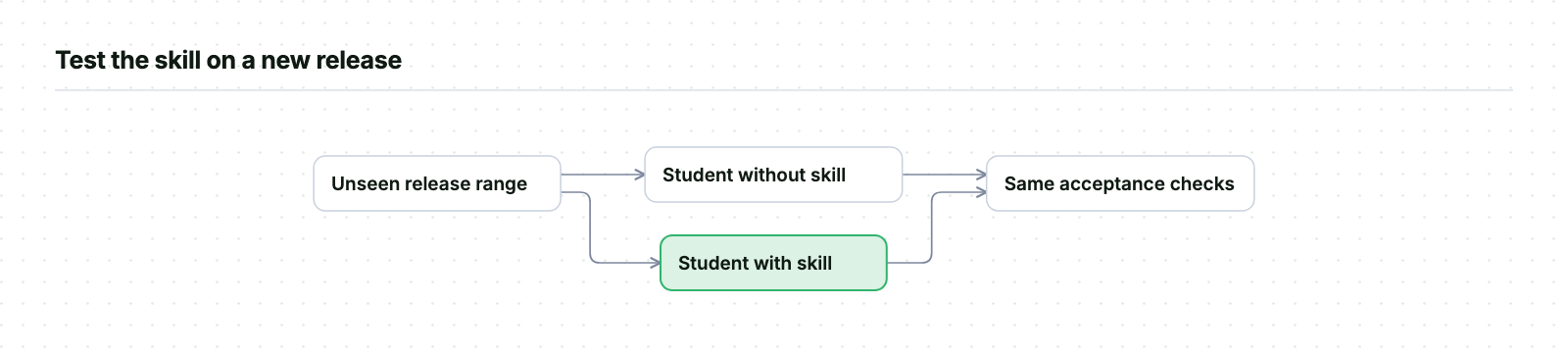
Once the student meets the rubric on the reference task, repeat it with a held-out input. That means a second release range the teacher and student did not use while drafting the skill. Keep the same harness, model, and checks. Include a case that exercises a real decision, such as two commits that fix one user-facing issue.
Run the second range once with the skill and once with the same model’s ordinary instructions. Compare passed checks, reviewer corrections, and time to an accepted result. If your harness exposes usage data, record it alongside retries and reviewer time. Those measurements let you decide whether routing similar tasks to the student saves effort on your workload.
Use a hand-written skill when the procedure is already documented and easy to validate. Use session distillation when the reference run contains tacit decisions you need to uncover. Small, repeatable workflows such as release notes, Markdown migrations, and fixture conversions give reviewers clear artifacts to compare. Tasks that depend on missing service state or ambiguous judgment require more work to evaluate.
How to share the reviewed Skill in Sharkly
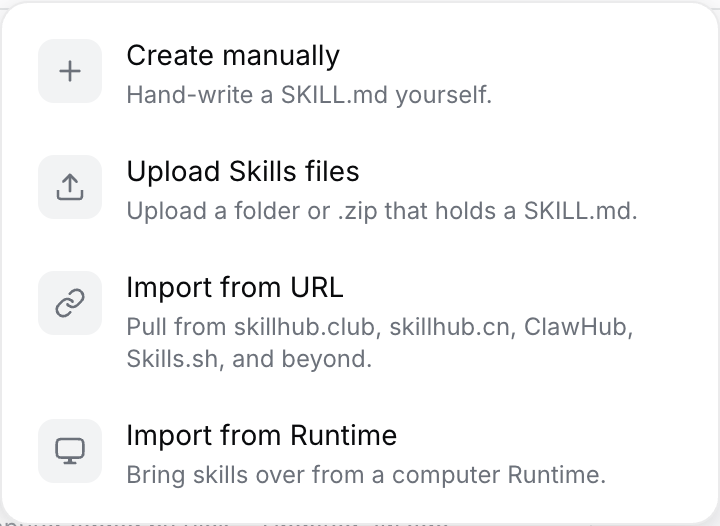
Once the trial results hold up, open Skills in your Space and choose Add Skills, then Upload Skills files. Upload a folder or zip that contains the reviewed package. See Sharkly’s Skills documentation. Pick Agent scope for a pilot with one Agent. Pick Space scope when eligible Agents in that Space should share the procedure. Bind the Skill through the intended Agent’s Skills settings when the scope requires it.
Keep reusable instructions and templates in the Skill. Put the new commit range, the deliverable, and the acceptance checks for that release in the Sharkly Task. The Agent runs the procedure and returns the artifact and verification results to the Task. A person reviews the output and decides whether it is ready. See how Sharkly Skills work and how Agent runs return work to the Task.
Start with one recurring workflow. Bring the approved package into Sharkly and assign one pilot Task with an unseen input. Ask the reviewer to record each correction before you widen access. When the same correction appears twice, turn it into a specific check and run the pilot again.
FAQ
Does skill-distill fine-tune the student model?
Skill-distill changes the instructions and supporting files the student receives. The student runs with its existing weights. The teacher tests each candidate by comparing the student’s outputs to the reference.
Can I use a Codex session as the reference?
Yes. The project documents Claude Code and Codex as teacher environments. Save the starting state, original prompt, and reference artifact in either case.
Can I switch student models after accepting a skill?
Treat the new model and harness combination as a new evaluation. Run the same acceptance checks and include an unseen input. The earlier result describes the combination you tested.
What should I keep out of the shared package?
Keep raw transcripts, private paths, credentials, and confidential examples in private storage. Publish the smallest set of instructions and permitted fixtures needed to repeat the task.
What if all three trials pass on the original prompt?
Run the held-out case before sharing the skill. Replays demonstrate consistency on the source task. A second input checks whether the skill captured the decision rules you need next time.