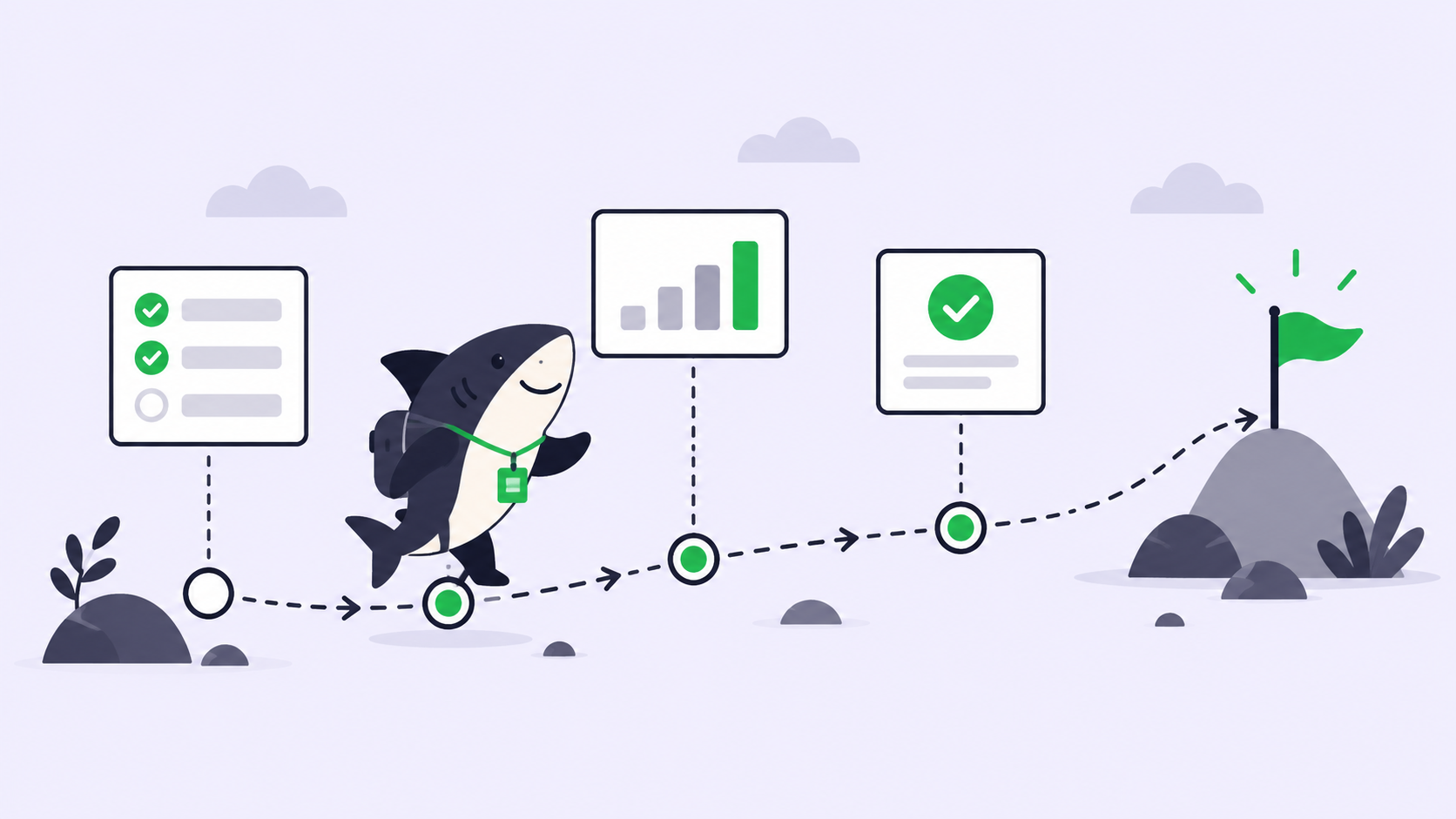
Factory sells autonomy to large engineering organizations, and it shows. Droid is a capable agent, and the platform around it is shaped for the way enterprises buy software. That shape is usually why you are here. Most people searching for a Factory alternative are not questioning the agent. They are questioning whether team agent workflows have to arrive as a vendor platform with its own metering and custom-priced tiers, or whether the same workflows can run on the coding agents the team already pays for. Sharkly is built for the second answer, and this guide covers both honestly.
TL;DR
Factory sells Droid, its own autonomous coding agent, across a CLI, a desktop app, the web, and Slack. Individual tiers run $20 to $200 per month; organization controls like SSO, zero data retention, and on-premise deployment sit on custom-priced plans. Sharkly is the alternative for teams that want assignment, parallel execution, and human review around agents they already run, on machines they already control.
What Factory does well
Start with the honest case for staying.
Droid is one agent that follows you across surfaces. Factory’s docs put it plainly: “Droid runs the same everywhere. Pick a surface, install it, and start your first session.” That covers the Droid CLI, the Factory desktop app, and the web at app.factory.ai.
The delegation story is strong. Factory’s Slack page pitches “fire-and-forget delegation: Tag @Factory and move on,” and describes delegating from the browser, Slack, and Jira while the CLI handles automation. A support engineer can describe a problem in plain English and get a pull request back.
On top of the agent sits what Factory calls the Software Factory: packaged automation for issue triage, code review, QA, and documentation. Around all of it sits a compliance envelope built for large buyers: SSO with SAML and SCIM provisioning, a zero data retention option, admin control over model selection, dedicated compute, customer-managed encryption keys, and on-premise deployment. Factory names customers like Blackstone, Adyen, and Wipro, which tells you who that envelope is for.
If you want one vendor to supply the agent, the surfaces, and the compliance story, Factory is a serious option. Keep evaluating it.
Where the pricing question starts
Read factory.ai/pricing closely, because the structure matters more than the numbers.
As of September 2026, individual plans run from Pro at $20 per month through Plus at $100 and Max at $200, with capacity described in multiples: Plus carries “~5x the usage of Pro,” Max around 10x. A Teams plan covers up to 10 seats at $60 per month for the team plus $40 per seat, including 10 shared hours of Droid Computers, Factory’s remote execution machines. Above that, Business (up to 150 seats) and Enterprise are custom-priced, and they hold the controls a rollout needs: SSO and SCIM, zero data retention, admin controls, dedicated compute, on-premise options. No free tier is listed.
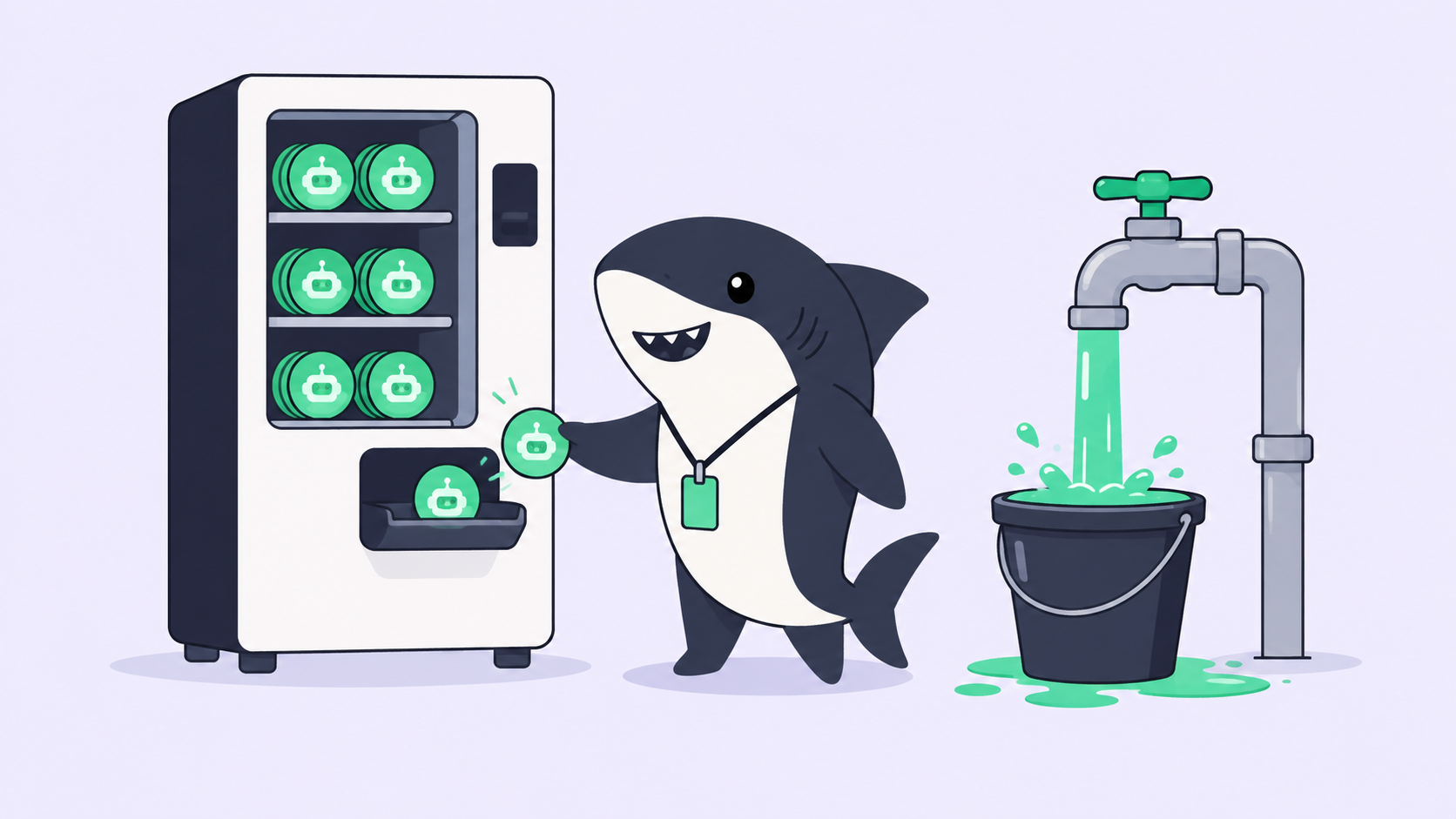
Two consequences follow. First, the entry price is low, but agent usage is metered through Factory’s tiers: a second consumption budget beside the Claude Code, Codex, or Cursor subscriptions your developers may already hold. Our Devin alternative guide walks through that paying-twice arithmetic, and it applies here unchanged. Second, the parts a team rather than an individual buys for start a procurement conversation, not a checkout.
Neither point is a scandal; it is how enterprise software is sold. It is also the moment to ask what an alternative must cover.
What a Factory alternative has to cover
Strip the branding and Factory’s team-facing value is four jobs:
- Assignment: work reaches an agent from where the team plans, not from a private terminal.
- Parallel execution: several agents work at once without trampling each other’s changes.
- Visibility: anyone can see what is running, what is blocked, and what it produced.
- Review: a person accepts or rejects the result, with the evidence next to the diff.
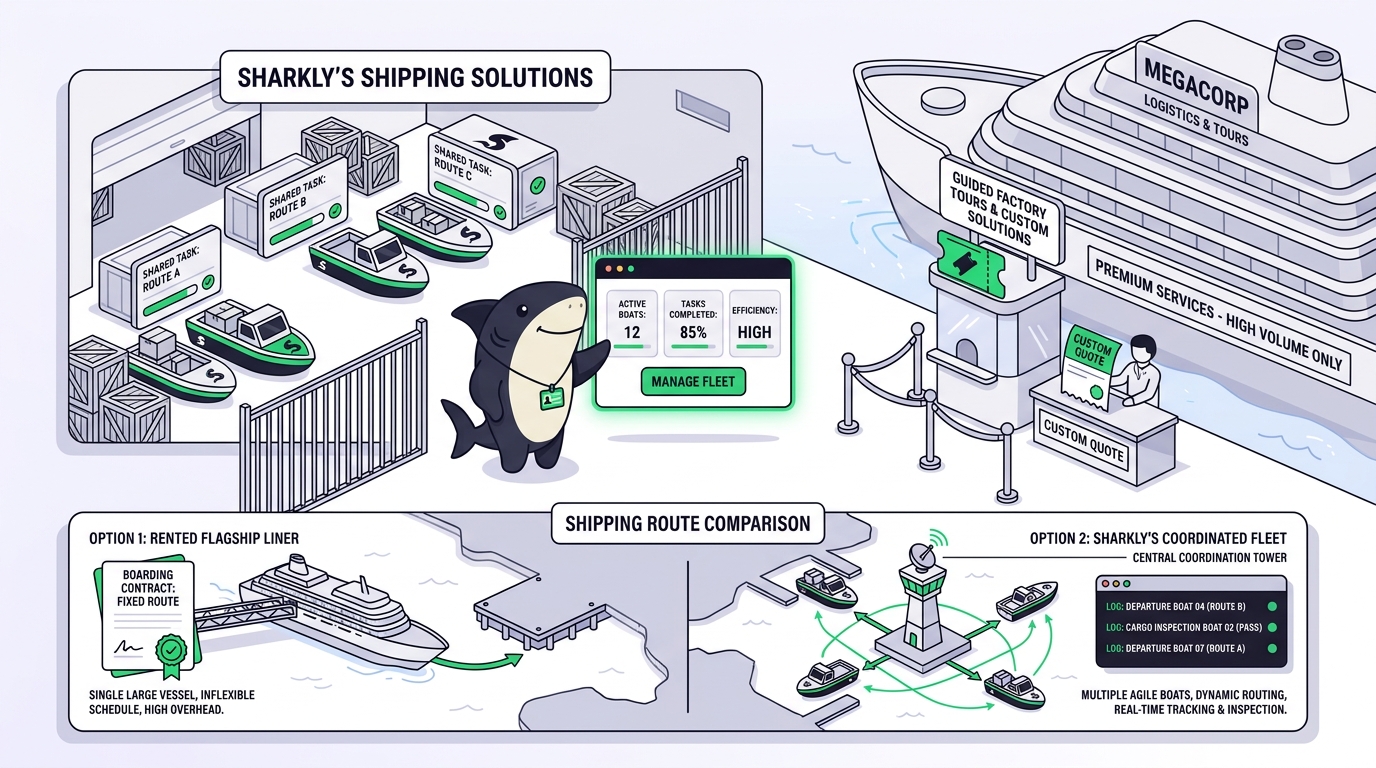
An autonomous-agent vendor bundles those jobs with its own agent and meters the package. A workflow layer covers the same four jobs around whatever agents you already run. That category difference decides which alternative fits you.
Sharkly: the workflow layer around agents you already run
Start with the boundary. Sharkly is not a replacement for Claude Code, Codex, or other execution tools, and it does not bundle an agent of its own. It adds the shared task, Computer, context, control, and review layer around the tools your team already uses.
A Computer provides the execution host for Agent work: your laptop, a remote server, a container, or a supported cloud host. A small local service connects it to Sharkly, detects the Runtimes installed there, prepares a task directory, starts the selected Runtime, and streams progress back. Model usage continues through the subscriptions or API keys configured in those tools, so there is no second usage meter to forecast.
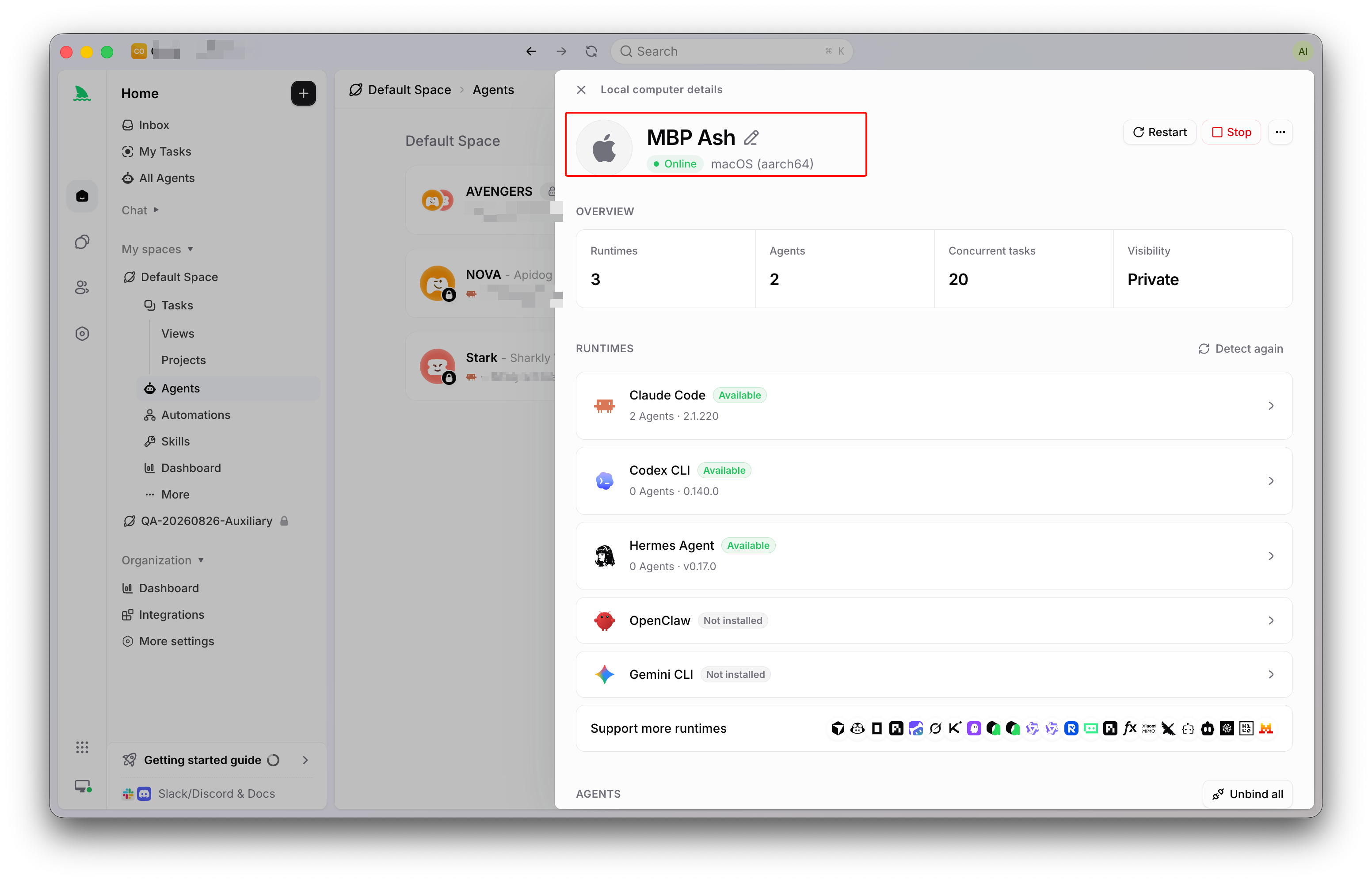
An Agent is a saved working configuration: instructions, Runtime, Skills, repositories, environment, and run settings. One developer’s careful setup becomes something the whole team can assign work to: the same standardization instinct behind Factory’s Software Factory, applied to agents you chose yourself.
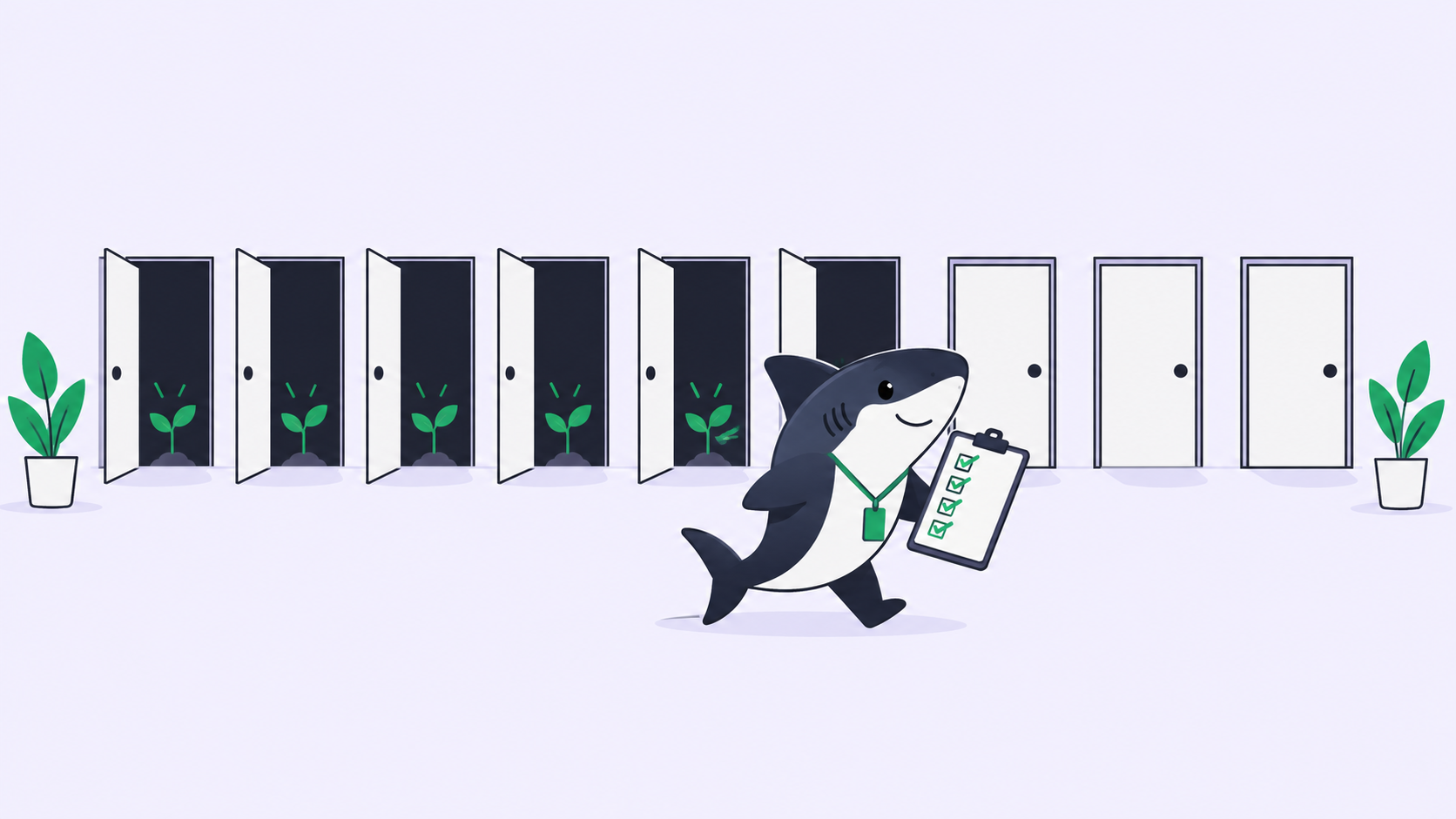
Each run gets an isolated git worktree, so parallel Tasks stop colliding. Execution state, the trace, the result, and the discussion all return to the Task, and review happens next to the evidence. Agents research, execute, test, and report. People set direction, grant authority, and accept the result.
The enterprise-workflow patterns have direct equivalents. Recurring work like bug triage runs through Automations: a Space-owned definition combining instructions, an execution assignee, triggers, and run history. Multi-agent work runs through Crews, a reusable group of People and Agents coordinated by one leader Agent. Planning lives in Sprints and Projects, and the Jira integration imports existing work or keeps a Jira project synced to a Space. The tracker your organization standardized on stays in place while execution becomes assignable and reviewable.
Factory vs Sharkly, side by side
| Factory | Sharkly | |
|---|---|---|
| Product shape | Autonomous agent platform with its own agent, Droid | Work management and execution layer around agents you already run |
| The agent | Droid, across CLI, desktop app, web, Slack | Claude Code, Codex, Gemini CLI, OpenCode, and other Runtimes detected on your Computers, plus custom ACP Runtimes |
| Usage billing | Metered through Factory tiers: $20 to $200 individual, team and custom plans above | Model usage stays on the subscriptions or API keys configured in those tools |
| Where work runs | Factory surfaces, local or cloud, including Droid Computers | Computers you connect: local, remote server, container, or supported cloud host |
| Team workflow | Software Factory automation: triage, code review, QA, docs | Tasks, Sprints, Projects, Automations, Crews with a leader Agent |
| Org controls | SSO/SCIM, zero data retention, on-premise, on custom-priced tiers | Spaces, roles and permissions, shared Agents and Skills |
| Review record | Sessions and resulting pull requests | Task holding execution state, trace, result, and threaded comments |
| Best fit | One vendor supplying agent, surfaces, and compliance envelope | Teams with agent subscriptions and a coordination gap |
When Factory is the right call
Use Factory when non-engineers need “describe a problem, receive a PR” delegation from Slack, or when your security review requires the envelope Factory sells: dedicated compute, zero data retention, on-premise deployment. A workflow layer does not replicate an autonomous agent, and pretending otherwise wastes your evaluation.
Use Sharkly when the agents are already chosen and paid for, and what is missing is the system around them: assignment instead of copy-paste, isolation instead of collisions, a shared record instead of five terminals, review instead of surprise pull requests.
There are middle options too. Conductor runs parallel local agents on a Mac, and Tembo hosts agent sessions you reach through existing tools. Our roundup of parallel-agent management tools compares the field.
A worked example
A forty-person engineering org piloted Factory for triage and small fixes. The pilot went well, and the writeup surfaced two findings: the controls the rollout needed sat in the custom-tier conversation, and 28 of the 40 engineers already carried Claude Code or Codex subscriptions the new metering would sit beside.
They kept the goal and changed the layer. Two shared Linux servers and a few laptops became Computers. Bug triage became a morning Automation assigned to a triage Agent. Well-scoped fixes became Tasks in the SH-214 style, each run in its own worktree, so reviewers read the trace next to the diff instead of meeting an unexplained pull request.
Spend stayed on the subscriptions the team already held. What changed was the workflow: the same triage, fix, and review loop Factory would have sold them, running on agents they had already standardized.
Conclusion
The fair summary: Factory is a strong answer to “sell me an autonomous engineering platform,” and its compliance envelope is what some security teams require. If that is your constraint, evaluate it seriously and budget for the custom tiers.
If the agents are chosen, the subscriptions are paid, and the gap is a workflow your whole team can see, you do not need a second agent stack. You need the layer that makes agent work assignable, parallel, and reviewable, and keeps context, progress, blockers, results, and human review visible from request to release.
That is what Sharkly is for. Connect one Computer, create one Agent, and assign it something boring. The getting started guide takes about ten minutes, and the docs at docs.sharkly.ai cover each concept in more depth.
FAQ
Is Sharkly a drop-in Factory replacement? No. Factory sells its own agent plus the platform around it. Sharkly supplies the platform layer only and runs the coding agents your team already uses. Teams that want Droid’s autonomy for some work and a shared workflow for the rest sometimes run both.
What does Factory cost? As of September 2026, factory.ai/pricing lists Pro at $20, Plus at $100, and Max at $200 per month for individuals, a Teams plan at $60 per team plus $40 per seat up to 10 seats, and custom-priced Business and Enterprise tiers. Check the page before deciding; the ladder has changed before.
Does Sharkly meter agent usage? Model usage continues through the subscriptions or API keys configured in the tools on your Computers. Model quota depends on the AI coding tools, plans, and API accounts your team connects.
Which agents can Sharkly run? Whatever Runtimes the local service detects on a connected Computer, with Claude Code, Codex, Gemini CLI, and OpenCode among them, plus any custom ACP Runtime you add by configuring its startup command.
Can my team keep Jira? Yes. Import copies existing Jira data into Sharkly for a controlled migration, and sync keeps a Jira project connected to a Sharkly Space so recent changes stay linked. Jira Cloud and Jira Server or Data Center are both supported.
Can I assign work to an agent from Slack in Sharkly? Not in the current release. Slack is an outbound channel: notification DMs, plus a Slack action inside automation workflows. Assignment happens in Sharkly itself or through the CLI and API. That differs from Factory’s tag-and-go Slack delegation; weigh it if Slack is your front door.
How does Sharkly handle two agents editing the same repository? Each run works in an isolated git worktree prepared on the Computer, so parallel Tasks hold separate working copies and merge on your terms.