Most code work still starts as a sentence in a group chat. “The CSV export drops the last row.” “Can we add SSO before the demo?” “Prod is throwing 500s on checkout again.” Someone reacts with a thumbs-up, a coding agent maybe gets pointed at it, and three days later nobody can say whether it shipped, who reviewed it, or which commit fixed it. The message scrolls away. The work becomes folklore.
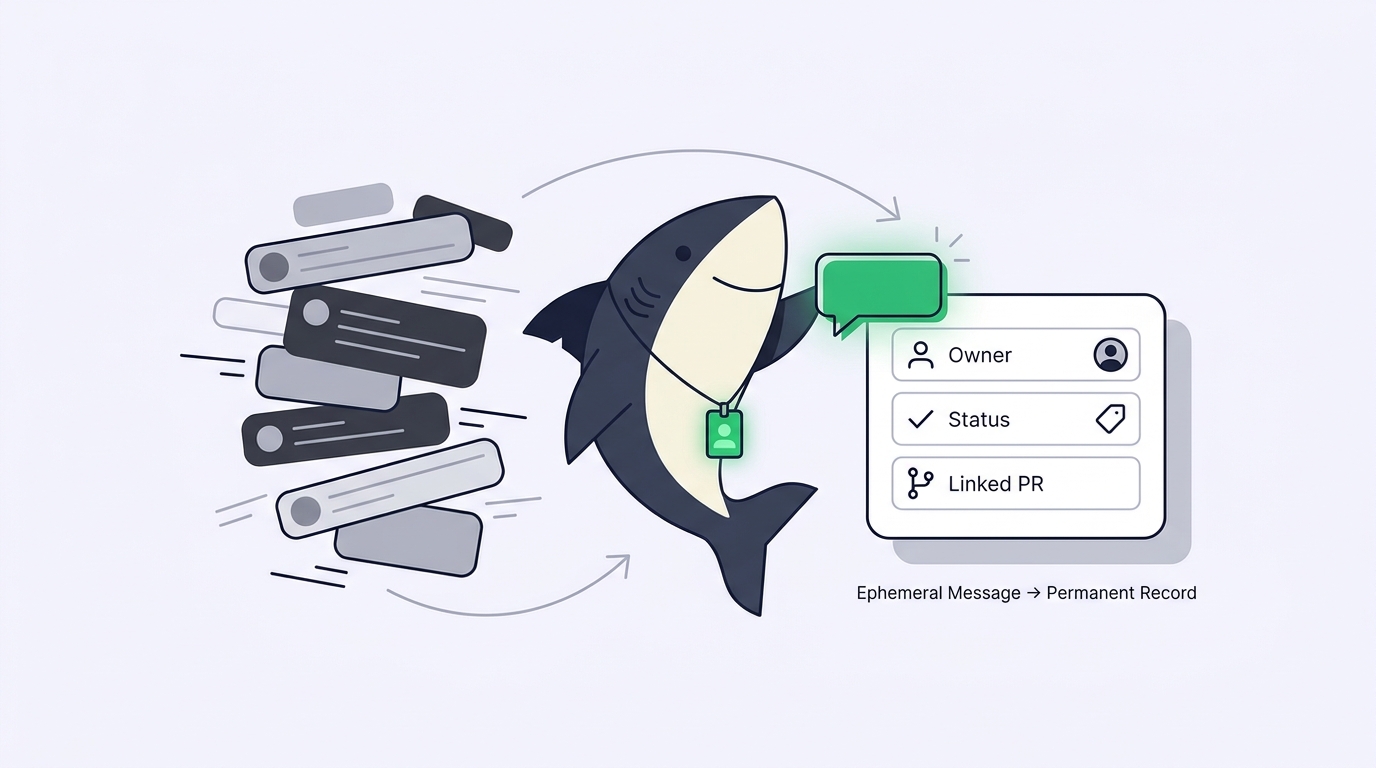
That gap is a structure problem, not a discipline one. A chat message has no owner, no status, no acceptance test, and no link to the diff that resolves it. Point a coding agent at that message and you have created work that cannot be traced. It gets worse once you run more than one agent, because now you also can’t say which agent touched it.
This article walks through turning a chat message into a traceable code task: what a bare do-it-yourself setup gets you, where it stops scaling, and what a shared task layer adds. Sharkly is the workspace for the traceable version, because it sits above your coding agents and keeps the goal, the run, the blockers, the diff, and the human review in one record. You already have coding agents. The job is turning their work into something a team can follow.
Why chat is where code tasks go to die
A group chat optimizes for speed of conversation, the opposite of what a code task needs. A real task carries a stated goal, an owner, acceptance criteria, a status you can query, and a link back to the change that closed it. A chat message carries none of that. It carries a timestamp and a reaction.
The failure mode is specific. A request arrives, gets informally agreed to in-thread, and the thread keeps moving. Two days later someone asks “did we ever fix the export bug?” and the answer requires Slack search, guesswork, and a scroll through a channel where the same phrase appears nine times. Even if you find the message, it doesn’t tell you whether the fix merged. The conversation and the code live in separate systems that never learned each other’s names.
Point an autonomous coding agent at that message and the trace gets shorter. The agent reads a Slack line, runs in a terminal on someone’s laptop, edits files, and reports back into the same fast-moving thread that swallowed the request. Now you have an execution log nobody saved, a change nobody linked, and a decision nobody recorded.
The DIY pipeline, and where it stops scaling
You don’t need a product to start. A workable do-it-yourself pipeline: copy the chat message, paste it into your coding agent as a prompt, let it work in an isolated Git worktree so it doesn’t collide with your main checkout, and open a pull request that links back to a tracking issue with a Closes #123 line. That is real traceability, and for a solo developer handling one request at a time it is often enough.
Here is the honest decision pair. If you are one person, running one agent, closing one task before the next, the copy-paste-to-worktree loop works and you should not add tooling to it. The overhead of a shared system would cost more than it returns.
The setup stops scaling the moment two things are true at once: two agents running, or two people routing work, or two repositories in play. Then the manual pipeline develops holes:
| What breaks | Why the DIY loop can’t cover it |
|---|---|
| “Which agent has the export bug?” | The assignment lived in your head, not in a record |
| “Is this done or still running?” | Status is a terminal you closed, not a queryable field |
| “Who approved the auth change?” | The approval was a thumbs-up, now scrolled away |
| “Where’s the diff for that Slack ask?” | The PR links to an issue, but the issue never links to the request |
| “What did the agent actually change?” | The run log lived in a session that ended |
Each hole is a place where the task becomes untraceable again. You can patch them by hand with more issues, naming conventions, and discipline. That works until it doesn’t, and it fails quietly, which is the worst way for a process to fail.
What “traceable” means once the task is shared
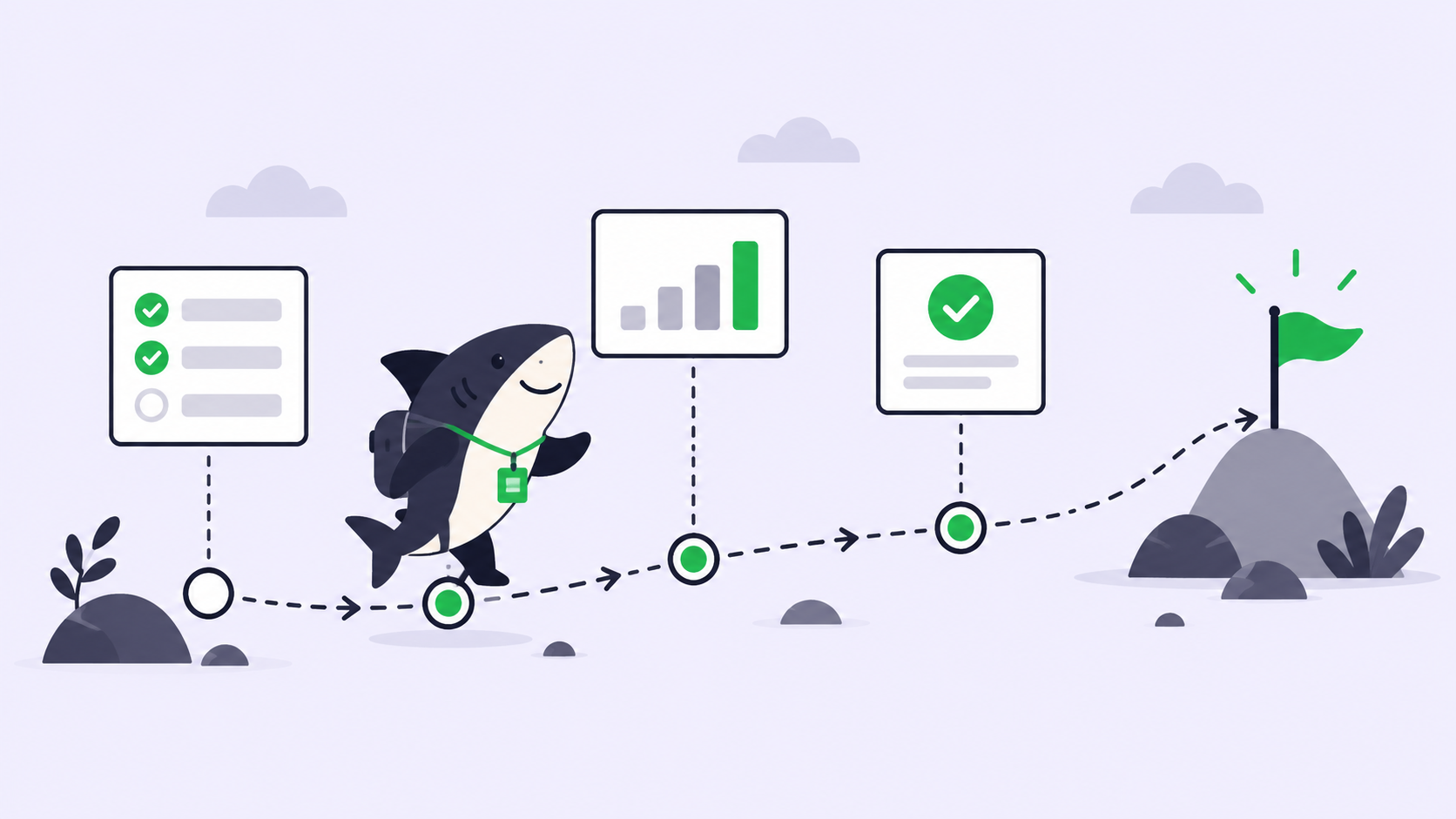
Traceable is not a vibe. Every question about a piece of work has an answer that lives in one place and survives the people who were online when it started. A traceable task keeps context, assignment, progress, blockers, results, and human review visible from request to release.
Sharkly models this as a Task, the main unit of work in the system. A Task is not a chat message and not a terminal session. It is the shared record a chat message becomes once you decide to act on it. The goal goes in the description. An Agent or a person becomes the Assignee. The Agent’s execution, its blockers, its results, and the follow-up discussion all return to the Task timeline instead of disappearing into a private terminal. When the change lands, the pull request is linked by ID, so the request and the diff finally know each other’s names.
One boundary matters, because a reader could assume the wrong thing. Sharkly is not a replacement for Claude Code, Codex, or your other coding agents. Those tools perform execution. Sharkly adds the shared task, context, and review layer around them. The Agent still writes the code. Sharkly makes the work assignable and traceable.
Turning a chat message into a traceable task with Sharkly
The workflow is short enough to keep in your head. Start with a real message, say the CSV export bug, and move it out of the channel:
- Capture the message as a Task. Create a Task with the request as its goal. If your chat lives in Slack, a Slack bot for coding agents turns the mention into a Task without leaving the thread.
- Shape it so an Agent can execute it. A one-line bug report is not an executable spec. Add the reproduction, the expected behavior, and an acceptance test. Same discipline as AI agent task management: a Task an Agent can close needs a description an Agent can act on.
- Assign it and let the Agent run. The Agent claims the Task, works in an isolated worktree so parallel work doesn’t collide, and streams its progress back to the Task. You are watching a record, not a terminal.
- Review and accept. The Agent attaches its change summary, test results, and known limits. A person accepts, requests changes, or makes the merge call.
That last step is the contract worth stating plainly: Agents research, execute, test, and report. People set direction, grant authority, and accept the result. Automation stops where team judgment is required. A traceable task makes that handoff possible, because the human reviewing the change sees the whole path from the request to the diff. When the work is done, you can track what the agent completed without reconstructing it from memory. It is the same spine as a full requirements-to-code workflow, starting from a chat scrap instead of a formal ticket.
You can build a version of this by hand with issues and worktrees, or use Sharkly to manage the workflow so the trace holds when the volume climbs.
The checklist you can run today
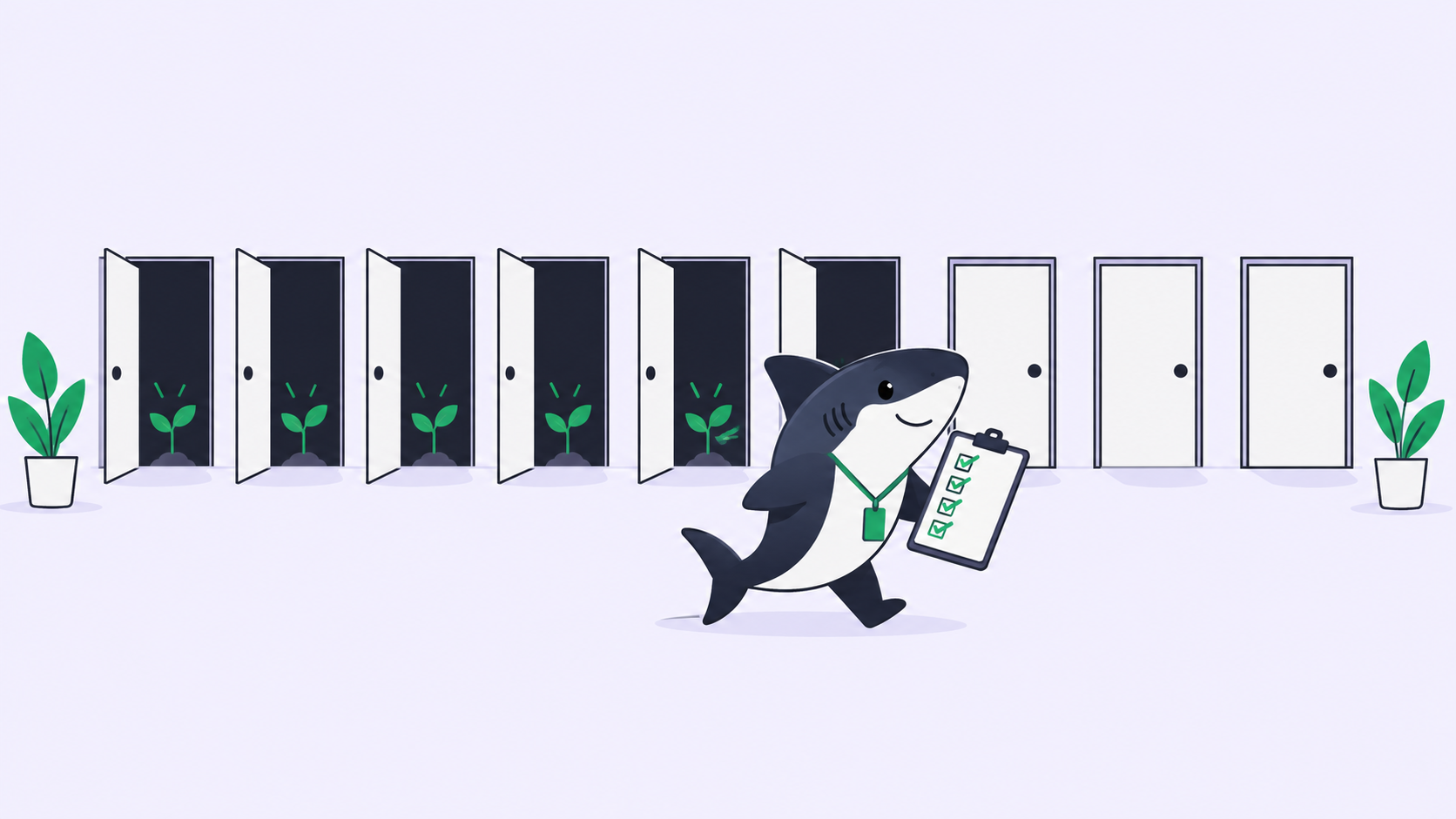
Run this against your current setup. Each unchecked box is a place a chat-born task can go untraceable:
- [ ] Every actioned chat request becomes a Task with an owner, not a reaction emoji.
- [ ] Each Task has a description an Agent can execute: repro, expected behavior, acceptance test.
- [ ] Each running Agent works in an isolated worktree, so two tasks never touch the same files.
- [ ] The Agent’s run log, blockers, and results return to the Task, not to a terminal that closes.
- [ ] The pull request is linked to the Task by ID, so the request and the diff are one click apart.
- [ ] A human accepts or rejects the result, and that decision is recorded on the Task.
- [ ] You can answer “is this done, who did it, and where’s the diff?” without searching the chat.
Handling one request at a time, the manual loop passes most of these on its own. Running several agents across a team, Sharkly gives you one place to manage their tasks and results. Download Sharkly and move one real chat request into a Task before you commit the whole channel to it.
FAQ
Do I need Sharkly to make chat-born tasks traceable? No. A single developer running one agent gets real traceability from a worktree plus a pull request that links to an issue. The AI agent inbox pattern earns its keep once you have multiple agents or people and the manual links start slipping.
What makes a chat message hard for a coding agent to execute? It usually lacks a reproduction, an expected result, and an acceptance test. Turn “the export is broken” into “the CSV export drops the last row; expected N rows, got N-1; fixed when the count matches.” Now the Agent has something to close against.
How is this different from a normal ticketing system? A ticket tracks work a human will do. A traceable code task also carries the Agent’s execution log, its isolated run, and the linked diff, so the record covers the decision and the change. See human-in-the-loop coding agents for where the person stays in the loop.
Can Sharkly read my Slack channel directly? You wire a Sharkly Agent into Slack so a mention becomes a Task. The conversation stays in Slack; the traceable work record lives in Sharkly.