You are trying to pick the best coding agent. You read the leaderboard, you watch the release posts, you run the same prompt through Claude Code and Codex and Gemini CLI to see which one feels sharper. Then a new model ships, the ranking reshuffles, and the agent you standardized on last month is suddenly mid-table. So you switch again.
Here is the uncomfortable part: the agent you choose changes less about your week than you think. The thing that decides how much work you actually ship is what happens around the agent. Which agent is on which task, what finished, what failed, what is waiting on you to review. Most developers feel the pull of the ranking and never notice that the ranking was never the bottleneck.
Sharkly is built on that observation. Sharkly is an all-in-one Agent command and management platform: you connect your own Computer, assign a Task to any Agent you already use, and every run returns its diff, its test output, and its review to one place. It sits above the agents, not beside them. This article walks through why the management layer decides your output more than the model does, and what to do about it this quarter instead of chasing the next leaderboard.
The best agent is a moving target
A coding-agent leaderboard measures a fixed, shared set of problems at a fixed moment in time. Both of those facts age badly. The problem set is not your codebase, and the moment is not next month.
Look at the pace. Anthropic, OpenAI, and Google have each shipped multiple coding-agent-capable model updates over the past year, and the relative ranking between them has flipped more than once [VERIFY: exact release cadence and current ranking change monthly; confirm before citing specifics]. If you treat “use the best agent” as a decision, you are signing up to remake that decision every time a lab ships. Every switch carries a tax: new config, new context files, new habits, a new set of failure modes your team has to learn.
Here is a prediction, labelled as one. The gap between the top coding agents will keep narrowing, not widening. When three agents all clear the same bug on your repository, the question stops being “which is best” and becomes “which one do I hand this particular task, and how do I see the result.” The differentiator moves off the model and onto the workflow. That shift is already visible in how teams talk about agents; it will be the default way of working before it is the exception.
The defense against a moving target is not better aim. It is a workflow that survives the target moving. Comparing agents on your own codebase tells you which ones are worth running today; it does not lock you into that answer tomorrow.
What actually decides your output
Run the numbers on where a task spends its time. The agent generates a diff in minutes. Everything else, deciding which agent gets the task, keeping its changes isolated from the other four agents, finding out it stalled on a build step, reading what it produced, accepting or rejecting it, is the part that eats your day. None of that is a property of the model.
This is the management problem, and it shows up the moment you run more than one agent. Which agent is working on what? Which one should receive the next task? What finished, what failed, what needs a human to look at it? How do you keep three agents editing one repository from touching the same files? The more capable each individual agent gets, the more of them you run at once, and the sharper these questions get.
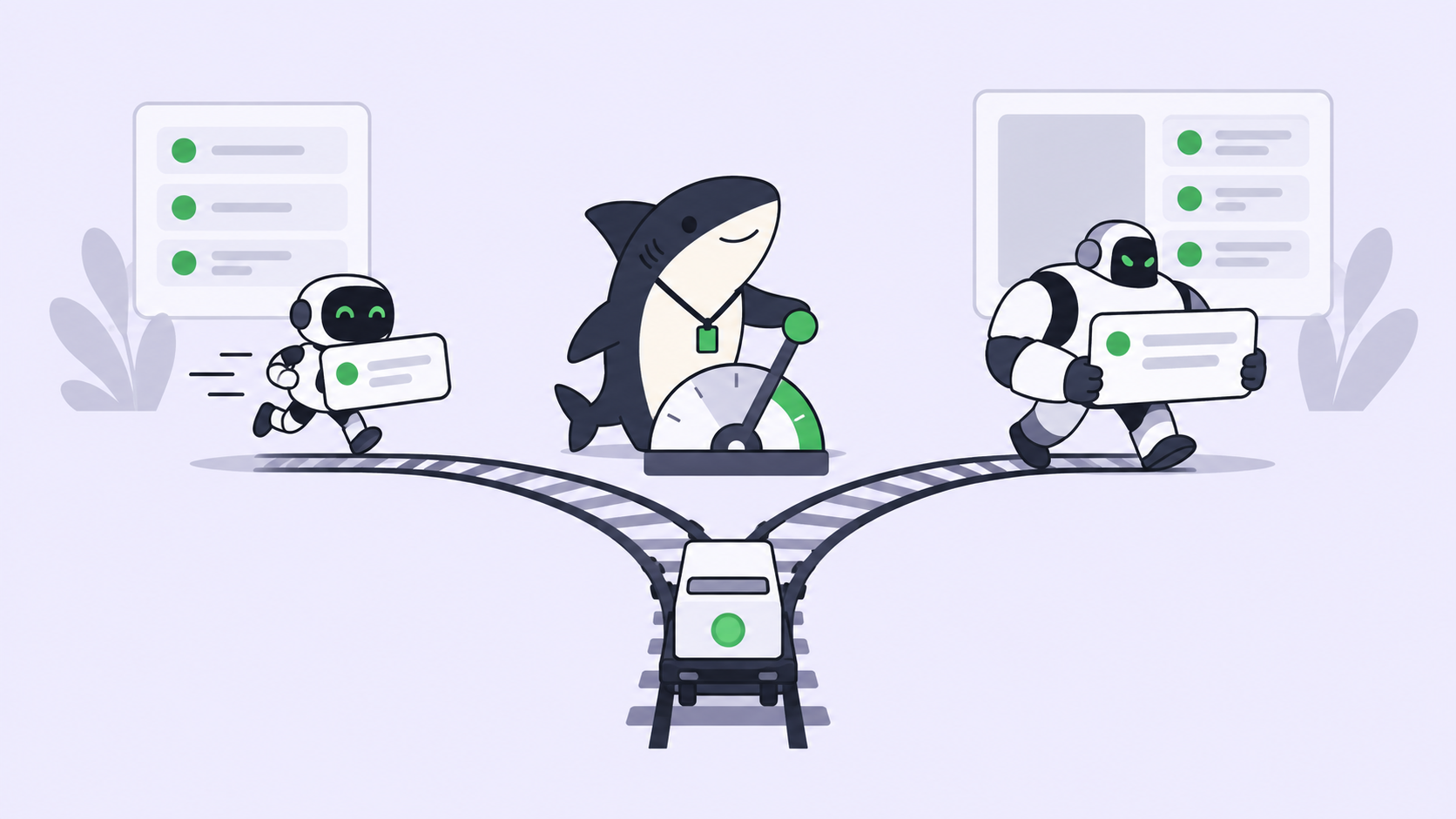
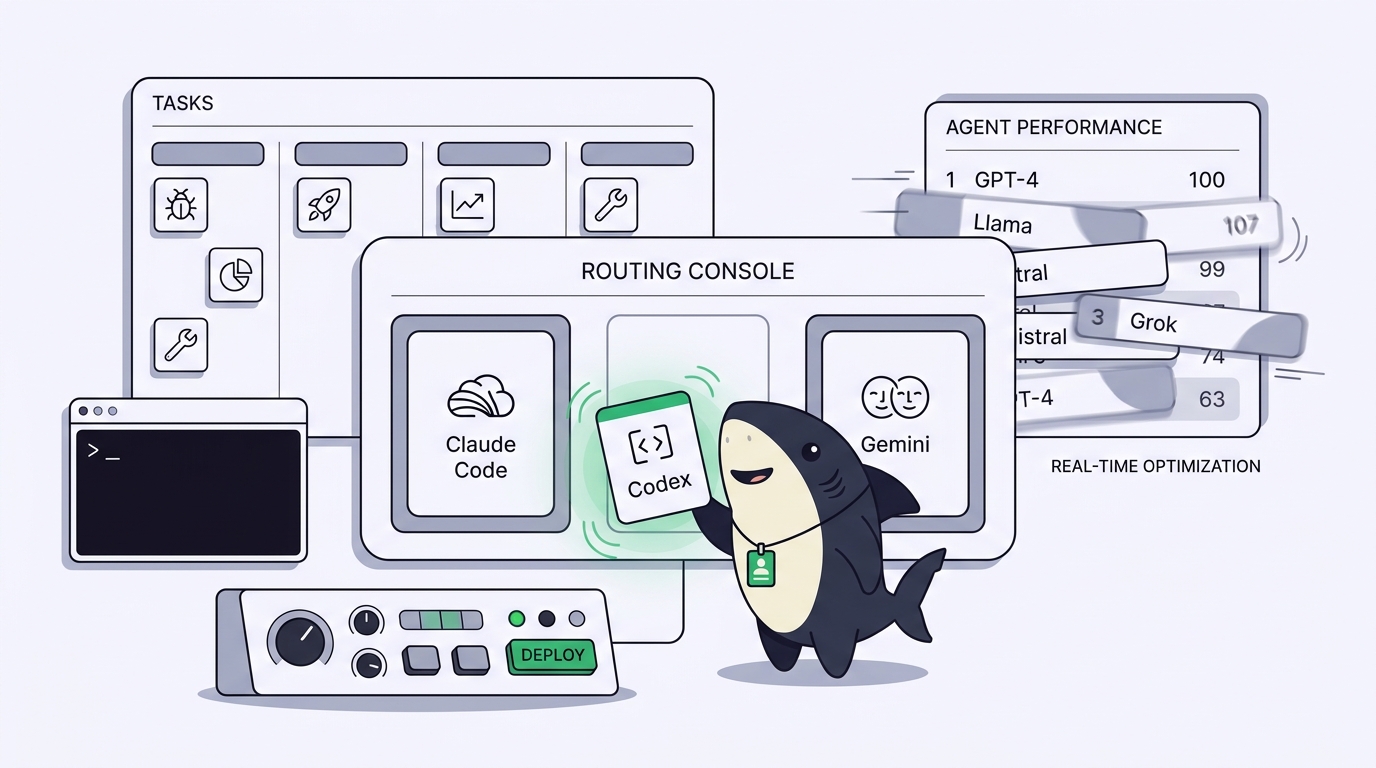
Sharkly answers them as a layer, not a tool. A Task is the main unit of work: you assign it to an Agent, the Agent runs on a connected Computer in an isolated worktree, and execution, blockers, results, and follow-up all return to the Task. The agent that did the work is a setting on the Task, not the architecture of your whole setup. Swap Claude Code for Codex on the next task and nothing else about your process changes. That is what provider neutrality buys you: your workflow outlasts whichever agent is currently winning.
Review capacity is the real ceiling
An agent that prints “done” has not shipped anything. A human still has to read the diff, check the tests, and decide. That review step, not code generation, is the constraint almost every team hits first.
The math is blunt. If one agent produces a day of reviewable work in twenty minutes, five agents produce five days of review in the same twenty minutes, and you still have one pair of eyes. A faster or smarter agent makes this worse, not better, because it fills your queue quicker. Picking the best agent optimizes the step that was never the bottleneck while leaving the actual bottleneck untouched. Review capacity is the true limit on how much parallel agent work a team can absorb, and no model upgrade changes that arithmetic.
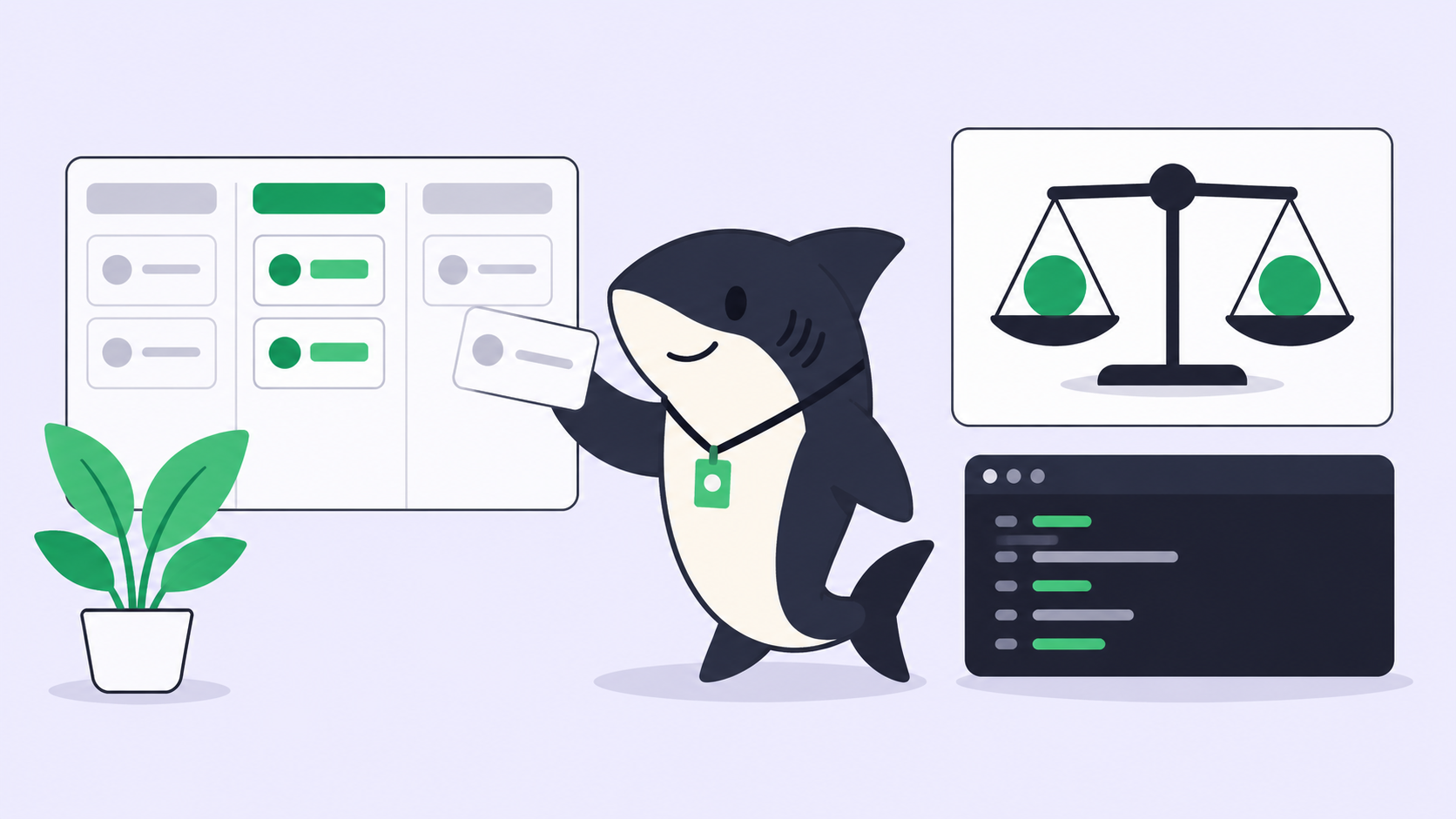
So the decision pair that matters is not “Claude Code or Codex.” It is this. Use a faster agent when your constraint is generating a first draft of a change. Invest in your review workflow when your constraint is deciding whether a change is correct. For most teams running agents in parallel, the second constraint binds long before the first. The fix is making every run reviewable with task-level evidence: a diff, typecheck and test output, a change summary, and the limits the agent admits to, all in one place instead of scattered across terminals.
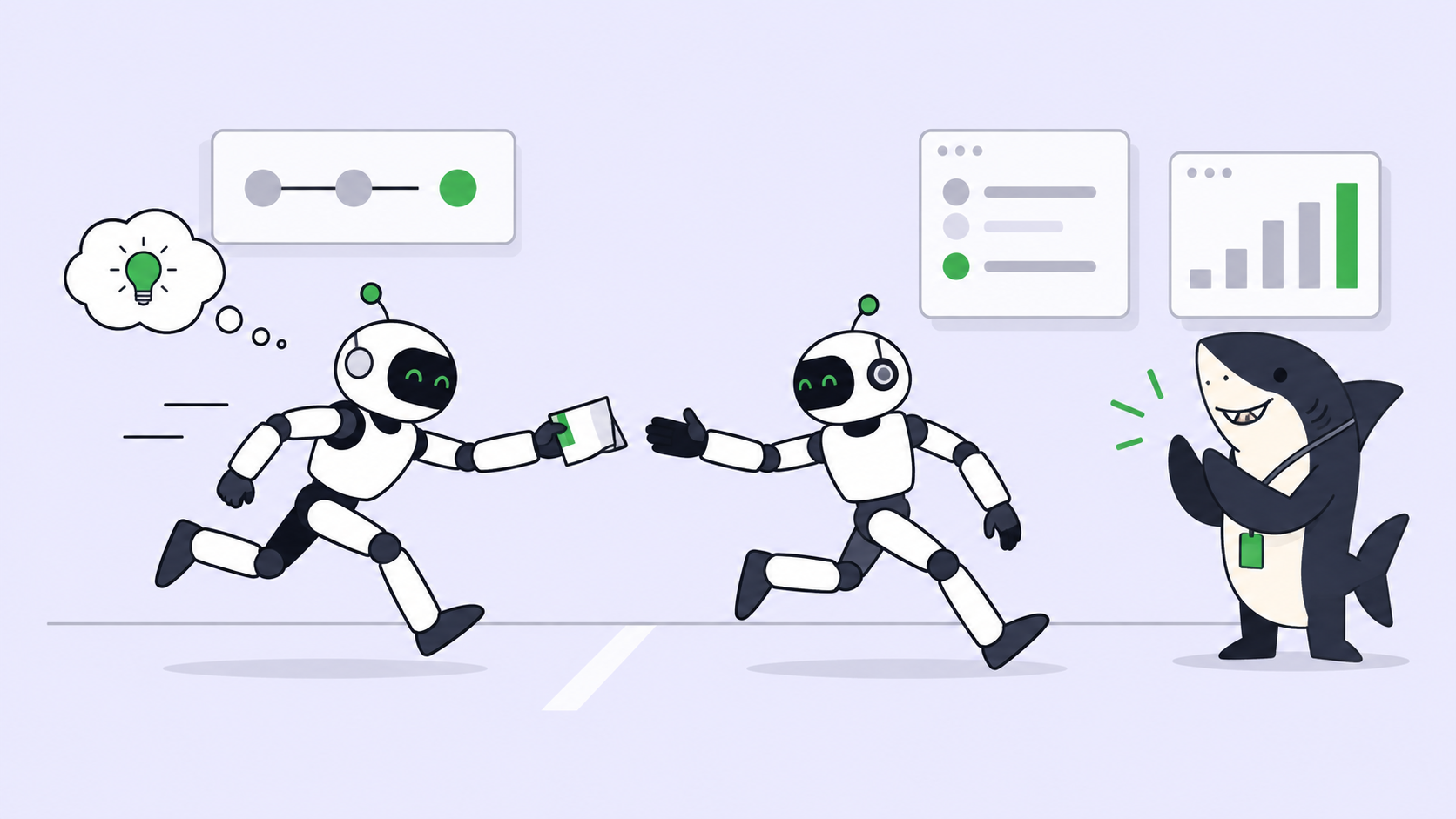
This is where the human-agent contract earns its keep. Agents research, execute, test, and report. People set direction, grant authority, and accept the result. Automation stops where team judgment is required. A better agent does more of the first sentence; it does none of the second. The ceiling is on your side of that line.
Make agent choice a setting, not an architecture
Here is the boundary, stated plainly so no one assumes wrongly: Sharkly is not a coding agent and not a replacement for Claude Code, Codex, or any runtime. It does not write better code than they do. It adds the shared Task, Computer, context, and review layer around the tools your team already uses.
That distinction is the whole point. When agent choice is a setting, trying a new agent costs you one task, not a migration. You connect the runtime, assign it a real requirement, and read what returns, next to the results from the agent you used yesterday. When agent choice is baked into your architecture, every experiment is expensive and every leaderboard shuffle is a threat.
Be honest about when you do not need this. If you only use one coding agent and live happily in a single terminal, a well-tuned Claude Code session in its own worktree is enough, and the management layer is overhead you can skip. The equation changes the moment you are running two or more agents, across more than one task or repository, and you want the results in a form a teammate can read without you narrating your scrollback. That is the threshold where coding agent management becomes a layer you actually need rather than a nice idea.
What to do differently this quarter
Stop spending the week chasing the ranking. Spend it building the layer that makes the ranking a detail.
Three concrete moves. First, pick your agents the boring way: run two of them on a real task from your backlog and keep whichever reads better on your code, knowing you will revisit it. Second, measure your review throughput honestly; if agents are finishing faster than you can accept their work, the next agent upgrade will not help you and a better review flow will. Third, stop hardcoding one agent into your process. Route work through a layer that treats the agent as interchangeable, so the next model release is an option you try, not a rebuild you dread. If you are still deciding which model to point each agent at, matching models to agent roles is a better use of an afternoon than refreshing a leaderboard.
If you want to keep using multiple coding agents rather than committing to one ecosystem, that is the problem Sharkly is designed around. Download Sharkly, connect one Computer, and assign the same real task to two agents. The best one will change. The way you manage them does not have to.